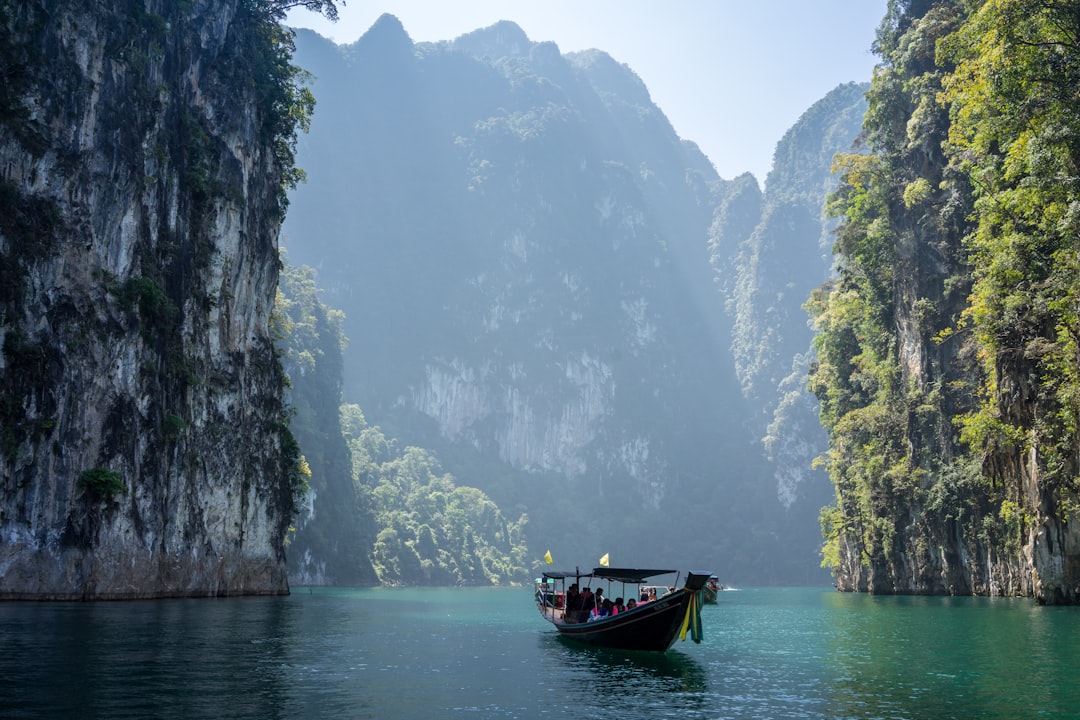
Photo by Robin Noguier on Unsplash
My phone died somewhere between Vienna and Budapest, which turned out to be the best thing that could have happened to my travel itinerary. Without GPS or the ability to check which train I was actually on, I did something revolutionary: I asked a stranger. That stranger was an 73-year-old Hungarian woman named Éva who'd been riding regional trains for fifty years, and she invited me to join her on a route I'd never heard of.
Most travelers treat trains as mere transportation—a means to get from Point A to Point B as efficiently as possible. We book the high-speed connections, the ones that cost a premium but save us an hour. We work on our laptops, scroll through our phones, treat the journey as wasted time. But what if I told you that some of Europe's most rewarding travel experiences happen on the trains that take twice as long and cost a fraction of the price?
The Lost Art of the Regional Railway
Regional trains are what Europeans who actually live in Europe use to get around. Not tourists. Not business travelers. Regular people commuting to jobs, visiting family, carrying groceries and small dogs and armfuls of flowers from the market. When you board a regional train—the ones that make stops in towns you've never heard of—you enter a completely different travel experience.
Take the Austrian Südbahn line from Vienna down through Styria. Most visitors know about the scenic Semmering Railway, which is genuinely spectacular. But the Südbahn, running through smaller towns like Bad Gleichenberg and Feldbach, offers something different: authenticity. You'll pass through wine regions, small farms, and villages where the biggest event of the week might be when your train rolls through. A ticket costs around €30. A high-speed train between the same points costs double and takes you straight through without stopping.
The difference is that you're actually *seeing* something on a regional train. The route runs at slow enough speeds that the countryside doesn't blur into abstraction. You can make out individual trees, watch children wave from their yards, read the names on little stations where nobody gets on or off.
Why Slow Travel Isn't Just Romantic Nonsense
Here's the counterintuitive part: traveling slowly by train actually gets you more stories and more memories than optimizing for speed. This isn't poetic theory; it's about how human brains work. Our memories are built on novelty and small details, not on arriving someplace quickly.
When I rode Éva's preferred route—a regional train that took four hours to cover what a high-speed train would do in ninety minutes—I had conversations with a nurse heading home from night shift, a student practicing French with an elderly man, a woman selling homemade plum brandy from a bottle she kept in her handbag. None of these encounters were planned. They happened because I wasn't in a hurry, because the train was moving slowly enough that people actually relaxed and chatted, because I had time to notice who was sitting across from me.
Research on travel satisfaction by Cornell psychology professor Thomas Gilovich found that people derive more happiness from experiential purchases—like train rides through unfamiliar country—than from material purchases. But there's a qualifier: the experience has to contain elements of discovery, interaction, and present-moment awareness. A three-hour express train ride where you're focused on your laptop doesn't meet those criteria. A four-hour regional train where you're watching villages pass and talking to locals? That absolutely does.
The Practical Magic of Regional Routes
You might be wondering how to actually find these trains. Most travel guides won't recommend them because travel guides are written for people optimizing for efficiency. But they're easy to find once you know what you're looking for.
Start with the national rail websites of whatever country you're visiting. In Austria, it's ÖBB (Österreichische Bundesbahnen). In Germany, Deutsche Bahn. These sites have regional train options usually listed separately from high-speed services. Buy a rail pass if you're doing multiple journeys—the Eurail Pass gives you unlimited travel across multiple countries, and the beauty of it is you're not incentivized to race between destinations because you've already paid.
Here's a specific example: the route from Innsbruck to Bolzano through South Tyrol. Most travelers either drive this or take the one direct train. Instead, take the regional trains that stop in every little town. The journey takes five hours instead of three, costs half as much, and you'll see the actual Tyrol—the farming villages, the traditional architecture, the real Italy-Austria border region that tourists miss.
Also worth considering: many regional trains have dining cars where you can get surprisingly good food. You're not eating microwaved airline nonsense; you're eating what the train company can prepare fresh. On Austrian trains, this means schnitzel and apple strudel. On Italian regional trains, proper pasta. The experience feels luxurious despite being inexpensive, because you're eating while watching mountains roll past.
Building Your Regional Train Adventure
If you want to actually try this, here's how to structure it: pick a country. Spend one week there. Instead of trying to hit five cities, hit three. Buy a regional rail pass (most countries offer these). Don't book accommodations in advance; let the train schedule dictate where you spend your nights. If you discover a town you like, stay an extra day. If a stranger invites you on their route (which happened to me), say yes.
The confession: I did eventually make it to Budapest. But I arrived a day later than planned, with notebooks full of names and addresses of people I'd met, photos of towns I'd never heard of, and a sense that I'd actually *traveled* rather than simply moved between destinations.
If you're interested in how happy accidents shape travel stories, you might also enjoy reading about how getting lost in the Swiss Alps led to an unforgettable adventure—sometimes the best journeys are the ones we didn't plan for.
Regional trains won't get you to your destination fastest. But they'll get you somewhere better: actually present for your own experience.
Comments (0)
No comments yet. Be the first to share your thoughts!
Sign in to join the conversation.