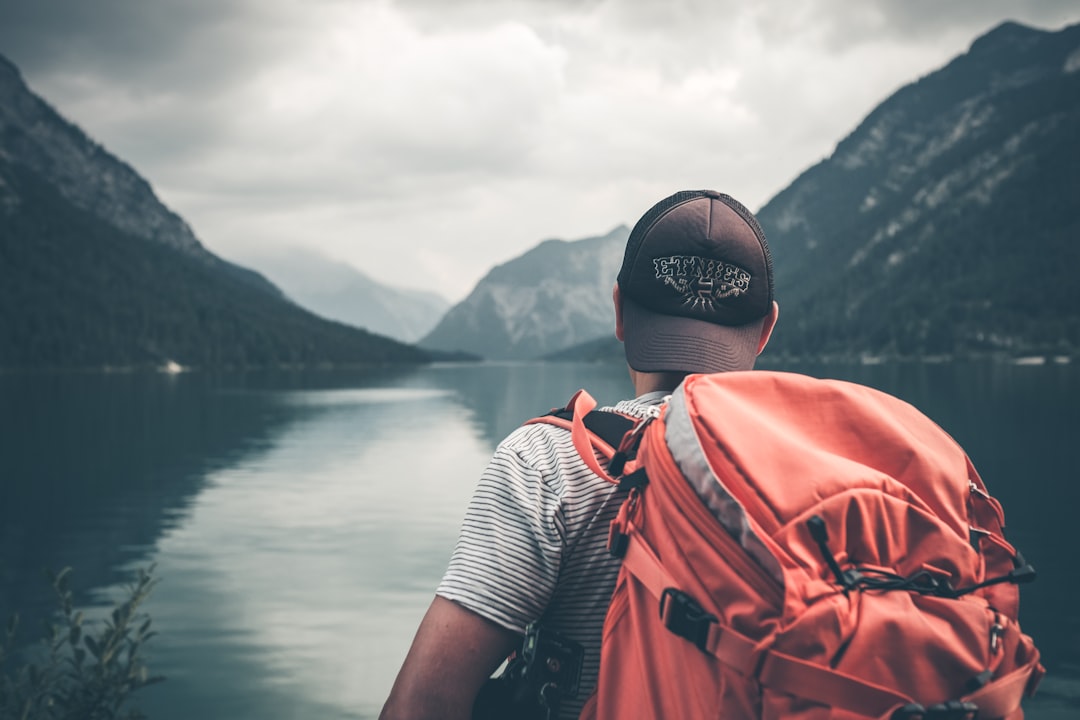
Photo by Philipp Kämmerer on Unsplash
I arrived in Civita di Bagnoregio on a Tuesday afternoon with absolutely no plan. The medieval village, perched on an eroding volcanic plateau in central Italy, has a population of twelve. Literally twelve people. My Airbnb host, Maria, handed me ancient keys and asked when I'd be leaving. "I don't know," I said honestly. "Maybe a month?" She smiled like I'd finally said something sensible.
That month changed how I travel forever.
The Tyranny of the Itinerary
Before Civita, I was a classic type-A traveler. I'd map out every museum, restaurant, and Instagram-worthy viewpoint weeks in advance. I'd spend eight days in Paris because that's what the guidebooks said was appropriate. I'd rush through cities like a human tornado, checking boxes and taking photos that looked exactly like everyone else's.
Then one trip to Barcelona broke me. I was supposed to be marveling at Park Güell, but instead I was standing in a ninety-minute queue, sweating through my shirt, watching families fight about whether this was worth the $30 entrance fee. I remember thinking: why am I here? Not in Barcelona—I meant why am I here, doing this, living this way?
The slow travel movement gets talked about a lot these days. You'll read articles about "authentic experiences" and "going off the beaten path," but most of those pieces still pack ten activities into seven days. That's not slow travel. That's just regular travel with better PR.
One Town, One Month, Infinite Time
Civita forced slowness on me through sheer isolation. There's one restaurant, one small café, and one little market that's open three days a week. You can walk the entire village in fifteen minutes. The internet is temperamental. There's no hotel, no tourist shop, no souvenir stand.
Day one was awkward. Day two was boring. By day four, something shifted.
I started learning names. Not tourist-guide names but real names—the guy who fixed the aqueduct system was named Giuseppe, and he spent forty-five minutes explaining the geological history while his dog napped on my feet. The woman who sold vegetables was Lucia, and she began saving me the good tomatoes. The priest, Don Michele, invited me to evening Mass in a church that hadn't been filled in decades.
I worked from the café four days a week—my remote job continued, thankfully—and the café owner, Paolo, learned my coffee order by day six. He started making it without asking. We'd talk about his daughter in Rome, about why young people leave villages like this, about his theory that Americans work too much.
Here's what nobody tells you about slow travel: it requires boredom. Not the bad kind—the good kind. The kind where your brain finally stops running its constant achievement software and just... exists. I read books cover to cover. I took naps at odd times. I sketched terrible drawings in a notebook. I sat on a bench for two hours watching clouds because I could.
The Hidden Economics of Staying Put
The financial argument for slow travel is surprisingly strong. My daily budget in Civita was roughly $45: a simple lunch, dinner materials from the market, coffee, maybe wine. Compare that to Paris, where I was spending $120 a day on meals and attractions alone, plus transportation costs hopping between countries.
Monthly, I spent about $1,350 in Civita. That same month visiting four different European cities? Easy $4,500 minimum. I stayed longer for less than a third of the cost.
Slow travel communities like digital nomads have known this for years. The data backs it up: travelers who stay one month or longer in a single location spend 60-70% less than traditional tourists according to research from the Global Sustainable Tourism Council. You stop buying admission tickets, eating at restaurants aimed at tourists, taking taxis everywhere.
You become a person living somewhere, not a person visiting somewhere.
What You Actually Learn When You Stay
After two weeks in Civita, I noticed patterns invisible to tourists. I learned that Sunday Mass at 8 AM was when the real gossip happened—attended by maybe eight people who discussed village politics for thirty minutes beforehand. I understood that the reason the restaurant was only open Friday and Saturday was because feeding tourists three other days wasn't worth Francesca's time anymore. I discovered the hidden archaeological site in the ravine below town because Giuseppe mentioned it casually, and I was around long enough to ask questions and follow up.
I met travelers passing through town. They'd spend an hour, take photos, ask me for recommendations, and leave. "You're so lucky," one woman said, "living here for a whole month." But here's the thing—I wasn't lucky. I was just patient. I chose one place and committed to it.
The experience transformed my understanding of travel itself. It's not about destination quantity. It's about depth, presence, and allowing space for serendipity. The best moments didn't happen because I planned them. They happened because I was there long enough for life to include me.
Reimagining Your Next Trip
You don't need to book a month abroad to try slow travel. Start with one extended weekend—actually extended, like five days—in somewhere small. Stay in one place. Skip the guidebook highlights. Eat where locals eat. Talk to people. Sit on benches. Let time move at its own speed.
If you're interested in exploring other underrated destinations with this mindset, consider skipping the obvious tourist hotspots and finding your own hidden gem.
When I finally left Civita—at exactly day thirty, because Maria had gently suggested a new guest was arriving—I wasn't sad. I was full. Full of conversations, inside jokes with people I'd known for a month, understanding of a place that went beyond its postcard version.
That's what slow travel gives you. Not more experiences. Better ones.
Comments (0)
No comments yet. Be the first to share your thoughts!
Sign in to join the conversation.