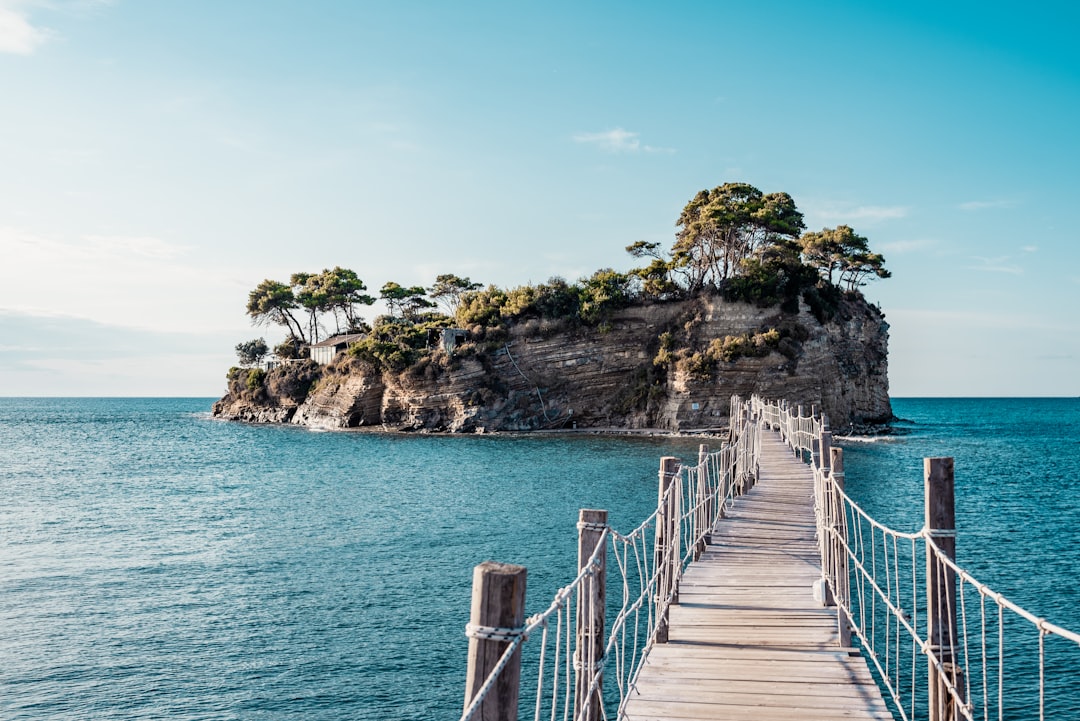
Photo by Julian Timmerman on Unsplash
There's something almost mythical about boarding a train as the sun sets, watching the world blur past your window, and waking up in an entirely different country. Yet for decades, sleeper trains have been the forgotten middle child of travel—too slow for business travelers, too expensive for backpackers, and too old-fashioned for Instagram-obsessed millennials. That narrative is changing, and fast.
The numbers tell the story. European sleeper train operator ÖBB has reported a 30% surge in bookings over the past three years. The Caledonian Sleeper between London and Scotland added extra cars to meet demand in 2022. Even Australia's Great Southern Railway has seen waitlists extending months ahead. People are rediscovering sleeper trains, and they're not doing it for nostalgia—they're doing it because sleeper trains solve a fundamental travel problem that nobody talks about enough: the wasted day.
The Math That Makes Sleeper Trains Actually Brilliant
Let's break down what happens when you fly versus when you take a sleeper train from London to Paris. With flying, you need to arrive at the airport three hours early. You sit in a metal tube for two hours. Then there's baggage claim, getting to your hotel, checking in, and basically losing an entire day to the logistics of travel. Total cost: roughly £60-150 depending on when you book.
Now consider the sleeper train. You board at 8 PM from central London. You shower, eat dinner in the dining car, and wake up in Paris at 8 AM—already in the city center, already showered, already able to actually start your day. Total cost: £80-200, depending on cabin class. But here's the real kicker: you've essentially paid for transportation AND accommodation. You've saved a hotel night. The economics flip entirely.
This is the calculation that's driving the renaissance. When you factor in gas, parking, airport transfers, and the hidden cost of a wasted travel day, sleeper trains become genuinely competitive with flying for distances under 1,000 kilometers. It's not that sleeper trains are cheaper necessarily—it's that they're more efficient in ways that actually matter to people's lives.
The Carbon Story Nobody Expected
Here's where things get interesting beyond the spreadsheet. A train produces roughly 14 grams of CO2 per passenger kilometer. A car produces 192 grams. A plane produces 255 grams. These aren't small differences.
A friend of mine, Sophie, took a sleeper train from Berlin to Vienna last summer and became almost evangelical about it afterward. Not because she suddenly cared about carbon footprints (though she did mention them), but because the entire experience felt less extractive. She wasn't rushing. She wasn't sitting in a middle seat next to someone who'd clearly never heard of deodorant. She was reading a book, drinking actual wine that didn't taste like it was filtered through a gym sock, and watching the Austrian countryside roll by in the morning light. The environmental angle was almost secondary to the fact that she enjoyed her transit.
This matters psychologically. People are more likely to change their behavior if the alternative is better, not just greener. Sleeper trains understand this intuitively. They're not asking you to suffer for the planet. They're offering you a genuinely superior experience that happens to be more sustainable.
The Routes Worth Taking Right Now
Not all sleeper trains are created equal. The European network is genuinely excellent. The ÖBB Nightjet connects Vienna, Prague, Berlin, and Munich with modern cabins that rival decent hotels. The Renfe Trenhotel in Spain gets mixed reviews, but the route from Barcelona to Madrid is spectacular. France's Intercités de nuit covers over 40 destinations and has undergone major renovations.
Switzerland's MGB Railway offers scenic sleeper routes through the Alps that genuinely justify their premium pricing—you're paying partly for the journey itself, not just to get from point A to point B.
Asia's sleeper train network is where things get absolutely wild. Thailand's overnight train from Bangkok to Chiang Mai costs about $15 for a basic sleeper and somehow remains one of the most memorable experiences you can have for under $20. You're eating pad Thai from the platform at midnight, sharing a cabin with locals who are actually friendly, and waking up to mountains. Japan's sleeper trains are almost absurdly comfortable—the Sunrise Izumo has cabins that feel more like capsule hotel rooms than trains.
The point is this: sleeper trains aren't just for Europe anymore, and they're not all expensive. They exist across a genuinely wide spectrum of experiences and price points.
What They Actually Get Right
The real reason sleeper trains are making a comeback isn't mysterious. They solve problems that modern travel has created. They force you to slow down. They put you in proximity with other humans—something planes deliberately avoid. They arrive in city centers rather than ghost airports 40 kilometers away. They let you watch the world change gradually rather than magically teleporting you between destinations.
This is also why the 48-hour rule for actually experiencing cities works so well with sleeper trains. You're already in the mindset of moving slowly, of paying attention, of being present.
The younger generation isn't just tolerating sleeper trains—they're seeking them out deliberately. Last month, I met a 26-year-old named Marcus at a hostel in Prague who'd spent the last four months traveling exclusively by sleeper train across Europe. Not for environmental reasons primarily, not for cost exclusively, but because it felt like the opposite of normal life. No screens demanding attention. No rush. No false efficiency.
The Honest Complications
To be completely fair, sleeper trains aren't perfect. The beds are genuinely narrow. Showers are tiny. If you value absolute privacy and pristine conditions, a hotel will beat it. Some routes still feel stuck in the 1990s. Scheduling can be complicated if you have strict itineraries.
But these aren't flaws in sleeper trains. They're just... constraints. And constraints, paradoxically, often make experiences better. They force engagement. They demand presence. They make the journey matter.
The sleeper train renaissance isn't about rejecting modernity. It's about rejecting the specific inefficiencies and alienation that modern travel has created. It's about reclaiming the idea that getting somewhere can be just as good as being somewhere. After decades of optimization making travel worse, sleeper trains are winning by making it slower, stranger, and somehow more human. And that might be the future after all.
Comments (0)
No comments yet. Be the first to share your thoughts!
Sign in to join the conversation.