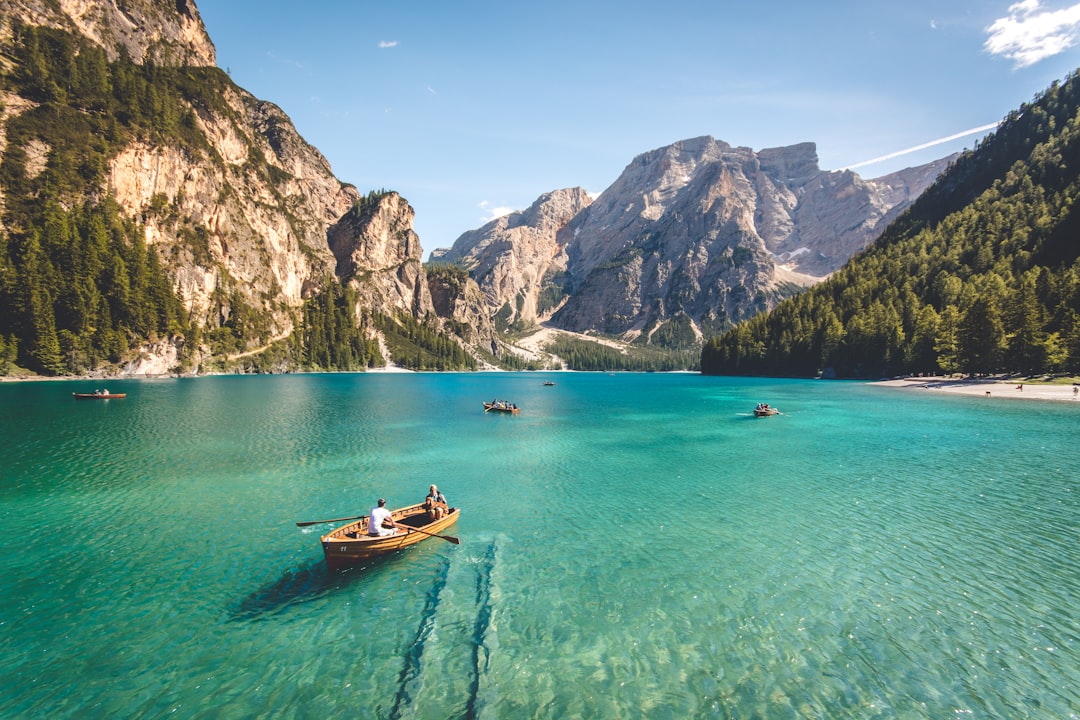
Photo by Pietro De Grandi on Unsplash
The train conductor's German was rapid-fire, and my French-English hybrid approach to communication wasn't cutting it. I stood in the aisle of a regional train somewhere between Interlaken and Zermatt, gesturing at my phone with what I hoped was a confused but charming expression. "This train?" I asked hopefully. The conductor nodded once, firmly, and walked away.
He lied. Or I lied to myself about understanding him. Either way, I ended up in Grindelwald instead of Zermatt, which was decidedly not where my hostel reservation awaited. Most travelers would've cursed their luck, caught the next train back, and moved on. But I'd just finished a three-week whirlwind through five countries, and something in me—exhaustion mixed with reckless curiosity—decided to stay.
The Accidental Discovery
Grindelwald isn't unknown. It's a legitimate resort town with 3,500 residents, a cable car that costs 40 Swiss francs one way, and considerable charm. But here's the thing about popular hiking destinations: when you actually arrive by accident, you experience them differently. I wasn't checking boxes on an itinerary. I was genuinely lost, genuinely hungry, and genuinely open to whatever happened next.
I walked downhill from the train station—always a safe bet in the Alps—and stumbled onto Grindelwald's main street around 4 PM. That's when I noticed something odd: hardly anyone was around. This was mid-August, peak season. Where was the seasonal tourist crush?
The answer was up. Everyone worth meeting was on the mountains. The hiking trails around Grindelwald are legitimately exceptional. The First Peak offers panoramic views of the Eiger, and the trails there draw thousands daily. But the village itself, when emptied of day-hikers, revealed something more interesting than a typical alpine resort: actual life.
Stumbling Into Real Switzerland
I found a small pizzeria called La Grotta—not because it was recommended, but because the owner, Klaus, was sitting outside reading a newspaper and made eye contact. We communicated through a combination of German (his fluent version, my remembering 15 words), Italian (he spoke this, I vaguely comprehended), and pointing at the menu.
Over pizza that was objectively mediocre but felt transcendent at that moment, Klaus told me about Grindelwald's peculiar identity. The town sits between two major tourist magnets—the Eiger and the Jungfrau region—yet remains somewhat overlooked by international visitors who blow through on their way to "bigger" peaks. This means it's retained a weird equilibrium: enough tourism to sustain restaurants and hotels, but not so much that it's lost its character.
"Most people, they come for the hiking, they leave," Klaus said, gesturing broadly at the empty main street. "They don't sit. They don't talk to people. They don't understand this is where we live." He wasn't being territorial or precious about it. He was simply stating a fact about how travel works for most people: we optimize for experiences and monuments, not for the quiet moments that make places real.
The Unexpected Value of Getting Directions Wrong
That evening, I checked into a small guesthouse run by an older woman named Ursula who seemed amused that an American had shown up without a reservation but perfectly willing to give me her second-floor room. She made me breakfast the next morning—fresh bread, local cheese, apricot jam—and drew me a hand-drawn map of "the good walks, not the crowded ones."
I followed her map to a trail that looped around the Eiger's north face via the Grosse Scheidegg pass. According to the official hiking websites, this route takes 5-6 hours. According to Ursula, it takes however long you want because "nobody is timing you."
She was right. I spent eight hours on that trail, not because I walked slowly, but because I stopped constantly. I sat for 45 minutes watching clouds move across the Eiger's base. I had lunch with a Swiss couple who were hiking in their 70s and asked me about American politics, which was equal parts fascinating and mortifying. I discovered a meadow full of Alpine flowers that I'm certain was on no official itinerary.
What I didn't do was take selfies at predetermined Instagram locations or rush through the "essential" viewpoints. The irony was thick: by failing to get where I meant to go, I'd actually found the place I should have been.
The Larger Truth About Travel Mistakes
Here's what every experienced traveler knows but most beginning travelers haven't learned: the best travel memories rarely come from executing the plan. They come from the plans falling apart. They come from getting lost. They come from being hungry at exactly the wrong time in exactly the right village.
The psychology of this is worth noting. When things go wrong, you're forced into a heightened state of attention. You can't default to autopilot. You have to actually notice the world around you, make micro-decisions about what to do next, and engage with people in authentic ways. That's when travel stops being consumption and starts being experience.
I ended up spending four days in Grindelwald instead of the planned half-day. I hiked different trails, ate at different restaurants, and had the kind of aimless conversations that become the actual substance of travel memories. I also learned something about the Swiss Alps that no guidebook mentions: their real magic isn't in the famous peaks, but in the hours you spend noticing the small things—a wildflower species, a particular quality of morning light, the taste of local cheese you'll never find again.
None of this would've happened if I'd understood the conductor's German. None of this would've happened if I'd immediately caught the next train back to where I was supposed to be.
These days, when people ask me about my favorite travel memory from Switzerland, I tell them the Grindelwald story. Then I tell them something even more useful: sometimes the best way to travel is to show up, make a mistake, and commit to going in whatever direction that mistake points you toward. The views from famous viewpoints are objectively stunning. But the views you find by accident? Those are the ones that stick.
If you're interested in the hidden systems that connect natural experiences, you might also enjoy learning about why mushrooms are nature's internet and how they connect every forest on earth—the kind of surprising, underneath-the-surface knowledge that changes how you see the natural world.
Comments (0)
No comments yet. Be the first to share your thoughts!
Sign in to join the conversation.