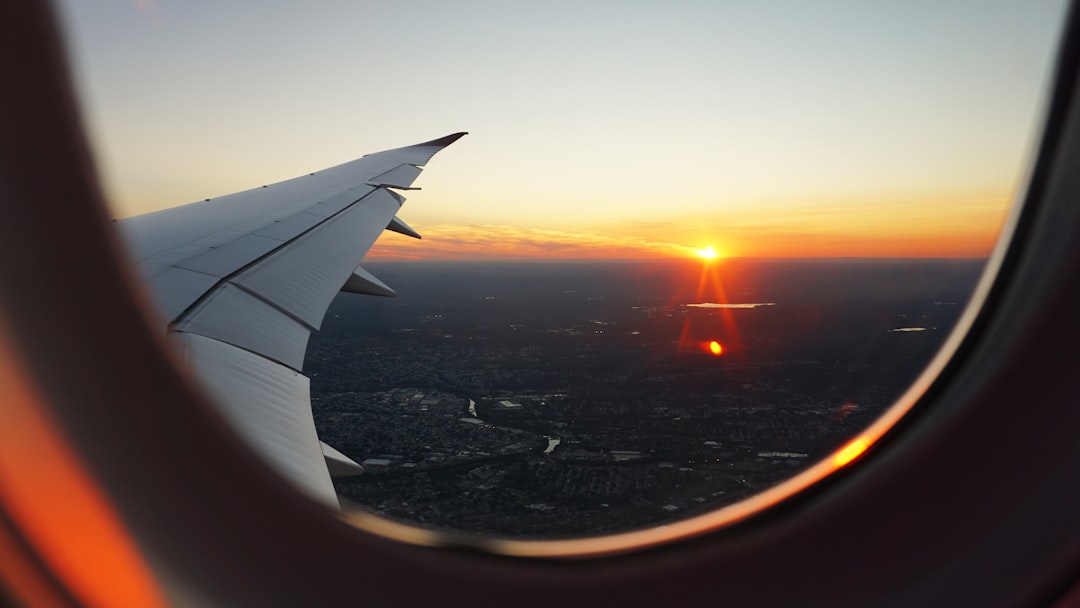
Photo by Eva Darron on Unsplash
Last summer, I boarded a flight to Tbilisi, Georgia with exactly 47 Georgian words in my vocabulary and zero regrets. My friends thought I'd lost my mind. "You don't speak the language," they said. "You won't be able to order food. You'll get lost." They were right on all counts. That's precisely why I went.
There's a peculiar magic that happens when you strip away the safety nets. No Google Translate open in a second tab. No hotel concierge with perfect English waiting to solve your problems. No familiar signage. Just you, your instincts, and the beautiful chaos of genuine human connection stripped down to its most basic components.
Why We've Become Addicted to Comfort While Traveling
Travel has become increasingly comfortable over the past two decades. We can book everything online. Read seventeen reviews before entering a restaurant. Text our hotel in advance to request a room on a specific floor. Technology has democratized global travel, which is wonderful. But it's also turned many of us into tourists rather than travelers.
The distinction matters. A tourist experiences a place. A traveler becomes part of it, however temporarily. And nothing breaks down the barrier between those two states faster than not understanding what anyone around you is saying.
According to a 2023 Pew Research survey, 39% of Americans who travel internationally use translation technology for more than 80% of their interactions abroad. We've outsourced the friction that used to force us to be present, vulnerable, and genuinely curious.
What Happens When Words Fail You (And It's Better Than You Think)
On my second day in Tbilisi, I walked into a small family-run khachapuri restaurant. The menu was entirely in Georgian. The staff spoke no English. My phone was at 6% battery. I should have been panicked.
Instead, I pointed at the table next to me where someone was eating something that looked absolutely magnificent. The woman at that table laughed—a full, genuine laugh—and spent the next twenty minutes showing me photos on her phone of different Georgian dishes, making exaggerated eating sounds, pointing at what she recommended. She didn't speak English. I didn't speak Georgian. We communicated in the universal language of "this food is delicious" and it was one of the most genuine interactions I've had while traveling.
This happens repeatedly when you're language-locked. A broken ankle in Portugal becomes a three-hour conversation with a pharmacist through charades and drawings. A missed bus turn becomes an adventure with a local who insists on riding an extra stop just to make sure you're headed the right direction. A confused look at a market stall becomes an impromptu lesson in how to select the best produce.
When you can't hide behind fluency, you're forced to be honest. You're visibly lost, clearly confused, obviously a foreigner. That vulnerability is often what opens doors.
The Practical Survival Skills You'll Actually Develop
Travel writers often romanticize these situations in ways that ring hollow. "Just follow your intuition!" they cheerfully advise. "Adventure awaits!" Sure. But here's what actually happens, practically speaking:
You develop exceptional observational skills. You notice which restaurants have other tourists versus locals only. You learn to read body language and tone in ways that transcend words. You become an expert at photographing things—menu items, street signs, business cards, product labels—to communicate what you need.
You also become incredibly patient. When you can't simply ask for directions, you accept that getting lost is part of the journey. This acceptance is profoundly freeing. I've stumbled upon neighborhoods, cafes, and street art in Tbilisi that I would have missed entirely if I'd been focused on efficiently reaching my original destination.
And yes, you learn some basic phrases. But not from an app. From repetition, from listening, from trying. Your brain absorbs language differently when you're actively dependent on it. I can order coffee in Georgian now. I know how to ask where the bathroom is. I can say "I don't understand" with convincing desperation. These words stuck because I needed them.
It Works Better Than You'd Expect (But Not Everywhere)
A caveat: this works best in countries where people are genuinely patient with travelers. Georgia fits this description perfectly. So do Vietnam, Turkey, and Portugal. Japan presents more challenges, though the extreme politeness of people there actually creates its own form of easy communication. Avoid this experiment in places where you might genuinely need medical help and communication could be urgent.
Also worth noting: this isn't about being deliberately difficult. It's about choosing destinations where your language incompetence becomes an interesting quirk rather than a significant safety concern. Most developing nations welcome the challenge. Many developed nations with English-everywhere tourism infrastructure will frustrate you when you're trying to opt out of convenience.
If you're curious about how small towns are reviving themselves through tourism in unconventional ways, check out The Ghost Towns of the American West That Are Actually Coming Back to Life—a different angle on how travel transforms places.
The Unexpected Reward: Actual Memories Instead of Just Photos
Here's what surprised me most: I took fewer photos in Georgia than I have on any international trip. My Instagram didn't explode. I don't have perfectly composed shots of the sunset from Narikala Fortress. But I have stories that I genuinely remember. I remember the taste of that khachapuri. I remember the woman's laugh. I remember the specific shade of purple in the wildflowers growing through the old city's cobblestones.
That's the real prize of deliberately choosing difficulty while traveling. Not suffering for its own sake. Not pretending that getting lost is inherently ennobling. But rather stepping into a space where you're forced to be present, where every interaction requires actual attention, where memory is formed through experience rather than documentation.
My next trip is booked to Albania. I've started my prep work: I know twelve words. I'm planning to keep it that way.
Comments (0)
No comments yet. Be the first to share your thoughts!
Sign in to join the conversation.