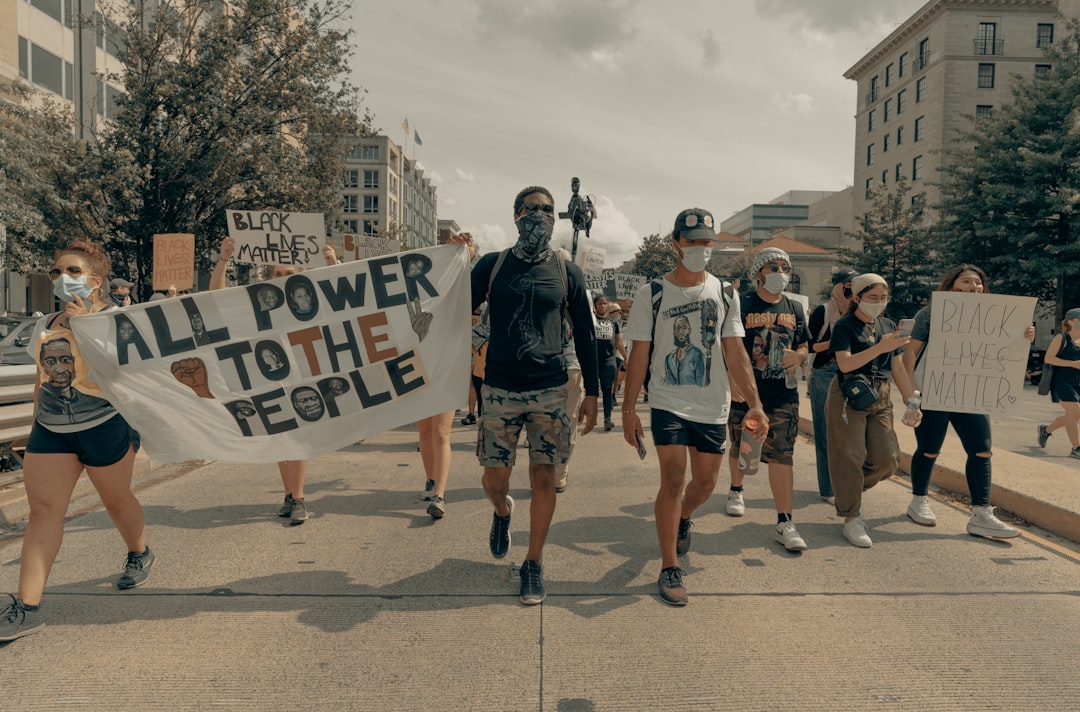
Photo by Clay Banks on Unsplash
On a Tuesday night in October 2022, I sat in a diner outside Columbus, Ohio, listening to a farmer explain why he'd voted Democratic his entire life until 2016. He wasn't angry. He wasn't ranting about immigrants or socialism. He was frustrated—genuinely, quietly frustrated—that nobody in Washington seemed to understand what he actually needed.
"They talk about rural America like we're a petting zoo," he said, pushing eggs around his plate. "They come for three days before the election, make some speech about small towns, and then disappear. They don't ask what we want. They tell us what we should want."
That conversation stuck with me because it encapsulates a crisis that Democrats have been unable to solve: they've lost rural America not because they're too liberal, but because they've stopped treating rural voters as politically sophisticated people with legitimate concerns. Instead, they've constructed a caricature—a backward region populated by people voting against their own interests. And rural voters have noticed.
The Numbers Tell a Brutal Story
Let's start with data, because the scale of Democratic decline in rural areas is staggering. In 1992, Bill Clinton won nearly 300 rural counties. By 2020, Joe Biden had won just 104. That's not a swing—that's a collapse.
In counties where agriculture and manufacturing dominate the economy, Democrats have gone from competitive to nearly invisible. Take Iowa's 5th Congressional District, where Democrat Tom Harkin won by double digits as recently as 2002. Today, Republican Congressman Chuck Grassley wins with 70% of the vote. Similar patterns play out across the Corn Belt, Appalachia, and the Great Plains.
The 2020 election crystallized this trend. Biden performed worse in rural America than any Democratic presidential candidate since Michael Dukakis in 1988. He lost counties that Obama had carried comfortably. He lost ground compared to Hillary Clinton in 2016—which itself had been a disaster for rural Democrats.
What's particularly revealing is where Biden did make gains: suburbs and college-educated communities. Meanwhile, rural voters without college degrees moved further toward Republicans. The Democratic Party has become, essentially, a coalition of urban progressives, suburban professionals, and college-educated voters. Rural working-class America has been left behind.
The Condescension Problem
Here's what Democratic operatives often get wrong: they assume rural voters are voting emotionally, voting against themselves, or voting based on cultural resentment. This assumption is poisonous. It's also inaccurate.
When a farmer in Iowa opposes increased environmental regulations, he's not voting based on "spite"—he's making a calculation about what a regulation will cost his operation and whether he believes the policy will actually work. When a factory worker in Pennsylvania resists calls for a "green transition," he's not anti-environment—he's worried about his mortgage and whether retraining programs will actually lead to decent jobs.
These are legitimate political positions. You can disagree with them. You can argue that long-term environmental investment benefits everyone. But if your response is to dismiss rural voters as backwards or stupid, they will stop listening to you. And frankly, they have.
Democratic messaging toward rural America often betrays this contempt. When Democrats talk about rural America, they emphasize gun control, abortion restrictions, and cultural issues—the very things they assume rural voters care about. But when you actually talk to rural voters, they want to discuss agriculture policy, infrastructure investment, healthcare access, and whether their children will be able to stay in their communities.
It's as if Democrats have decided that rural voters are a fixed demographic—that they will never be persuadable and that the party's energy is better spent elsewhere. This becomes a self-fulfilling prophecy. Candidates don't campaign there seriously. They don't develop rural-specific policy proposals. Rural voters notice this indifference and vote accordingly.
The Policy Vacuum
Beyond the tone, Democrats have largely abandoned the economic arguments that once won rural voters. There was a time when rural America voted Democratic because the party championed policies that benefited working-class people: union protections, agricultural price supports, infrastructure investment, and regional economic development.
Today, Democratic rural policy tends to be either absent or framed through an urban progressive lens. When Democrats talk about manufacturing, it's often about green manufacturing. When they discuss agriculture, it's through the framework of environmental sustainability and organic farming—policies that appeal to wealthy urban consumers but don't necessarily align with the survival strategy of commodity farmers.
This isn't to say that environmental policy is wrong. It's to say that Democrats have failed to develop a compelling economic case for rural America that integrates environmental concerns with working-class prosperity. Republicans, meanwhile, have stepped into this void by promising to prioritize rural economic interests above all else—even if those promises are often vague.
For a detailed analysis of how this political realignment happened, read about how state legislatures are reshaping American electoral politics—dynamics that further entrench rural Republican dominance.
What Winning Rural America Would Actually Require
Winning back rural America won't happen through culture war messaging or token campaign visits. It requires something much harder: a sustained commitment to understanding rural communities, developing serious economic policy proposals, and running competitive races even in districts Democrats are unlikely to win.
This means having Democratic candidates in rural areas who can articulate why Democratic policies would benefit their specific communities. It means investing in local organizing year-round, not just during election season. It means listening to rural voters without judgment and adjusting messaging based on what you hear—not what you assume.
It also means Democrats need to stop treating rural America as a curiosity or a charity case. Rural voters are not confused people who need to be educated. They're politically sophisticated people making rational choices based on their understanding of their interests. If Democrats want their votes, they need to earn them.
The farmer I met in Ohio didn't leave the Democratic Party because he became more conservative. He left because he felt forgotten. That's a message Democrats finally need to hear.
Comments (0)
No comments yet. Be the first to share your thoughts!
Sign in to join the conversation.