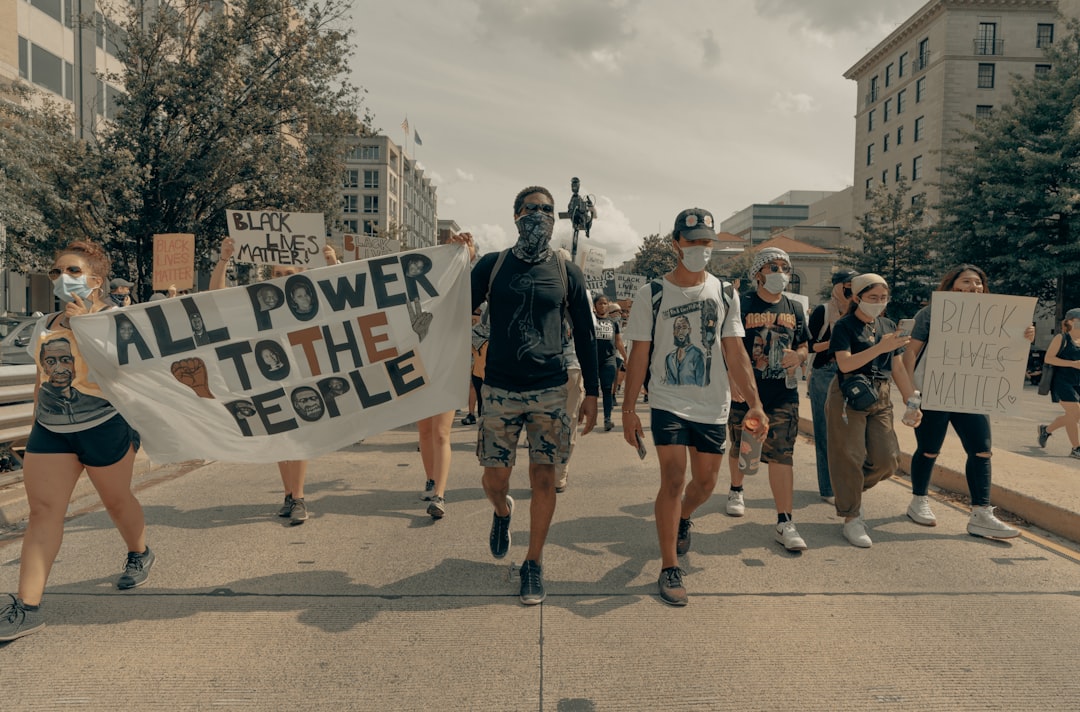
Photo by Clay Banks on Unsplash
Sarah Chen thought she was prepared for the 2020 election. The Arizona voter had her registration squared away, knew her polling location, and even brought her ID. But when she arrived to vote, she learned the rules had changed three times in eighteen months—each adjustment making it slightly harder for people like her to participate. She wasn't alone. Across the country, state legislatures were quietly rewriting the election rulebook, and most Americans had no idea it was happening.
This isn't conspiracy thinking. It's the unglamorous reality of American politics that rarely makes cable news but shapes every election. While presidential candidates wage billion-dollar wars and network pundits dissect every tweet, state lawmakers are passing legislation that determines voting access, ballot design, how mail-in votes are processed, and even who gets to count the votes. The 2024 election cycle has exposed just how fragmented—and vulnerable—America's electoral system truly is.
The Shift From National Standards to State Experimentation
Here's what most people don't realize: America doesn't have a national election system. We have fifty separate systems, each with its own rules, procedures, and quirks. After 2020, this decentralization became both a feature and a bug. Republicans and Democrats alike recognized they could reshape elections at the state level with far less opposition than pushing federal changes.
Wisconsin Republicans moved to eliminate same-day voter registration—a practice that had existed for decades. Georgia enacted new ID requirements that voting rights groups argued disproportionately affected Black and Latino voters. Arizona and Pennsylvania battled over mail-in ballot verification procedures. Michigan implemented new voter roll purging measures. Each state action seemed relatively minor in isolation. But collectively, they were erecting different barriers in different places, creating a patchwork electoral system where your right to vote literally depends on which state you live in.
The pattern is striking: in states where one party controls both chambers of the legislature and the governorship, they're passing stricter voting requirements. In states with split control, the voting laws remain relatively stable. This isn't accident or coincidence. It's deliberate strategy.
The Real Numbers: Who Loses Access?
Let's talk specifics, because generalities hide the actual impact. When Georgia eliminated the weeks-long early voting period that had existed before, it affected roughly 2.1 million voters who had voted early in 2020. Young voters, shift workers, and people with transportation challenges were disproportionately affected. A University of Maryland study found that Hispanic voters were 10 times more likely than white voters to lose access to previously available voting locations.
Texas implemented one of the nation's strictest voter ID laws. The state's own government estimated approximately 600,000 registered voters lacked the required ID—a number larger than the margin of victory in several recent statewide races. When researchers looked at demographic breakdowns, they found the burden fell most heavily on elderly, disabled, and minority voters.
But here's where it gets interesting: these same states often made it easier for some people to vote. Texas and other Republican-controlled states expanded voting access for military personnel overseas and simplified procedures for people with certain disabilities. The net effect wasn't neutral—it was targeted. The changes opened doors for some demographic groups while closing them for others.
For a deeper look at how these electoral changes concentrate power in specific hands, consider reading The Gerrymandering Trap: How One Congressman Redrew His District and Accidentally Created a Political Powder Keg, which explores related tactics lawmakers use to entrench their power.
The Software Problem Nobody Talks About
Beyond voter registration and ID requirements, something more technical—but equally consequential—is happening. Several states are upgrading their election software, and the process is murky. Vendors are private companies with little transparency. Security experts have raised concerns about everything from inadequate testing to closed-source code that prevents public auditing.
In 2022, when Maricopa County, Arizona allowed security researchers to examine their voting machines, they found vulnerabilities. Nothing fraudulent happened in that particular election, but the mere possibility revealed how much faith we place in systems most voters have never considered. State legislators can theoretically respond by mandating better security, demanding open-source software, or requiring auditable paper trails. Some states have. Others haven't.
The question hanging over 2024 isn't whether the election will be rigged—elections with adequate paper trails, bipartisan poll observers, and transparent procedures are remarkably difficult to rig at scale. The question is whether confidence in elections will survive when different states operate under wildly different standards, and millions of Americans can legitimately point to rules they see as unfair, even if fraud never actually occurred.
What Happens When the Loser Doesn't Accept the Results
Here's the scenario that should keep election officials awake at night: In 2024, one candidate wins the popular vote but loses the Electoral College. In close swing states, the margin is narrow. The losing candidate points to some of the new voting restrictions implemented in those states and argues, with some factual basis, that the rules were unfair. They refuse to concede. Their supporters, already suspicious from 2020, demand investigations.
Legally, the election would probably hold. Procedurally, it would be extremely messy. Politically, it could fracture the country further.
This isn't hypothetical. Trump didn't accept 2020. Some Democrats didn't fully accept 2016. When 60+ lawsuits questioning election integrity fail in court—including before judges appointed by the losing side—it suggests the elections probably were secure. But perception and reality have become increasingly decoupled. State-level rule changes that make voting harder create the impression that the system is rigged, even when the changes are technically legal and implemented by elected representatives.
The Path Forward Is Unclear
Fixing this requires confronting an uncomfortable truth: both parties benefit from the current fragmentation. When Republicans control statehouses in Texas, Florida, and Georgia, they implement voter restrictions. When Democrats control statehouses in California and New York, they expand voting access. Each side argues their changes improve election integrity or expand democracy, depending on their values.
Federal legislation that establishes national election standards has failed repeatedly. Some argue that's appropriate—election administration should be local. Others contend that leads to a two-tiered system where some Americans' votes carry more weight than others.
The 2024 election will likely proceed smoothly from an operational standpoint. Millions will vote. Votes will be counted. We'll probably know the outcome within days or weeks. But the legitimacy question—whether voters across the country trust the process—remains dangerously unsettled. And state legislatures, now fully aware of their power to shape elections, show no signs of stepping back.
Comments (0)
No comments yet. Be the first to share your thoughts!
Sign in to join the conversation.