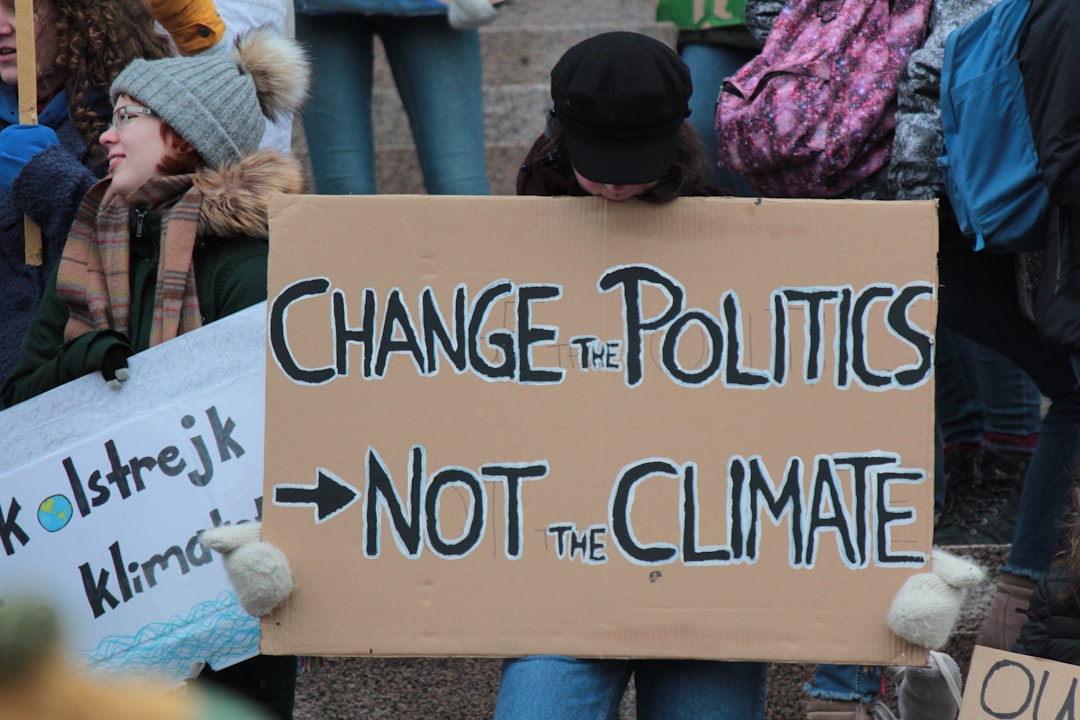
Photo by Tania Malréchauffé on Unsplash
Last spring, when Eric Adams, the mayor of New York City, declared a state of emergency over migrant arrivals and demanded federal action, he didn't file a report with Congress or beg for attention on cable news. He simply called a press conference, faced the cameras, and made a demand that reverberated across the nation. Within weeks, Democratic senators were scrambling to respond. The incident revealed something many Americans haven't fully grasped: the most consequential political battles in this country are no longer primarily fought in Washington.
The shift toward hyperlocal political power represents one of the most underreported transformations in American governance. While political commentators obsess over Senate races and presidential approval ratings, mayors and city councils have become the actual laboratories of democracy—the places where policy gets tested, refined, and implemented at a scale that affects millions of daily lives.
Why Congress Can't Keep Up
Congress has become functionally paralyzed. The numbers tell the story. In 2023, Congress passed just 18 bills that became law, a historically low number that reflects deeper ideological fractures. When Washington can't agree on anything—not infrastructure spending, not healthcare reform, not even climate policy—cities and municipalities don't wait around for permission. They act.
This isn't accidental. Budget gridlock in Washington has forced states and cities to shoulder more responsibility for public services. Education, transportation, housing, public health—these were once considered federal priorities. Now they're municipal challenges. And when you're the elected official responsible for making sure your city's schools function, its streets are safe, and its economy grows, you can't afford to wait for a Congressional compromise that may never materialize.
Take the minimum wage issue as a perfect example. Federal minimum wage has been stuck at $7.25 since 2009. Congress can't agree on raising it. But cities can, and they have. San Francisco raised its minimum wage to $20 per hour. New York City did the same. Seattle went to $21. Over 40 cities across America have implemented local minimum wages that far exceed the federal baseline. These aren't symbolic gestures—they affect millions of workers and have become the de facto wage policy for an entire generation.
The Experimental Nature of Municipal Politics
What makes local politics so powerful is its experimental character. Cities try things. Some work. Some fail spectacularly. But the failure happens at a manageable scale, with real learning opportunities, rather than as a national disaster.
Consider the progressive criminal justice reforms that have swept through American cities over the past decade. These weren't mandates from Washington. They emerged from district attorneys and mayors who decided their cities needed a different approach to prosecution, policing, and incarceration. Chesa Boudin in San Francisco, Larry Krasner in Philadelphia, Kim Foxx in Chicago—these elected officials implemented policies that would have been politically unthinkable at the federal level. Some of these experiments have faced significant backlash (Boudin was recalled, for instance), but others have yielded meaningful results that have now become reference points for policy discussions nationwide.
The same pattern holds true for environmental policy. Rather than waiting for a federal carbon tax or comprehensive climate legislation, cities have implemented their own sustainability goals. Denver committed to running entirely on renewable energy by 2030. Boston launched a serious effort to reach net-zero emissions by 2050. These aren't feel-good initiatives—they involve massive municipal budgets, zoning changes, and concrete enforcement mechanisms. When 50 American cities commit to climate targets simultaneously, the market responds. Solar panel manufacturers invest in new facilities. Electric vehicle charging networks expand. The private sector follows the municipal demand signal.
The Veto That Nobody Talks About
But here's where things get really interesting: mayors don't just implement policies within their jurisdictions. They can veto federal initiatives through non-compliance or political obstruction. This is especially true regarding the rewriting of election rules and governance structures that emanate from state capitals and Washington.
When the Trump administration attempted to expand immigration enforcement under the Secure Communities program, sanctuary cities simply refused to participate. Los Angeles, Chicago, New York—these cities used their law enforcement resources as political leverage. The federal government couldn't force compliance without destroying the relationship between federal immigration authorities and local police departments, something that would have made actual immigration enforcement nearly impossible. The mayors won.
This veto power extends to everything from vaccine mandates to surveillance technology. When police departments in major cities resisted purchasing or using predictive policing algorithms, the entire industry struggled. When city councils banned facial recognition technology, the technology's trajectory changed. Individual mayors operating in concert can effectively torpedo federal or corporate initiatives that require local cooperation to function.
The Dark Side of Municipal Power
Of course, hyperlocal power creates its own problems. The same decentralization that allows progressive San Francisco to implement ambitious policies also allows conservative cities to implement regressive ones. Exclusionary zoning in wealthy suburbs has created some of the most severe housing shortages in the nation. Cities can use local authority to discriminate against marginalized populations through policing practices and enforcement of ostensibly neutral laws.
There's also the fundamental issue of inequality. A mayor in a wealthy suburb can fund excellent schools and services. A mayor in an economically struggling city faces impossible tradeoffs. The rise of hyperlocal power, without concurrent federal redistribution mechanisms, risks creating a patchwork nation where your zip code determines your life outcomes more rigidly than ever before.
What This Means for Your Vote
The practical implication is clear: if you care about politics, start paying attention to municipal elections. Your mayor's election is more consequential than you've been led to believe. The candidates running for your city council will shape your daily reality more immediately than whoever wins the presidency. This isn't cynicism about federal politics—it's recognition of where actual power resides in 2024.
The next time you're tempted to tune out local politics because it seems boring compared to national news cycles, remember that the mayor of your city controls a budget that likely dwarfs many small countries' GDPs. That's not boring. That's where the real game is happening.
Comments (0)
No comments yet. Be the first to share your thoughts!
Sign in to join the conversation.