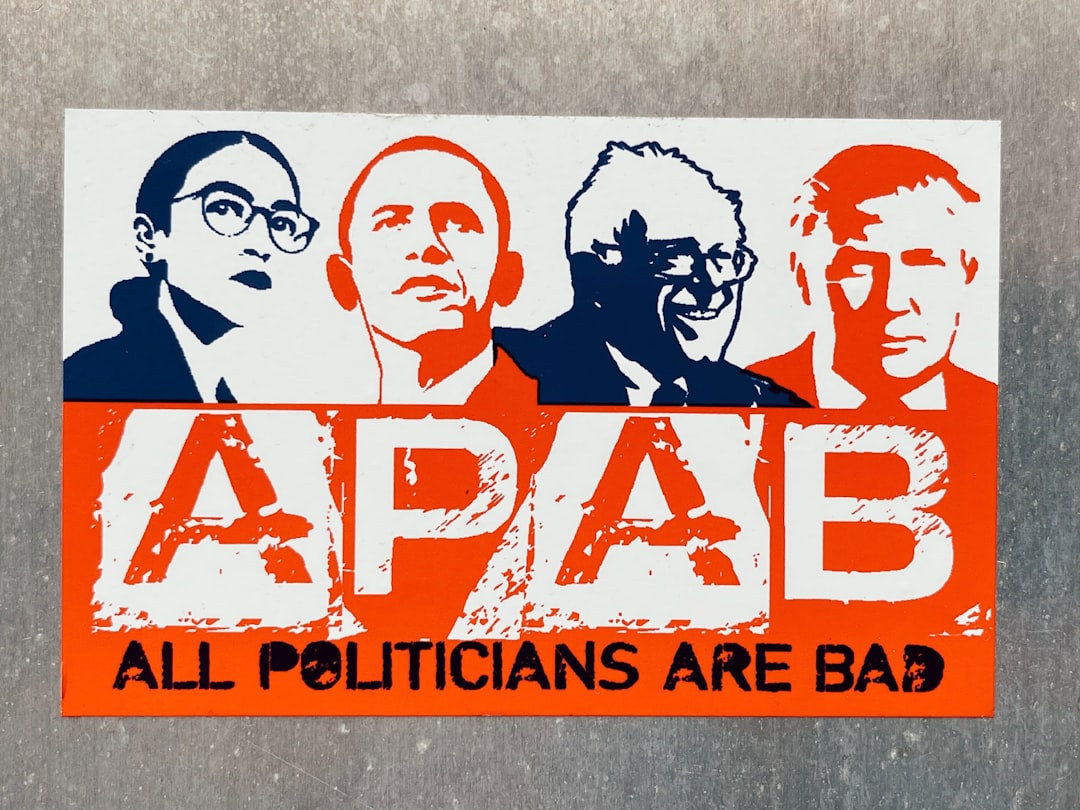
Photo by Jon Tyson on Unsplash
Sarah Chen wasn't planning to become a political activist. The 42-year-old marketing manager from suburban Ohio attended her first city council meeting in March 2022 out of pure annoyance—the municipality wanted to add bike lanes to her street, and she had questions. What she found was something far more consequential: a packed auditorium where residents were screaming at each other about curriculum standards, pronoun usage, and what books belonged in the public library.
"I thought I was just going to talk about road construction," she told me during a recent interview. "Instead, I walked into what felt like a national cable news debate, but it was happening in a gymnasium with folding chairs."
Sarah's experience isn't an anomaly anymore. Across America, local government meetings—once the domain of concerned citizens discussing parking regulations and pothole repairs—have transformed into ferocious battlegrounds where national political divisions are fought block by block. This shift represents one of the most consequential but underreported changes in American politics over the past three years.
The Nationalization of the Municipal
For decades, local politics operated under a gentlemen's agreement: keep it practical, keep it civil, and for heaven's sake, keep it out of national headlines. A school board election might draw 5 percent of eligible voters. City council meetings rarely cracked local news broadcasts.
Then everything changed. The 2020 census created redistricting battles. The pandemic shutdowns sparked legitimate debates about schooling that quickly became cultural flash points. And then came the book bans, the curriculum controversies, and the sudden realization among national political operatives that school boards weren't obscure local bodies—they were potential leverage points for the culture wars.
The numbers tell the story. According to a study by the Education Week Research Center, 41 percent of school board candidates in 2022 ran explicitly on national political issues, compared to just 12 percent in 2016. That's a quadrupling in six years. Meanwhile, attendance at city council meetings in major metropolitan areas increased an average of 340 percent between 2019 and 2023, according to municipal records compiled by the Brookings Institution.
What changed the calculus? Money, primarily. National Republican and Democratic organizations began pouring resources into local races that had traditionally operated on shoestring budgets. School board races in competitive districts, which previously might have spent $50,000 total, now regularly see $500,000+ in spending from outside groups.
The Template for National Culture War Infiltration
Here's the blueprint: A national advocacy group identifies a "winnable" school district or city council. They find local candidates willing to run on national conservative or progressive priorities—gender identity policies, critical race theory (or the opposition to it), library book curation, police funding, and environmental regulations. They flood the zone with digital advertising, mailers, and social media content. Local voters, many of whom have never paid attention to municipal politics before, suddenly feel like this election matters to their identity and values.
Sometimes it's explicit. "Moms for Liberty," a Florida-based organization founded in 2021, has spent millions helping elect school board candidates nationwide who oppose LGBTQ+ curriculum materials and certain history teachings. On the other side, progressive groups like "School Board Partners" have funded candidates opposing what they view as book banning and conservative overreach. Both claim to be responding to genuine local concerns. Both are bankrolled by national networks.
The result is that your local school board election increasingly looks like a 2024 presidential proxy battle. A librarian finds herself in a heated social media argument about pronouns. A parent who simply wanted to improve math scores becomes a target for opposing progressive ideology. A principal gets death threats because of curriculum decisions made by administrators, not elected officials.
The Real Casualty: Local Expertise and Pragmatism
"The thing nobody talks about is that while everyone's fighting about national issues, basic municipal services don't improve," said Michael Rodriguez, who served on the Detroit city council from 2018 to 2022. "My street had a pothole. I got elected partially on fixing that pothole. But once I was in office, council meetings became about taking sides on national politics. We spent three full meetings arguing about a police funding resolution that was purely symbolic. That pothole never got fixed because we were all performing for our base."
This phenomenon has real consequences. School districts have seen an exodus of experienced board members who simply don't want to deal with the harassment and ideological warfare. In some communities, entire slates of reasonable, experienced candidates have withdrawn, leaving the field to the most ideologically motivated candidates.
It's worth understanding the connection between this local fragmentation and the broader political dysfunction at the national level. The Disappearing Swing Voter: Why Politicians Are Abandoning the Middle explores how politicians have abandoned moderate positions for ideological purity. That same dynamic is now playing out at the hyper-local level, where there's nowhere left to hide behind pragmatism.
Why This Matters More Than You Think
Your instinct might be to dismiss this as performative politics at the local level—people grandstanding and playing culture war games while real governance suffers. That's partially true. But it misses something crucial: this is where the next generation of national politicians is being trained.
The state legislator who runs for Congress learned how to mobilize voters through local education board battles. The congressional candidate who learned to raise money via culture war positioning started with a school board race. National political operatives are identifying and grooming local candidates who proved effective at generating viral moments and turning out ideologically motivated voters.
Moreover, local government is often where policy innovation happens. When your city council can't focus on anything except culture war positioning, you're not experimenting with solutions to housing shortages, transportation innovation, or economic development. You're stuck.
What Can Actually Change This
Some communities are fighting back. Several states have recently passed laws restricting outside spending in local elections. Some school districts have created explicit norms about keeping national politics out of municipal governance. A few have even implemented ranked-choice voting, which theoretically reduces the incentive for extreme positioning.
But honestly? The incentive structure that created this problem is powerful. As long as national political organizations can parachute money into local races and candidates can build national profiles by taking hardline positions on local issues, the nationalization of municipal politics will continue.
Sarah Chen still attends city council meetings, though not as frequently anymore. She got frustrated with the screaming matches and the performative politics. "I just wanted to talk about bike lanes," she said. "Instead, I learned that everything—literally everything—has become about national politics." She paused. "I miss when local government was just about local stuff."
Most of us do.
Comments (0)
No comments yet. Be the first to share your thoughts!
Sign in to join the conversation.