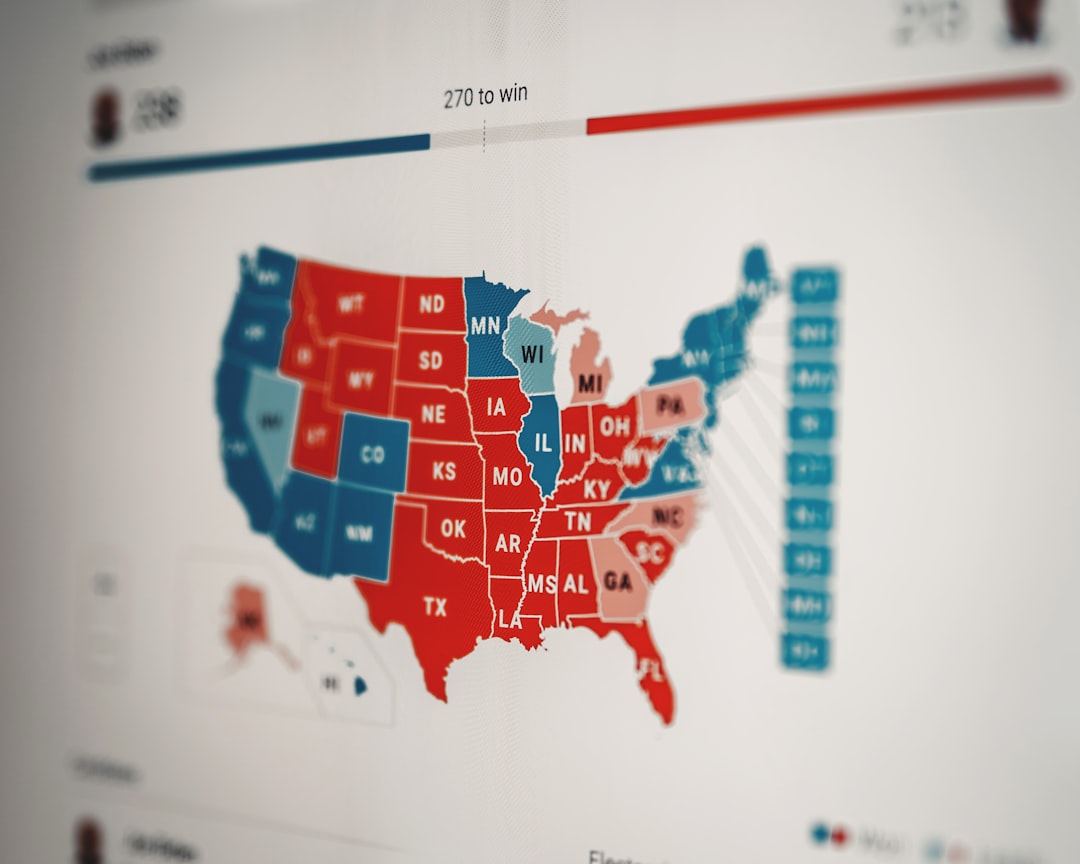
Photo by Clay Banks on Unsplash
Nobody saw this coming. Not really. A year ago, if you'd predicted that Elon Musk would become a folk hero among evangelical Christians, or that tech entrepreneurs would start funding candidates who oppose vaccine mandates, you'd have been laughed out of every political consulting firm in Washington. Yet here we are, watching an unlikely coalition form around opposition to government overreach—albeit for wildly different reasons.
The shift started quietly, almost imperceptibly. When Meta and Twitter began moderating political content more aggressively in 2021 and 2022, conservative voters felt targeted. When payment processors and cloud hosting services dropped Parler and other platforms, it felt like censorship. When Apple and Google removed apps from their stores, it confirmed what many conservatives already believed: Silicon Valley had become an enemy, not a neutral platform. These weren't just business decisions. They felt personal.
Meanwhile, on the other side of this strange equation, a different drama was unfolding. Tech entrepreneurs—traditionally Democratic donors and libertarian-leaning independents—were growing increasingly frustrated with government attempts to regulate their industry. The EU's Digital Services Act. Proposed antitrust lawsuits. Potential content moderation requirements. For people like Musk, these weren't abstract policy concerns. They threatened the fundamental structure of their businesses and their vision for the future.
When Enemies of My Enemy Became My Ally
The catalyst came when Musk purchased Twitter in October 2022 for $44 billion. What followed was a masterclass in political realignment. Musk fired roughly half the staff, gutted the content moderation team, and essentially told advertisers to take a hike if they didn't like his vision for "absolute free speech." It was chaotic. It was reckless. It was also, from a certain perspective, exactly what conservatives had been demanding for years.
Suddenly, MAGA-aligned influencers were praising Musk as a free speech hero. Conservative politicians started visiting his offices. Fox News ran glowing segments about the Twitter takeover. And here's where it gets really interesting: tech-friendly Republicans who'd previously been marginalized within the party found their moment. They could argue, with some justification, that defending free speech wasn't some left-wing cause—it was a conservative principle being championed by the world's richest man.
The numbers tell part of the story. According to a Wall Street Journal analysis, donations from tech executives to Republican candidates increased by roughly 40% in the 2023-2024 cycle compared to 2021-2022. Were all of these donations coming from MAGA devotees? No. But enough were coming from people worried about regulatory overreach that Republican campaigns suddenly had more cash to deploy.
The Regulatory Rebellion
What makes this alliance genuinely significant isn't just the money. It's the intellectual framework both sides are embracing. Conservative politicians have started adopting anti-monopoly rhetoric that would have made them sound like Bernie Sanders five years ago. Republican senators are now the loudest voices calling for breaking up Big Tech companies—not because they care about market competition in the traditional sense, but because they see it as a way to prevent coordinated censorship.
The irony would be almost funny if the implications weren't so serious. Tech executives, many of whom supported Biden and Democratic candidates, are finding common cause with Trump loyalists. They're sitting in the same rooms. They're funding the same politicians. They're pushing for the same regulatory changes, just for completely different reasons.
Take Josh Hawley's relentless anti-Big Tech crusade as an example. The Missouri senator has proposed legislation to break up tech platforms and regulate content moderation. His arguments sound reasonable on the surface: these companies are too powerful, they play kingmaker in elections, they control the flow of information. But listen to him speak for five minutes and you realize the real concern isn't market fairness—it's that tech companies have been filtering out conservative content. A tech entrepreneur opposing monopolistic practices and Josh Hawley opposing what he sees as anti-conservative bias aren't actually on the same team. They just look like they are right now.
The Fragile Coalition
Here's the problem with unlikely alliances: they're usually temporary. The tech entrepreneur worried about regulatory burden and the social conservative worried about censorship don't actually share fundamental values. When push comes to shove—and it will—they'll discover their interests diverge sharply.
Consider content moderation itself. Tech executives, even the most free-speech-minded among them, still want moderation standards. They want to remove hate speech, illegal content, and coordinated harassment campaigns. Social conservatives want moderation standards too, but ones that reflect their values. Those two things aren't compatible at scale.
Similarly, while both groups oppose certain regulations, they might want opposite regulations. Conservatives might want laws preventing content suppression, while tech entrepreneurs might want protection from liability for user-generated content. These are different things.
The 2024 election cycle will test this coalition's durability. If tech executives continue finding common ground with MAGA Republicans, we could see a genuine realignment in American politics. Tech billionaires and evangelical voters could become a serious political force. But if, as seems more likely, they discover their differences outweigh their similarities, this alliance could evaporate as quickly as it formed.
What's certain is that the old political rules no longer apply. The tech industry's relationship with government has become so fraught, so ideologically charged, that strange bedfellows are inevitable. For now, the enemy of my enemy really is my ally. Whether that lasts another election cycle? That's the question nobody can answer.
If you want to understand how these political realignments actually reshape electoral power, check out The Quiet Coup: How State Legislatures Are Rewriting America's Electoral Rules, which explores how money and political pressure shift election structures at the ground level.
Comments (0)
No comments yet. Be the first to share your thoughts!
Sign in to join the conversation.