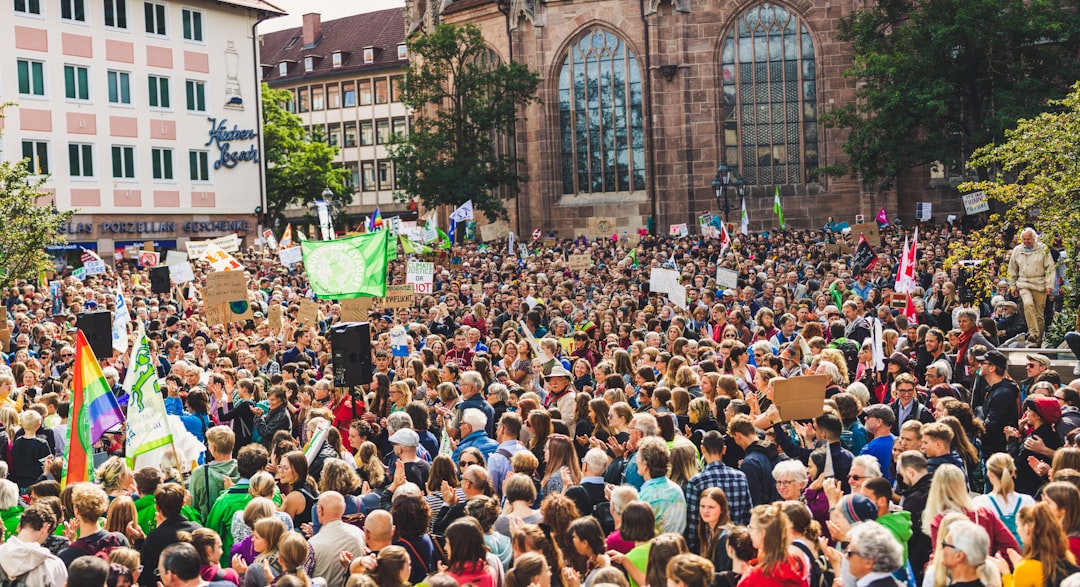
Photo by Markus Spiske on Unsplash
Sarah Chen used to believe her father was just doing his job. For thirty-two years, he worked as a senior lobbyist for one of America's largest pharmaceutical companies, arriving at Capitol Hill each morning with leather briefcase in hand and a rolodex of congressional contacts that would make most political operatives weep with envy. She watched him win awards at industry dinners. She listened to him explain, patiently, why certain regulations were "unreasonable" or how "the market would self-correct" if politicians would just listen to reason.
Then she became a lawyer. Then she read the actual data.
The Education of an Industry Kid
Growing up as a lobbyist's daughter meant certain things were simply understood. Her father traveled constantly. He knew senators by their first names. Their home in Arlington was filled with photos from fundraisers and charity galas—her dad shaking hands with famous politicians, always smiling, always connected.
"I thought he was helping people understand complicated issues," Chen recalls during our conversation at a coffee shop in Washington, DC. She's careful with her words, choosing them deliberately. "I genuinely believed that. When you grow up around something, it becomes normal. Your parent isn't corrupt—they're just... connected. They're important."
That worldview started cracking when she took a position at a government accountability nonprofit in 2019. For the first time, she began seeing the actual mechanisms of influence rather than the polished narrative she'd absorbed her entire life. She saw the same pharmaceutical companies her father represented blocking cheaper insulin imports. She saw drug prices that had tripled in a decade while senators who'd received donations from those companies blocked reform measures.
She saw the mechanism. And she couldn't unsee it.
Following the Money Through the Maze
The specifics of what Chen discovered are eye-opening, though her story isn't unique—it's just rarely told from the inside. According to the Center for Responsive Politics, pharmaceutical and health product companies spent $307 million on lobbying in 2022 alone. That's not campaign contributions. That's money spent specifically on hiring people to influence legislative outcomes.
When Chen cross-referenced her father's client list against voting records, the pattern became undeniable. A senator he'd donated to personally opposed a price-control amendment. Another congressman he'd taken to golf tournaments suddenly became vocal about "market interference." The correlations weren't always perfect—they weren't stupid about it—but they were consistent enough that any competent analyst could spot them.
"What struck me most wasn't the shadiness," Chen explains. "It was the normalcy of it. These aren't cartoon villains. They're people at charity events with their families. They genuinely believe they're advocating for important business interests. But they're doing it with money and access that ordinary citizens don't have. That's the actual corruption—not individual bad actors, but a system that's structurally designed to give certain voices more power."
She started keeping detailed records. Drug price votes. Lobbying expenditures. Meeting schedules that she obtained through FOIA requests. Donations. The data built a picture that was damning in its specificity.
The Family Rupture
Chen didn't go public immediately. She tried something harder first: she tried to talk to her father.
"I invited him to lunch and laid out what I'd found. I thought he'd want to know—that there might be something he didn't realize about the impact of his work." She shakes her head, remembering. "He listened politely for about ten minutes, then told me I was being naive. That I didn't understand how government actually works. That every industry needs representation."
He wasn't entirely wrong about that last part. Every industry does need representation. But there's a difference between representation and the kind of disproportionate access that money buys. That was the line her father wouldn't cross in his thinking—the acknowledgment that this system creates inequality in political voice itself.
When Chen eventually published her findings through a nonprofit watchdog organization in 2021, her father's response was swift and final. She received an email—not a call, an email—saying the family felt she'd betrayed them. Her mother, whom she was close to, stopped responding to texts. Her brother, who worked in finance and understood that corporations existed to maximize profit, didn't defend her publicly.
"That was the price," Chen says quietly. "I knew it might be. But knowing and experiencing are different things."
What Changed, and What Didn't
It's been four years since Chen's report made minor waves in political reform circles. A few articles got written. Some advocates cited her work. One state legislature used her methodology to examine its own pharmaceutical lobbying dynamics. But her father still works as a lobbyist. The system remains fundamentally unchanged.
This is perhaps the most important part of her story—not because it's depressing, but because it's honest. Whistleblowing doesn't always lead to systemic change. Sometimes it just costs you your family while the machinery grinds on.
Yet Chen hasn't returned to her father's world or abandoned her conviction. She now directs research efforts for an organization focused on campaign finance reform, work that occasionally puts her in rooms where her father's industry has a seat at the table. She doesn't confront them. She just documents everything carefully.
"People always ask if I regret it," she says. "If I regret losing my family over this. And honestly? Some days yes. But the alternative was knowing exactly how the system works and choosing to benefit from it anyway. I couldn't do that. Not once I understood."
That's the real story buried beneath the scandal. It's not about one person exposing corruption. It's about how systems that concentrate power can fracture the people within them, forcing individuals to choose between connection and conscience. It's also a reminder that understanding how political power actually functions requires looking past the official narratives into the intimate spaces where influence is actually traded—and recognizing that those mechanisms affect real human beings in ways we rarely discuss.
Change is slow. But at least now we're being honest about the price it extracts.
Comments (0)
No comments yet. Be the first to share your thoughts!
Sign in to join the conversation.