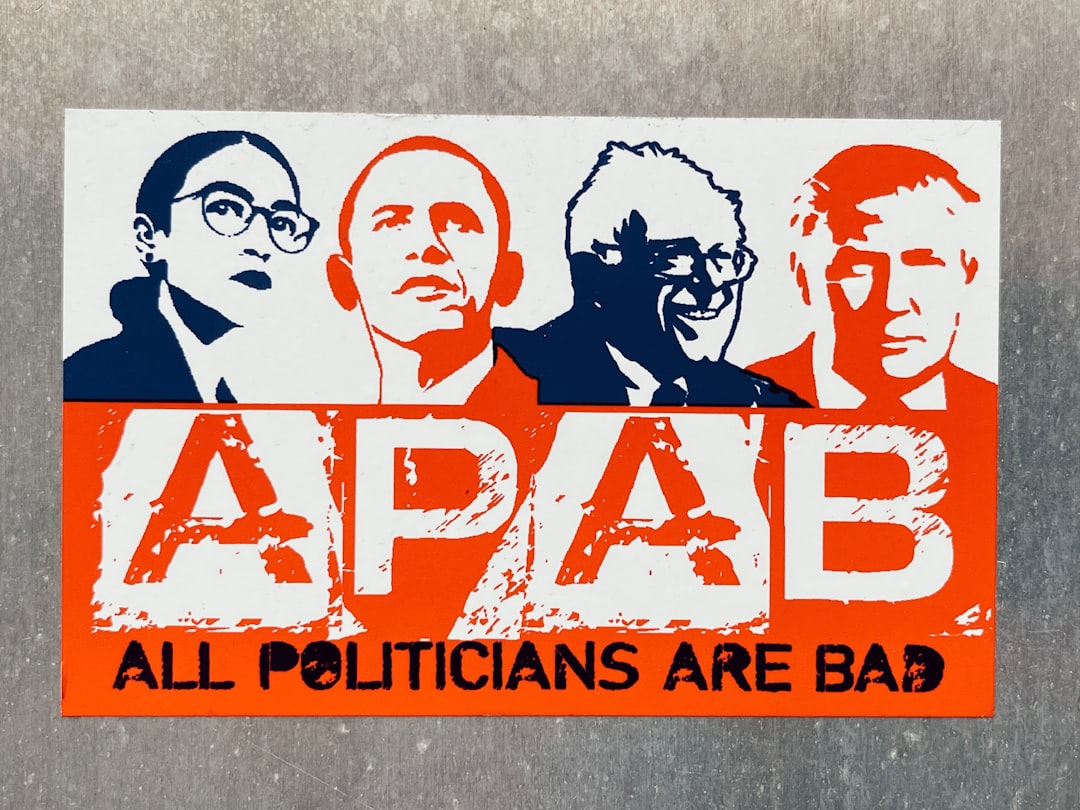
Photo by Jon Tyson on Unsplash
Nobody showed up to the Kansas statehouse on a Tuesday afternoon in March 2023 when legislators voted to require photo ID for mail-in voting. The chamber was half-empty. Local news stations didn't run segments. Twitter barely noticed. Yet this single vote—one of hundreds happening simultaneously across state capitols—represents a profound shift in American democracy that most voters have completely missed.
The real battle for American democracy isn't happening on CNN or in the halls of Congress. It's happening in statehouse corridors, county clerk offices, and state supreme courts where partisan majorities are methodically rewriting the rules of how we vote, who can vote, and whose votes matter.
The Great Dismantling: Voting Restrictions Accelerating
Since 2020, Republican-controlled legislatures have passed voting restrictions at an unprecedented pace. We're not talking about isolated incidents. The Brennan Center for Justice documented that 34 states passed 88 new voting restrictions between 2021 and 2023 alone. That's more than one new restriction per state, every year.
Texas passed SB 1, which eliminated straight-ticket voting and reduced early voting periods. Georgia passed SB 202, which restricted ballot drop boxes and changed voter registration rules. Arizona tightened mail-in voting requirements. Florida made it harder for formerly incarcerated citizens to vote. North Carolina restricted early voting.
These aren't random policy tweaks. When you stack them together—requiring ID, reducing early voting windows, purging voter rolls, limiting drop boxes, making it harder to register—they create a cumulative effect. A 65-year-old retiree in rural Pennsylvania who doesn't drive and misses the single Saturday voting period now can't vote. A single mother working double shifts who relied on mail-in voting faces new obstacles. A newly naturalized citizen trying to register finds the deadline has passed.
"What we're seeing is a systematic effort to make voting harder for certain groups," says Michael Li, an expert on election law who has tracked these changes for over a decade. The patterns are undeniable: restrictions disproportionately affect Black voters, young voters, and voters in urban areas.
The Gerrymander's New Dimension: Surgical Precision
Gerrymandering isn't new. Politicians have been manipulating district lines for over 200 years. But modern technology has turned it into a science that makes past efforts look quaint.
In 2022, North Carolina Republicans used advanced mapping software and voter data to redraw congressional districts so precisely that Democrats would need to win statewide elections by nearly 10 points just to win a majority. They didn't hide it. Republican state senator Ralph Hise literally said: "I think electing Republicans is better than electing Democrats. So I drew this map to help elect Republicans."
The result? In 2022, Democrats won 51% of votes cast for Congress in North Carolina but won just 4 of 14 seats. Let that sink in. A slight majority of voters got one-third of the representation.
States controlled by Democrats do this too—Illinois and Maryland are often cited as examples. But Republicans control more state legislatures, so they've executed this strategy at scale. After the 2020 census, Republicans had the ability to redraw maps in states that contain about 187 million Americans. Democrats controlled maps affecting about 73 million.
Technology makes this worse. Gerrymandering software can now analyze thousands of demographic variables simultaneously, creating districts that are mathematically designed to prevent electoral competition. In some states, nearly 100% of congressional seats are now considered "safe" for one party or the other. Your representatives choose their voters before voters choose them.
The Takeover: When State Courts Become Campaign Weapons
Here's what keeps election lawyers awake at night: state supreme courts are increasingly being weaponized for partisan advantage.
In 2022, Wisconsin's state supreme court flipped from 5-2 conservative to 4-3 liberal in a single election. The difference? Voters turned out specifically to protect abortion rights and voting access. But this also meant the court would likely hear challenges to the state's gerrymandered congressional maps.
Across the country, state supreme court elections are now treated as proxy battles for national politics. In 2024, North Carolina held a state supreme court election that was nationally funded by out-of-state money flowing into a race for a seat that typically attracted no outside attention. Abortion rights, voting access, gerrymandering—all were on the ballot, disguised as a local judicial race.
The stakes are enormous. State courts interpret state constitutions, and some state constitutions actually provide stronger voting protections than the federal Constitution. But if those courts are packed with partisan justices, those protections become meaningless.
Why Washington Is Missing This Story
Federal politicians talk about voting rights constantly. President Biden promised voting rights legislation. Congress argues about the Voting Rights Act. But here's the uncomfortable truth: Congress can't unilaterally stop most of what states are doing because states have significant power over elections under the Constitution.
This creates a dangerous asymmetry. One party can systematically limit voting access, gerrymander ruthlessly, and elect partisan judges in 30 states while the other party watches helplessly from Washington. The party that controls state government has tremendous ability to entrench itself.
Meanwhile, most Americans remain completely unaware. A 2022 survey found that 60% of Americans couldn't name a single voting restriction passed in their state. People are outraged about federal politics while the actual machinery of democracy is being dismantled quietly in state capitols.
The Resistance and What Comes Next
Some states have pushed back. California, New York, and Virginia created independent redistricting commissions to prevent gerrymandering. Arizona and Colorado did the same. Some states have strengthened voting access during the same period Republicans restricted it.
But the momentum is clearly one direction. State legislatures—particularly those controlled by one party with significant majorities—have been systematically restructuring electoral rules in ways designed to prevent power from changing hands.
This isn't conspiracy thinking. These are public votes, public court decisions, and public policy changes. They're just happening at a scale and speed that most voters haven't noticed.
If you care about democracy, the advice is uncomfortable: pay attention to your state elections. Show up for state supreme court races. Learn about your state legislature, not just federal Congress. Understand who controls redistricting in your state. Because that's where the fight is actually happening.
For more insight into how policy changes affect your rights, check out The $50,000 Mistake: Why Your Side Hustle's Tax Bill Will Devastate You (And How to Stop It) to understand how policy changes directly impact your life.
Comments (0)
No comments yet. Be the first to share your thoughts!
Sign in to join the conversation.