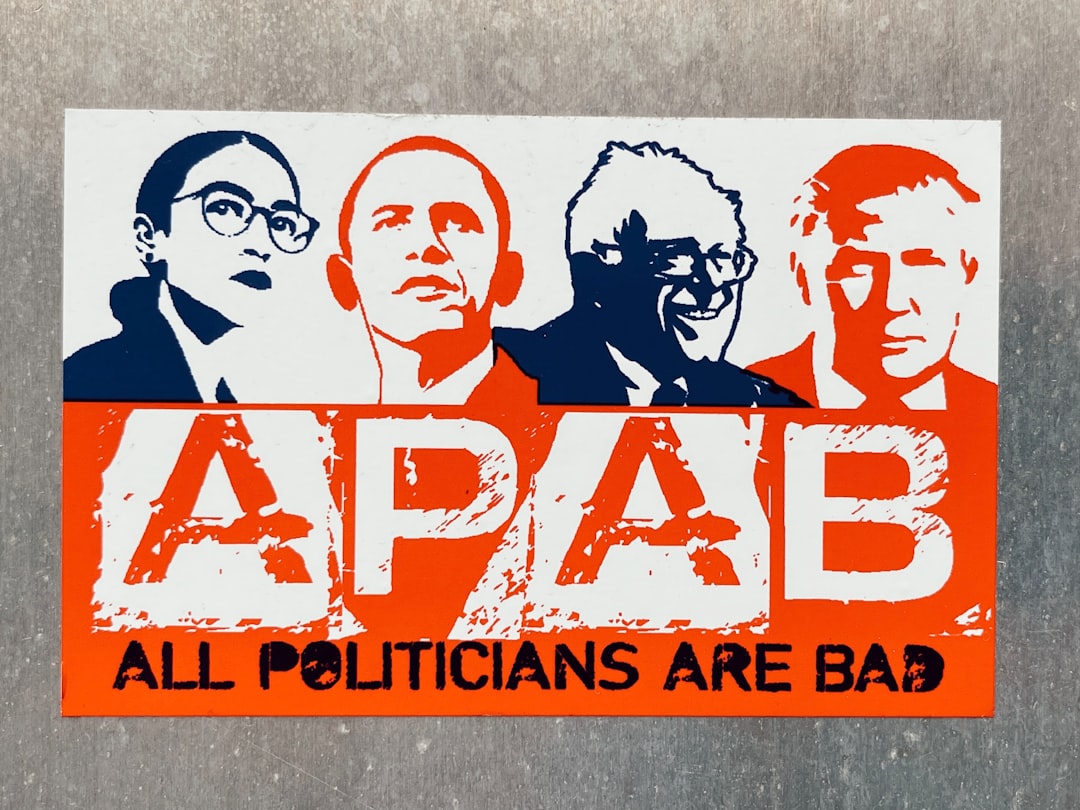
Photo by Jon Tyson on Unsplash
Ask Senator Kyrsten Sinema about her mail. The Arizona Democrat, once celebrated for her bipartisan dealmaking, now receives letters calling her a traitor. Her crime? Refusing to eliminate the Senate filibuster. She'd worked with Republicans on infrastructure. She'd voted against her party on Biden's spending agenda. By 2024, she'd had enough and left the Democratic Party entirely, becoming independent.
Sinema's story isn't unique anymore. It's becoming the norm.
Across America, politicians who dare to occupy the center ground are facing an existential crisis. They're attacked from both sides, abandoned by party leadership, and increasingly squeezed out by an electoral system that punishes compromise. The moderate politician—once a fixture in American governance—is becoming extinct.
The Primary Problem That Started It All
The trouble began with how we pick nominees. In most American elections, primaries determine everything. But here's the catch: primary voters are rarely representative of the general population. They're more ideological, more engaged, and significantly more partisan than average Americans.
This creates a brutal incentive structure. A Republican primary voter in South Carolina looks very different from a general election voter in South Carolina. The primary voter is more conservative, more religious, and more skeptical of government. A Democrat in a blue-state primary is more progressive, more secular, and more activist-oriented than the typical Democratic voter.
A moderate candidate trying to win a primary faces an impossible equation. Run to the center and lose to a more ideologically pure opponent in round one. Run to the ideological wings to win the primary and face an exhausted, polarized image in the general election.
That's why we've watched moderates disappear. Between 2010 and 2020, the number of moderate House members dropped by nearly 40 percent. The trend accelerated further in 2022. Members like Liz Cheney, Adam Kinzinger, and Tom Rice—all Republicans who voted to impeach Trump—faced primary challenges so brutal that some simply retired rather than fight.
Social Media's Role in the Hunting Season
Television and newspapers once acted as filters. A politician making controversial statements might get called out by a local journalist or a competing politician, but the message didn't spread instantly to millions. There was friction. There was time for context.
Social media obliterated that friction. Now, a single vote, a single statement, a single moment of perceived disloyalty gets recorded, edited, weaponized, and distributed to hundreds of thousands of activists before the politician can even explain their reasoning.
When Senator Joe Manchin of West Virginia suggested he couldn't support a voting rights bill without Republican backing, progressive activists had attack ads funded and running within 72 hours. When moderate Republicans met with Biden to discuss infrastructure, right-wing media was already painting them as sellouts before the ink dried on the agreement.
The incentive is clear: moderates are visible targets. They can't hide behind party unity. They can't claim to be fighting the good fight with uncompromising conviction. They're constantly vulnerable to accusations of betrayal from either side.
The Money Follows the Extremes
Campaign funding has shifted dramatically. Grassroots donors—energized by partisan media, cable news, and social platforms—now constitute a larger share of campaign cash than ever before. And those donors aren't funding moderates.
According to FEC data, politicians in the ideological extremes of both parties raise significantly more from small-dollar donors than their moderate counterparts. Alexandria Ocasio-Cortez and Marjorie Taylor Greene might be on opposite ends of the spectrum, but they're both fundraising powerhouses precisely because they excite their bases.
Moderates, meanwhile, have to rely more heavily on big donors and establishment funding—which brings its own problems. It makes them look like corporate puppets to primary voters. It undermines their message about independence and principle.
Some moderates have found success by embracing local funding and grassroots organizing on their own terms. But it's exhausting. It's a constant uphill battle against structural forces pushing toward the poles.
What Gets Lost When the Middle Disappears
The practical consequences are significant. Congress has become less productive. The number of bipartisan bills has plummeted. Budget negotiations that once happened through compromise now happen through brinksmanship and brinkmanship. We nearly defaulted on our debt multiple times in the past decade—something that would have been unthinkable in an era when moderates controlled the terms of negotiations.
Moderates were the translators between the parties. They understood what was non-negotiable for their side and what could be compromised. They had relationships across the aisle. They knew how to find common ground because they actually believed common ground existed.
Without them, governance becomes a zero-sum game. Everything is an existential threat. Every compromise is surrender. The temperature of political discourse rises because there's no one in the middle saying, "Hey, we can actually work with these people."
This helps explain how state legislatures are quietly rewriting democracy—when extremists control both parties, the space for defending democratic norms shrinks dramatically.
Can the Middle Survive?
There are some signs of hope. Ranked-choice voting, adopted in Maine, Alaska, and several local jurisdictions, seems to create more space for moderate candidates. Open primaries, where voters of any party can participate, have similarly moderated outcomes in some states.
A few politicians have found success by owning their moderation rather than apologizing for it. Jon Tester of Montana, despite being a Democrat in a red state, has survived because he's rooted his centrism in his specific state's values. He's not splitting the difference for the sake of it—he's representing Montana.
The question is whether structural reforms can spread fast enough. Because right now, the math is brutal. For every Joe Tester, there's a dozen Kyrsten Sinemas—smart, well-intentioned politicians who realize the system is designed to punish people like them.
Until the incentives change, the moderate politician will remain an endangered species. And that should worry anyone who believes that representative democracy requires people willing to listen, compromise, and acknowledge that the other side might have a point.
Comments (0)
No comments yet. Be the first to share your thoughts!
Sign in to join the conversation.