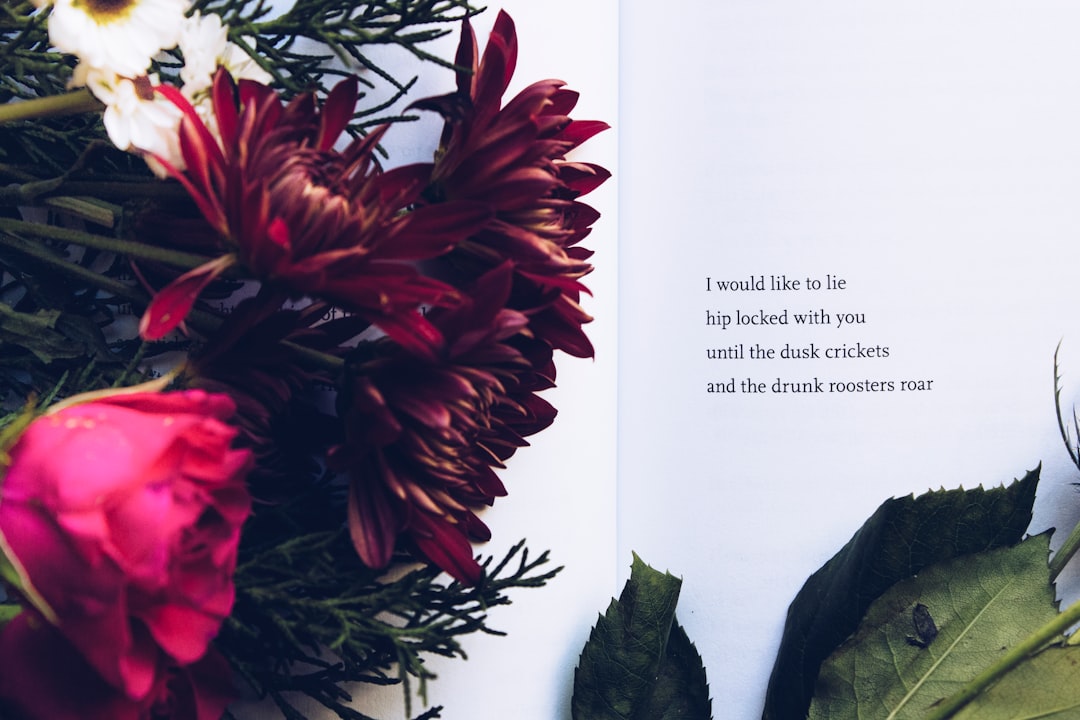
Photo by Thought Catalog on Unsplash
Last month, I attended a reading by a contemporary poet whose work made me genuinely angry. The lines didn't connect. The syntax twisted back on itself. Metaphors collided without resolution. I left the venue convinced I'd wasted an evening, only to find myself rereading the published poem six times over the next week. By the seventh read, something shifted. The confusion wasn't a barrier to meaning—it was the meaning itself.
This experience haunts literary circles everywhere. Readers approach modern poetry with the same trepidation mountaineers reserve for avalanche terrain. And yet, poetry sales have climbed 38% since 2010, with experimental and avant-garde collections showing some of the strongest growth. Something is drawing people toward the very difficulty they claim to resent.
The Tradition of Difficulty
Obscurity in poetry isn't new. T.S. Eliot's "The Waste Land" arrived in 1922 as a cultural bombshell partly because readers felt collectively gaslit—was this really poetry, or was Eliot simply showing off? The poem's fragmented structure, its collage of languages and mythological references, made it nearly impenetrable to average readers. Critics called it incomprehensible. Universities built entire departments around explaining it.
Ezra Pound, writing in the same era, created work so densely allusive that scholars still argue about its meanings. His "Cantos" spans over 800 pages and references history, economics, Chinese philosophy, and obscure medieval texts with equal weight. Pound wanted readers to work for comprehension. He believed that ease was a form of intellectual laziness.
But here's what's crucial: these poets weren't trying to be difficult for difficulty's sake, despite what their reputations suggest. Eliot was attempting to capture the fractured consciousness of post-war trauma. Pound believed the complexity of modern life demanded a formal response. Their difficulty was purposeful, even if that purpose remained hidden behind layers of allusion and fragmentation.
The Language Poetry Movement Changed Everything
Skip forward to the 1970s and 80s. A group of poets including Lyn Hejinian, Ron Silliman, and Steve McCaffery decided that conventional syntax itself was the problem. They called themselves Language poets, and they believed that the very structure of standard English grammar reinforced capitalist ideology and limited consciousness.
So they broke grammar. They scattered words across pages. They created texts where meaning had to be actively constructed by each reader rather than delivered by the poet. Hejinian's "My Life" is a masterclass in this approach—a prose poem where chronology dissolves, sentences interrupt themselves, and clarity is deliberately withheld.
"The reader is not meant to be passive," Silliman wrote in his influential essay collection "The New Sentence." "They're meant to be active producers of meaning, not consumers of it." This philosophical shift changed how we think about what poetry could do. It wasn't about delivering emotion or narrative. It was about creating an experience of reading itself.
Why Readers Actually Want This
The counterintuitive part? People seem hungry for this challenge. When Ocean Vuong published "Night Sky with Exit Wounds" in 2016—a collection marked by unconventional syntax and complex emotional registers—it became a bestseller. Young readers filled social media with posts about struggling through the opening poems and then feeling transformed. The book became a fixture on MFA workshop syllabi and indie bookstore displays.
Maggie Smith's 2017 collection "Goldenrod" offered more traditional accessibility, yet Vuong's denser work resonated more widely with readers under thirty. There's a generational shift happening. Digital natives, accustomed to processing multiple information streams simultaneously, seem less bothered by fragmented or non-linear narratives. They're comfortable with ambiguity.
But there's something else operating too: difficulty functions as a status signal. Reading obscure poetry and claiming to understand it offers intellectual legitimacy. This has always been true, and it's worth acknowledging without judgment. We've all felt the small thrill of comprehending something that seemed impenetrable moments before. That moment of breakthrough is genuinely pleasurable.
The Backlash and the Middle Ground
Not everyone celebrates this trend. Poet Dana Gioia sparked considerable debate in a 1991 essay titled "Can Poetry Matter?" arguing that difficulty had become poetry's greatest enemy. By making their work inaccessible, poets had ceded readers to other forms of art. Poetry had become insular, written by and for academics in creative writing programs.
This criticism stung because it contained truth. The average reader encountering contemporary poetry in The New Yorker or a literary journal often feels like they're missing essential context. Contemporary poetry has fractured into specialist communities with different formal commitments and aesthetic philosophies. A reader devoted to narrative poetry might find experimental work incomprehensible. A Language poet might find formal metered verse aesthetically exhausted.
The healthiest contemporary poetry scene embraces this plurality rather than treating it as a problem. Poets like Ada Limón manage to achieve accessibility without sacrificing sophistication. Her work is clear and direct, yet emotionally complex. She proves that difficulty and accessibility aren't opposed forces.
Finding Your Way Through
If you're intimidated by contemporary obscure poetry, consider this framework: stop looking for meaning as something the poet deposits for you to retrieve. Instead, notice what the poem's form and structure make you feel. Notice where your attention goes. Notice where you feel confused, and ask why that confusion exists. Is it because the poet hasn't been clear enough, or because clarity wasn't their goal?
Read difficult poems multiple times. The first read is almost never the right read. Read them aloud. Listen to how words sound together, regardless of whether you understand their logical connection. Sometimes meaning emerges from rhythm and sound rather than semantic content.
This approach applies to understanding poetry's formal innovations more broadly. The Enjambment Revolution: How Line Breaks Became Poetry's Most Radical Tool explores how poets use line breaks to create meaning and disruption. Understanding these technical choices helps illuminate why contemporary poets structure their work as they do.
The rise of deliberately obscure poetry isn't a problem to solve. It's an invitation to read differently, to think differently, to experience language as something more than a delivery system for pre-packaged meaning. Some readers will accept that invitation. Others won't. Both responses are legitimate. But dismissing difficulty outright means missing out on poetry that might genuinely transform how you experience consciousness itself.
Comments (0)
No comments yet. Be the first to share your thoughts!
Sign in to join the conversation.