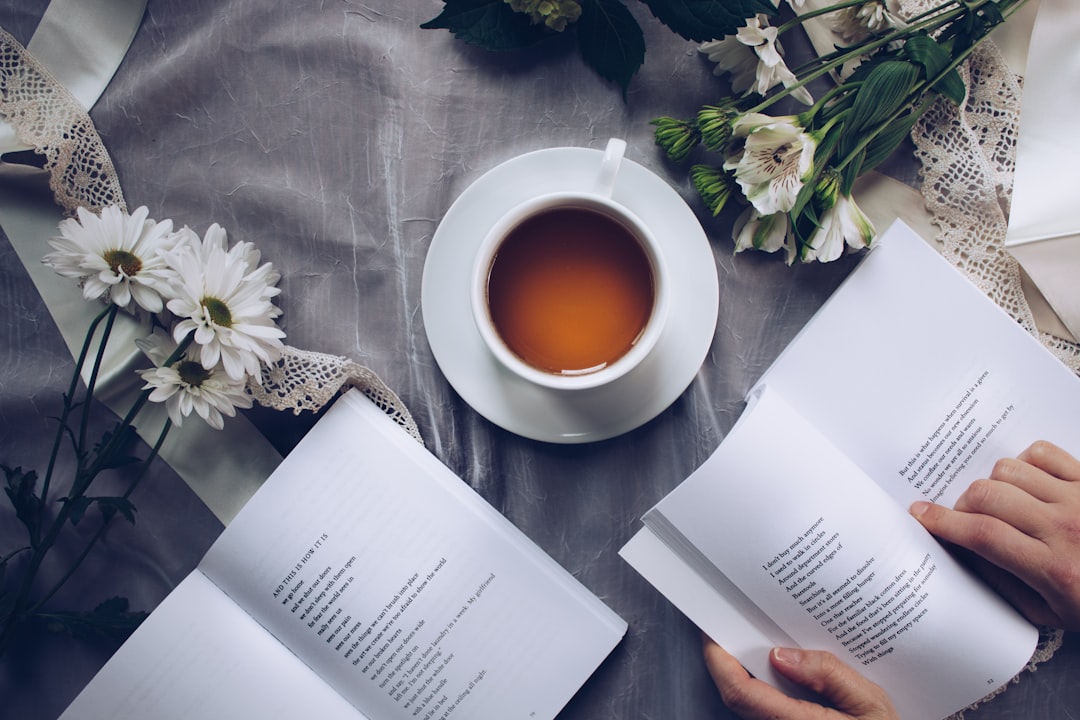
Photo by Thought Catalog on Unsplash
Most readers don't think about line breaks. They glance at a poem, absorb its words, and move on. But poets? Poets obsess over them. A single line break can transform a confession into a question. It can turn "I love you" into "I love / you"—and somehow make the second version feel more desperate, more true. This isn't overthinking. This is the entire revolution that modernism brought to poetry, and it's still reshaping how language works today.
The Old Rules and How Poets Broke Them
Before the twentieth century, line breaks were mostly servants of rhyme and meter. A line ended because the poem needed ten syllables before the next rhyme arrived. Punctuation and syntax marched together in neat formation. Poetry was orderly. Predictable. Safe.
Then T.S. Eliot, Ezra Pound, and their modernist contemporaries asked a dangerous question: what if we broke the rules intentionally? What if we made the form rebel against the content? The results were seismic. When a line break interrupts mid-phrase, it creates tension. The reader waits for completion. They hold their breath. This suspense—this tiny pause between lines—became a tool for emotional expression.
Consider these lines from William Carlos Williams's "The Red Wheelbarrow":
so much depends
upon
a red wheel
barrow
Read it without line breaks: "so much depends upon a red wheelbarrow." It's a complete thought, slightly poetic but functionally ordinary. But Williams's line breaks? They force you to isolate words. "Upon" stands alone. That single word becomes a fulcrum on which the entire poem balances. The form creates meaning the syntax alone never could.
Enjambment: The Heart of Modern Poetry
This technique—when a line break cuts through a grammatical unit and forces you into the next line—is called enjambment. The word comes from French, meaning "to stride over." You stride from one line into the next, unable to fully rest at the line's end.
Here's why poets love it: enjambment lets you control the reader's pace without controlling the words themselves. Sharon Olds demonstrated this masterfully in "The Victims," a poem about her parents' divorce. She writes:
When my father left, in the war, my mother
took me and my sister back to her parents'
house, and she read aloud
to us, nights, Chapter Books, Craig
Kennedy and the Ones
in the posse.
Notice how the line breaks don't correspond to the natural pauses in speech. "She read aloud / to us" splits the action. "Craig / Kennedy" breaks a proper name. These breaks create a staccato rhythm that mirrors the fragmentation of the speaker's childhood. The form enacts the content. You don't just understand the poem's subject; you experience it through the way your eye moves across the page.
Why This Matters Right Now
You might think this is an ancient debate, fought out decades ago. But enjambment is more relevant now than ever. Social media has rewired how we read. We scroll. We glance. Our attention fractures. Against this, poets using line breaks deliberately create friction. They force you to slow down. They demand presence.
Contemporary poet Ocean Vuong uses enjambment to explore identity and trauma. His book Night Sky with Exit Wounds is built on strategic line breaks that make readers sit with discomfort. A line might end with an ambiguous word that shifts meaning entirely when you see the next line. You're not passively consuming—you're actively constructing meaning with each line break decision.
This connects to something broader happening in poetry right now. Poets are using form and technique to capture the fractured nature of modern life, and enjambment is one of their primary weapons. When your experience feels discontinuous—jumping between work emails, family obligations, social media, actual human connection—poetry that breaks apart mid-thought starts to feel honest.
Enjambment Across Cultures and Voices
What's fascinating is that enjambment isn't exclusive to English-language modernism. Poets globally discovered it independently. In Spanish, Federico García Lorca used line breaks to create surreal juxtapositions. Japanese poets working with strict haiku forms found ways to subvert them through strategic line placement. The technique appears in Arabic, Hindi, and Portuguese poetry—proof that this isn't cultural colonization but a genuine discovery of form's power.
Lucille Clifton, one of America's greatest poets, used short lines and enjambment to create poems that feel like heartbeats or urgent whispers. Her poem "won't you celebrate with me" uses line breaks to make simple words feel monumental:
won't you celebrate with me
what i have shaped into
a kind of life?
The breaks prevent grammatical completion. "Shaped into" doesn't finish until the next line. We're held in a state of becoming, which is exactly the poem's point. Form and meaning fuse completely.
How to Use This in Your Own Reading and Writing
Next time you read a poem, pause at the line breaks. Ask yourself: why did the poet end here? What word or phrase gets isolated? How does the break change the meaning or emotional weight? You'll start seeing how poets craft experience through structure, not just through beautiful words.
If you write, experiment with enjambment. Take a sentence you've written and see what happens if you break it at an unexpected place. How does the new line break alter the rhythm? Does it reveal something hidden? The line break becomes a kind of conversation with your reader—a way of saying "wait here with me, look at this word differently."
Poetry's power has always lived in small moments: a precise word, a fresh image, a sound pattern. But the line break? It's the invisible architecture that holds everything together. It's been modernism's greatest gift to how we understand language. And the more our lives fracture across screens and competing demands, the more we need poems that acknowledge this fragmentation—that use form itself to mirror our broken, beautiful reality.
Comments (0)
No comments yet. Be the first to share your thoughts!
Sign in to join the conversation.