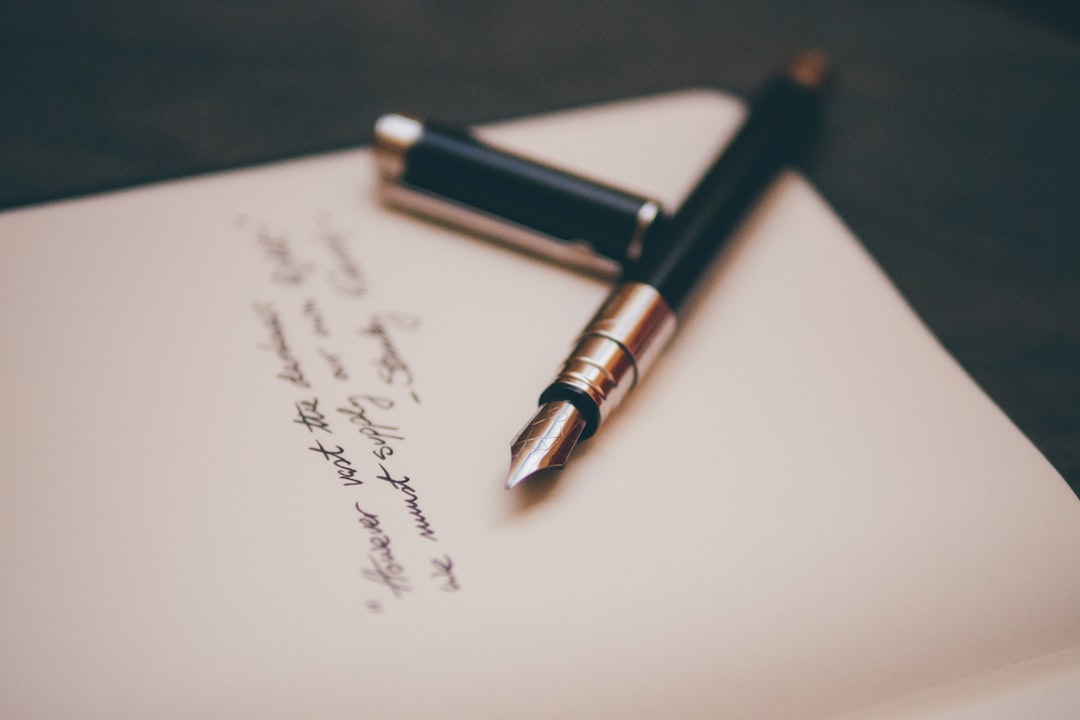
Photo by Álvaro Serrano on Unsplash
I've watched poets spend three years perfecting a single fourteen-line sonnet. Three years. They'll tinker with syllables, swap adjectives, agonize over whether "crimson" or "scarlet" better captures the dying light. The poem is genuinely beautiful when it's finally done. It's also practically worthless to their development as a writer.
This phenomenon isn't unique to poetry, but poetry makes it worse. Unlike novelists who can hide behind plot momentum or essayists who rely on argument, poets exist in a medium where every word carries visible weight. A single weak syllable ruins the whole thing. So we obsess. We perfect. We polish until our work becomes less like art and more like a museum piece—technically immaculate but somehow lifeless.
The problem is this: perfectionism and growth exist in inverse relationship to each other.
The Cult of Completion vs. The Necessity of Mess
Somewhere around 2008, I stopped showing anyone my work. I'd been writing poetry seriously for about five years, and I'd convinced myself that only perfect poems deserved an audience. My standards became so exacting that I finished maybe two poems a year. Those two poems were technically solid. They were also repetitive, safe, and weirdly detached from anything resembling genuine human experience.
Then I met a poet named James at a bar—not in that romantic MFA way, just an actual bar in Brooklyn where he happened to be reading. He showed me a notebook filled with what he called "garbage poems." Genuinely rough material. Messy line breaks, inconsistent metaphors, ideas that went nowhere. But scattered throughout were fragments of something alive. Real urgency. Real stakes.
"I write fifty terrible poems to get five okay ones," he told me. "The terrible ones teach me what doesn't work. The okay ones wouldn't exist without them."
This is what most aspiring poets misunderstand about the craft. The published poem you admire—the one that seems to have materialized fully formed—represents maybe 2% of the actual work. Behind it are drafts. Bad drafts. Drafts where the poet tried something that completely failed. Drafts where they swung for the fences and struck out catastrophically. Drafts where they discovered something about rhythm or image or vulnerability they never would have found while being cautious.
Mary Oliver, who wrote some of the most deceptively simple, perfect-seeming poems in American literature, kept journals filled with false starts and abandoned experiments. Sharon Olds talks about writing forty drafts of a single poem. Sylvia Plath's journals reveal a writer constantly trying new forms, new approaches, constantly failing. They didn't succeed because they were naturally talented at perfection. They succeeded because they were willing to be terrible repeatedly until they figured out what worked.
The Tyranny of the Finished Poem
Here's what happens when you commit to publishing only polished work: you become risk-averse. You stop experimenting. You stick with forms and subject matter you've already mastered because mastery feels safe. A poet I knew spent seven years trying to write a technically perfect villanelle. She succeeded. It won several contests. It was also her last poem—she quit writing shortly after, presumably because she'd achieved the goal.
This is the curse of completion. Each finished poem becomes a benchmark, and suddenly every subsequent poem has to meet that standard. The anxiety becomes paralyzing. You stop writing prolifically. You write carefully, strategically, defensively. Your voice narrows instead of expanding.
Compare this to prolific poets like Ocean Vuong or Ross Gay, who seem to publish new collections every few years. Their work varies wildly in approach, subject matter, and form. Some poems in their collections are obviously experimental. Some don't quite land. But this willingness to put imperfect work into the world—or at least to write imperfectly in their drafts—means they're constantly discovering new territory. Their later collections are dramatically different from their earlier ones because they weren't wedded to proving a point about their talent.
Permission to Fail Spectacularly
The practical question becomes: how do you actually stop obsessing over perfection?
First, separate your drafting process from your publishing decision. Write rough. Write badly. Write lines that make you cringe. The permission to be terrible in a private notebook is what enables growth. I now keep two separate folders: "raw material" and "submittable work." The raw material folder is where poems go to be born ugly. It's filled with poems that are 40% finished, 60% finished, or headed in three different directions simultaneously. The submittable work folder contains pieces that have been considered carefully enough to face external judgment.
The magic happens in that raw folder. It's where poets actually learn. Not from writing perfect poems. From writing imperfect ones repeatedly until their hand and ear figure out what works.
Second, remember that sharing early-stage work doesn't require publishing it. A workshop or writing group serves this function. You get feedback on messy material without the permanence of publication. You learn what readers actually respond to versus what you thought they would. You discover that the line you agonized over for two hours means almost nothing to anyone else, while the throwaway image you barely noticed lands with real power.
Third—and this is harder—accept that some of your work will be imperfect in public. Start a blog. Maintain a social media presence where you share rough drafts. Submit to smaller journals or anthologies where the stakes feel lower. The poets who are still writing and improving in their fifties are invariably the ones who got comfortable with people seeing their work in progress. They didn't wait for permission to be good enough.
The Hidden Curriculum of Failed Poems
A failed poem teaches you more than a successful one. Success feels good but teaches you almost nothing except that you can repeat what you already know how to do. A poem that doesn't work—really doesn't work—forces you to diagnose the problem. Is it the image? The pacing? The rhythm? Are you being honest? Are you hiding behind technique? These questions make you a better poet.
There's also something psychologically important about failing and surviving it. The first time you put mediocre work into the world and nothing terrible happens—no one dies, you don't lose your job, the poetry gods don't smite you—something shifts. The stakes become clearer. You realize that perfectionism wasn't actually about quality. It was about fear. And once you separate those two things, you're free.
If you're serious about understanding how technical craft elements like line breaks shape meaning, you need to write badly first. You need to experiment with enjambment without knowing if it works. You need to make mistakes with form and pacing before you can master them deliberately.
The poets worth reading—the ones who still matter decades after publication—aren't the ones who got it perfect on the first try. They're the ones who wrote constantly, published willingly, and stayed humble enough to keep learning. Start writing more. Publish earlier. Embarrass yourself in print. That's where the real education begins.
Comments (0)
No comments yet. Be the first to share your thoughts!
Sign in to join the conversation.