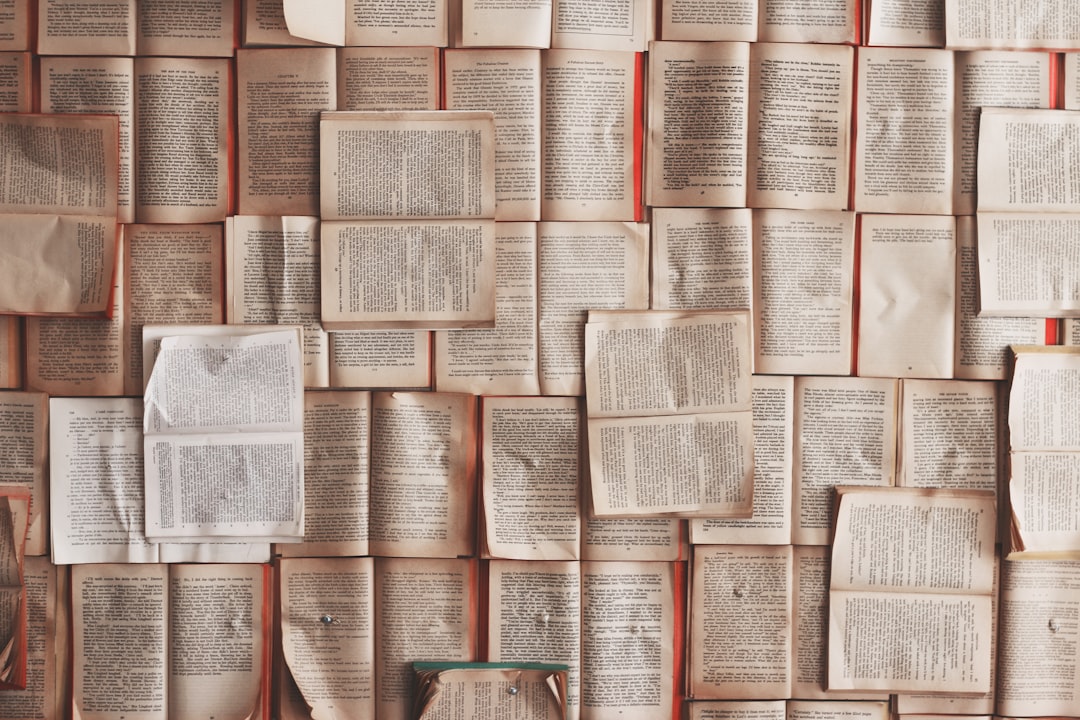
Photo by Patrick Tomasso on Unsplash
When Mary Oliver wrote "You do not have to be good," she wasn't just starting a poem. She was breaking every rule about how sentences should behave on a page. That line break—that sudden stop mid-thought—became the hinge upon which an entire emotional revelation turned. This is enjambment at its finest: the technique of running a grammatical phrase or clause over the line break into the next line, creating tension, surprise, and meaning that wouldn't exist if the words simply sat in a neat paragraph.
For centuries, enjambment lived in the shadows of poetry's more celebrated devices. Metaphor got the glory. Rhyme got the attention. But over the last two decades, something shifted. Poets began treating line breaks not as a stylistic choice but as the central nervous system of their work. They realized that enjambment does something prose can never do: it forces the reader's eye to move in a specific way, controlling not just what we read but how fast we read it, where we pause, and what weight we give each word.
When Form Becomes the Message
Here's what most people don't understand about poetry: the way a poem looks on the page is not decoration. It's argument. It's philosophy. It's the actual content, not just the container for content.
Take Claudia Rankine's "Citizen," a work that systematically dismantles the line break altogether, only to rebuild it in service of exposing racism in everyday interactions. Or consider Ocean Vuong's collection "Night Sky with Exit Wounds," where enjambment becomes a visual representation of fractured memory and displacement. These aren't poets being fancy. They're being precise. The line break is doing the labor that punctuation can't do alone.
A simple example makes this clear. Compare these two versions of the same thought:
Version 1: "She walked out the door and never came back."
Version 2:
She walked out
the door and never
came back.
In version two, something shifts. The reader pauses at "out"—does she go outside, or has she "walked out" as a protest? The enjambment creates ambiguity, hesitation, multiple meanings stacked on top of each other. That's not a bug. That's the feature.
The Physics of Reading
Neuroscientists have actually studied how our brains process line breaks, and the results are fascinating. When we encounter an enjambed line, our eyes move to the next line expecting the sentence to complete in a certain way. Instead, the poet has redirected us. Our brain has to recalibrate. This isn't just a reading experience—it's a physical interruption in how we process meaning.
Contemporary poet Maggie Smith has built an entire career on understanding this principle. In her poem "Good Bones," enjambment becomes a way to interrupt consolation itself. The poem tells us that the world is terrible, yes, but then—line break—maybe it's not entirely terrible. Maybe we should look anyway. The form mirrors the content: we're interrupted mid-despair, forced to reconsider.
This technique has exploded in popularity among poets working with trauma, grief, and identity. Why? Because enjambment mirrors the way these experiences actually feel. Fragmented. Non-linear. Incomplete. When poets like Ocean Vuong or Danez Smith use aggressive enjambment, they're not being experimental for its own sake. They're creating a formal equivalent of lived experience.
The Democratization of Difficulty
One of the strangest things about poetry's recent shift toward enjambment-as-central-technique is that it's made difficult poetry more accessible, not less. Instagram poetry accounts with millions of followers regularly feature heavily enjambed work. Gen Z readers who claim to "hate poetry" will still stop scrolling to read a poem that uses line breaks cleverly.
This might seem contradictory—shouldn't complex form create more distance between reader and poem? But here's what's actually happening: enjambment is visceral. It's visual. You don't need to understand literary terminology to feel it. You just need eyes and the basic ability to read.
The rise of performance poetry and spoken word has accelerated this phenomenon. When poets perform enjambed work aloud, the line breaks become moments of breath, hesitation, and emphasis. The audience feels the technique in real time. A poet can pause at an enjambment point, letting the silence speak, then deliver the next line with completely different emotional weight. It's theatrical without being pretentious.
This connects directly to something larger happening in contemporary poetry—the return to accessibility and clarity as revolutionary acts. poets are suddenly writing about their day jobs, refusing the myth of the isolated genius, and enjambment fits perfectly into this democratizing impulse. It's a technique you don't need years of MFA training to use or appreciate.
Breaking the Rules That Never Existed
The irony is that enjambment has always existed in poetry. It's as old as the form itself. But for much of the 20th century, it lived under strict rules. You enjambed a line break for a reason. You created meaningful ambiguity. You didn't waste the reader's attention.
Contemporary poets have essentially said: those rules? Burn them.
A new generation of poets, many of them poets of color, queer poets, and poets from working-class backgrounds, are using enjambment recklessly, playfully, even carelessly. They're proving that you don't need permission from the tradition to break its rules. You just break them and see what happens.
This is perhaps the most important shift: enjambment has moved from being a sophisticated literary device to being a foundational principle of how poetry actually works right now. It's the default rather than the exception. When a contemporary poet chooses NOT to use enjambment, that becomes the conscious choice, not the other way around.
The line break is where poetry lives now. Not in imagery, not in metaphor, not in the elevated language we once thought essential to the form. The real work happens in the white space between lines, in the reader's eye traveling down the page, in that fractional moment of uncertainty about what comes next. That's where meaning is made. That's where poetry does what nothing else can do.
Comments (0)
No comments yet. Be the first to share your thoughts!
Sign in to join the conversation.