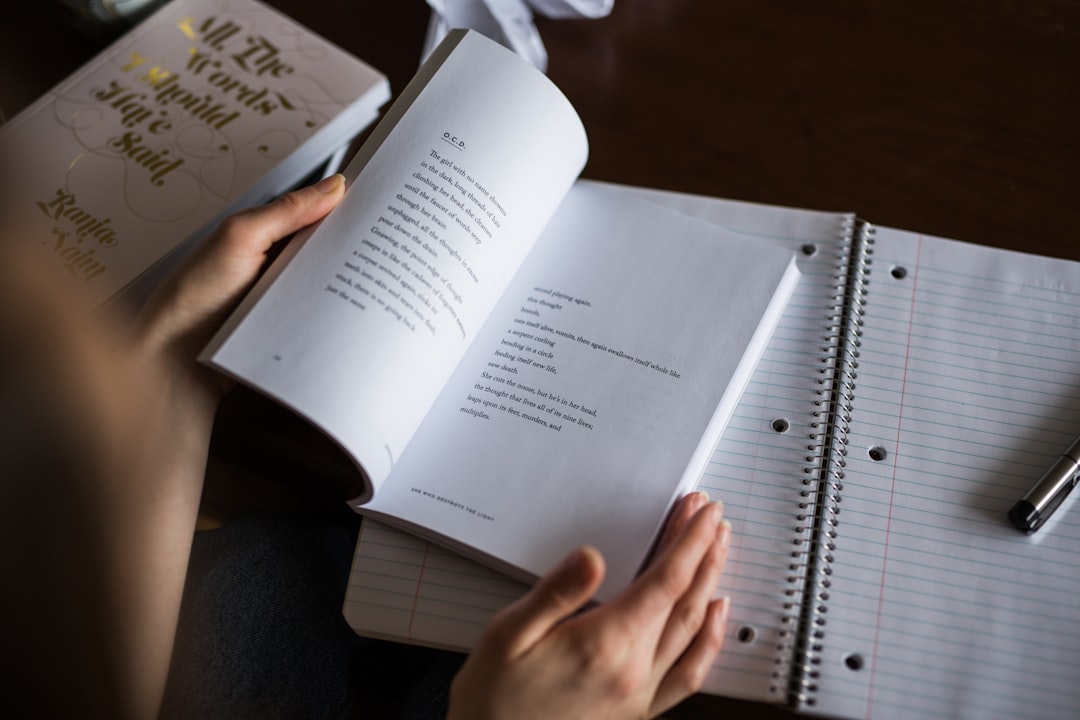
Photo by Thought Catalog on Unsplash
A teenager in Portland writes one at 2 AM about a breakup. A poet in Lagos crafts sonnets about climate anxiety. A retired teacher in Manchester publishes her first sonnet collection at seventy-three. The sonnet—that supposedly ancient, dusty form from the Renaissance—is experiencing something that feels less like a revival and more like a resurrection that nobody expected.
When I first noticed this trend, I dismissed it as nostalgia. Surely young poets were just playing dress-up in historical garments. But the more I paid attention, the more I realized something genuinely interesting was happening. The sonnet's rigid structure—exactly fourteen lines, typically in iambic pentameter, with specific rhyme schemes—wasn't constraining modern voices. It was liberating them.
Why Constraints Breed Creativity
There's a counterintuitive psychology at work here. You'd think that asking a poet to work within strict formal requirements would stifle innovation. Instead, the opposite occurs. When you know you have exactly fourteen lines to express something, every word becomes precious. Every line break matters. You can't afford filler.
Poet Ocean Vuong, whose work has reached millions beyond traditional poetry audiences, has spoken about how formal constraints actually freed him to say dangerous things. The form becomes a container—and sometimes, the most explosive emotions need containers to make them explode properly. Without walls, a shout just dissipates. With walls, it echoes.
Consider the numbers: According to a 2023 survey by the Academy of American Poets, sonnet submissions to literary journals increased by 34% over the past five years. This isn't marginal growth. This is a genuine shift in what poets want to write and what editors want to publish. Online communities dedicated to sonnet-writing have exploded—Reddit's r/Sonnets has grown from 2,000 members in 2019 to over 31,000 today.
The Modern Sonnet: Form Meets Content
But here's what makes contemporary sonnets different from their Shakespearean ancestors: they're not pretending to be about courtly love anymore. Modern sonneteers are writing about Grindr dates, student debt, police brutality, and pharmaceutical side effects. They're keeping the form but radicating the content.
Take the work of poet and educator Stephanie Burt, who has written extensively about how the sonnet form works particularly well for addressing identity and transformation—experiences that feel simultaneously ancient and urgently contemporary. A sonnet about transition, about racism, about grief, carries a weight that free verse sometimes struggles to achieve. The formality paradoxically makes the personal feel more universal.
One particularly brilliant example comes from poet Aracelis Girmay's collection "Black Life," where she uses the sonnet form to explore intimacy and community in ways that feel anything but historical. The lines are contemporary in syntax and reference, yet the structure gives them an almost liturgical quality—as if these urgent modern concerns deserve the same formal respect we've always given to poems about love and loss.
What's fascinating is how the form actually helps with the emotional weight. A sonnet about heartbreak gets to its volta—that critical turn that happens around line nine—and suddenly you're in a different emotional space. The form doesn't just hold the feeling; it shapes how that feeling transforms. It's built-in architecture for processing.
Breaking the Rules Without Breaking the Form
Of course, not every contemporary sonnet follows the rules perfectly. Some poets use fourteen lines but abandon iambic pentameter entirely. Others keep the meter but play with rhyme schemes. Some adopt the form so loosely that calling them sonnets feels generous. And that's actually healthy.
This flexibility mirrors what happened in other art forms. Jazz musicians didn't destroy the twelve-bar blues—they deconstructed it, rebuilt it, made it their own. Contemporary sonneteers are doing the same thing. They're using the form as a jumping-off point rather than a prison.
For a deeper exploration of how poets are using traditional structures in revolutionary ways, check out The Enjambment Revolution: How Line Breaks Became Poetry's Most Radical Tool, which examines how poets use visual structure to challenge reader expectations.
Young poet and TikTok creator Rupi Kaur (different from the more famous poetry TikTok creator, but part of the same phenomenon) has spoken about how the sonnet's constraint actually helped her reach people who don't typically read poetry. There's something about the familiarity of the form—people recognize it, even if they can't articulate why—that makes the poetry feel more accessible, not less.
Why Now? Why the Sonnet?
The timing matters. We live in an era of infinite scroll, of fragmented attention, of constant input. In that context, the sonnet's bounded form feels like an act of rebellion. Fourteen lines. A beginning, middle, and end. A statement that some things deserve a complete thought, fully formed.
There's also something specifically appealing about a form associated with love—whether romantic, spiritual, or communal—when we're collectively grieving, isolated, and searching for connection. The sonnet has always been a form about intimacy. That feels necessary right now.
As we move further into the twenty-first century, it seems clear that the sonnet won't disappear. Instead, it will continue to evolve, absorb new voices and concerns, and prove that formal poetry isn't some historical artifact. It's a living, breathing tool that poets keep reaching for because it works. Because sometimes, the best way to say something urgent is to say it within carefully chosen boundaries. Because constraints, properly understood, aren't limitations—they're invitations to be precise, to be powerful, and to be heard.
Comments (0)
No comments yet. Be the first to share your thoughts!
Sign in to join the conversation.