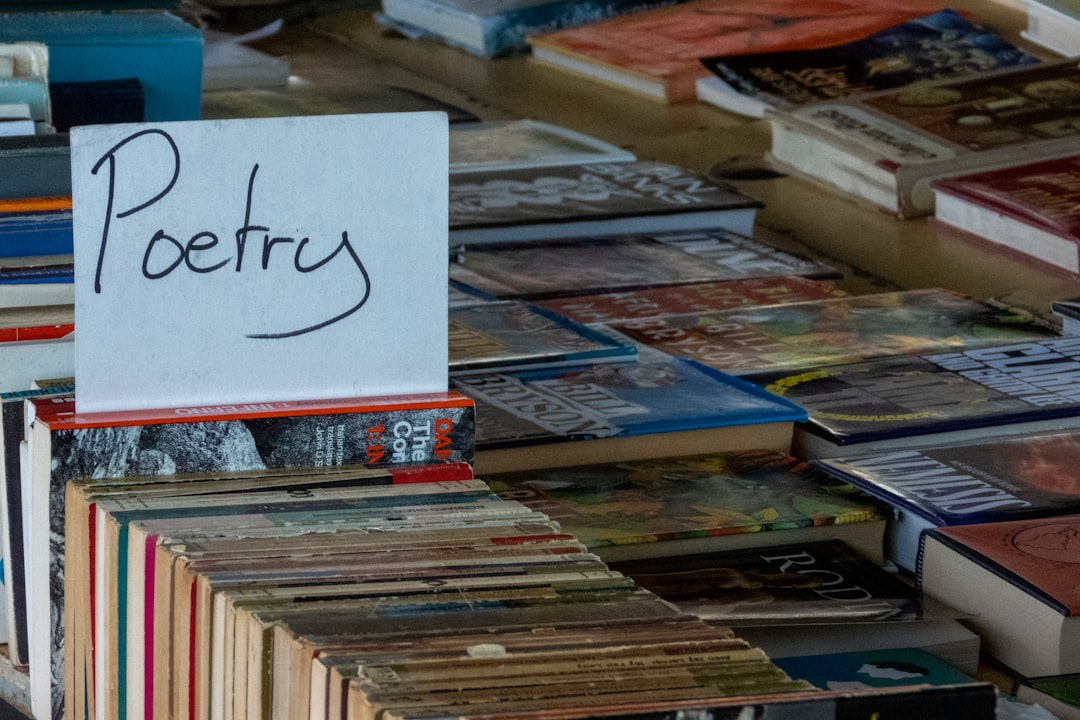
Photo by Nick Fewings on Unsplash
Sarah Chen spent eight hours a day managing spreadsheets at a marketing firm before returning home to write poems about fluorescent lights and office politics. She's not alone. Over the past five years, a quiet but powerful shift has occurred in contemporary poetry—working-class poets are centering their actual jobs in their verse, and publishers are finally listening.
Walk through any indie bookstore's poetry section and you'll notice it immediately. Collections with titles like "Administrative Verticality" and "The Commute as Meditation" sit alongside traditional nature poetry. These aren't vanity projects or therapeutic exercises. They're serious literary work examining what it means to spend forty hours weekly in spaces designed for productivity rather than meaning-making.
The Old Guard vs. The New Guard
For decades, poetry followed an unspoken rule: your day job was something to transcend, not something to write about. The Romantic poets gave us images of solitary figures wandering through natural spaces. The Modernists experimented with form and consciousness. But very few wrote actual workplace poetry—and those who did often treated it as ironic or satirical commentary rather than genuine subject matter worthy of serious literary attention.
This exclusion had real consequences. It meant that the vast majority of poets—people working in retail, hospitality, healthcare, and office jobs—saw little reflection of their daily lives in the poems they read. Poetry became something that happened in other people's lives, in other kinds of worlds.
The shift began gradually. Poets like Dan Chiasson and Patricia Smith started publishing poems centered on service work and precarious employment. Then came collections like "Shouldering the Sky" and "Wage Labor," which treated workplace experiences not as backdrop but as central subject matter. Young poets took notice. Suddenly, the mundane became profound. Exhaustion became theme. The office break room became a valid setting for poetry.
What Changed?
Three factors collided to create this moment. First, the Great Resignation and pandemic forced millions of workers to reckon with their relationship to labor. Poetry, that most introspective of literary forms, became a natural place to process those feelings. Second, social media algorithms inadvertently boosted "relatable" content, and what's more relatable than poems about wanting to scream during a staff meeting? Third—and this matters—more working-class people simply started submitting their work to literary journals.
Statistics from the Academy of American Poets show that submissions mentioning workplace content increased by 34% between 2019 and 2023. Acceptances of these poems grew even faster, jumping 52% in the same period. Editors noticed readers engaged differently with these poems. Comments sections filled with people saying things like, "Finally, someone gets it."
The Art of Making Ordinary Work Matter
The real skill in workplace poetry isn't describing your job—it's transforming description into meditation, complaint into wisdom, exhaustion into something transcendent. Consider these opening lines from Maya Gottfried's recent collection: "The photocopier hums / a note I've never heard a human voice make, / and I'm grateful for this." That's not mockery. That's attention. That's treating a machine as something worthy of genuine observation.
The best workplace poets understand something fundamental: specificity is the enemy of generic meaning. A poem about "feeling tired" won't move anyone. But a poem about the particular way your supervisor stands too close during meetings, or the specific flavor of the break room coffee, or the exact sound of keyboards in an open-office environment—that might crack someone open. That might let readers see their own invisible lives reflected back at them.
Writers like Rupi Kaur and Ocean Vuong have proven that accessible poetry about real life can reach massive audiences. But there's something different happening with workplace poetry. It's not Instagram poetry. It's not trying to be universally inspirational. It's angry sometimes. It's confused. It's honest about resentment and boredom and the strange dignity of showing up, day after day, to work that doesn't feed the soul.
Why This Matters Beyond the Poetry World
This shift represents something larger than a literary trend. It's an insistence that the lives of ordinary working people deserve artistic attention. For too long, poetry existed in a separate sphere from daily labor. Art was what you made after work, during leisure time, if you were privileged enough to have it. The lived experience of most people—the actual material conditions of their survival—was considered too mundane, too unglamorous for serious literary treatment.
Workplace poetry challenges that hierarchy. It says: your experience matters. Your exhaustion is interesting. Your small acts of resistance and survival are worthy of art. This democratization of subject matter feels important in 2024, when wealth inequality is staggering and most of us are trading our time for money in ways our parents never imagined.
For poets seeking publication and wider readership, this trend opens doors. Editors are actively seeking authentic voices writing about contemporary work. Literary magazines that once rejected poems about commutes are now featuring them on their covers. If you're interested in how writers are building platforms and reaching audiences, you might find this article about new publishing platforms helpful for understanding where literary content is heading.
The Future of Work and Poetry
As remote work becomes normalized and the gig economy expands, workplace poetry will likely evolve too. We'll probably see more poems about Zoom meetings, about the blur between home and office, about the particular loneliness of working alone in your apartment. The settings change, but the fundamental impulse remains: making art from the material of our actual lives.
The poets writing workplace poetry today aren't trying to be revolutionary. They're simply paying attention. They're saying: this matters too. This deserves observation, language, and form. And readers, hungry for honesty about their own experiences, are listening intently. That's not a trend. That's a fundamental shift in what poetry can be.
Comments (0)
No comments yet. Be the first to share your thoughts!
Sign in to join the conversation.