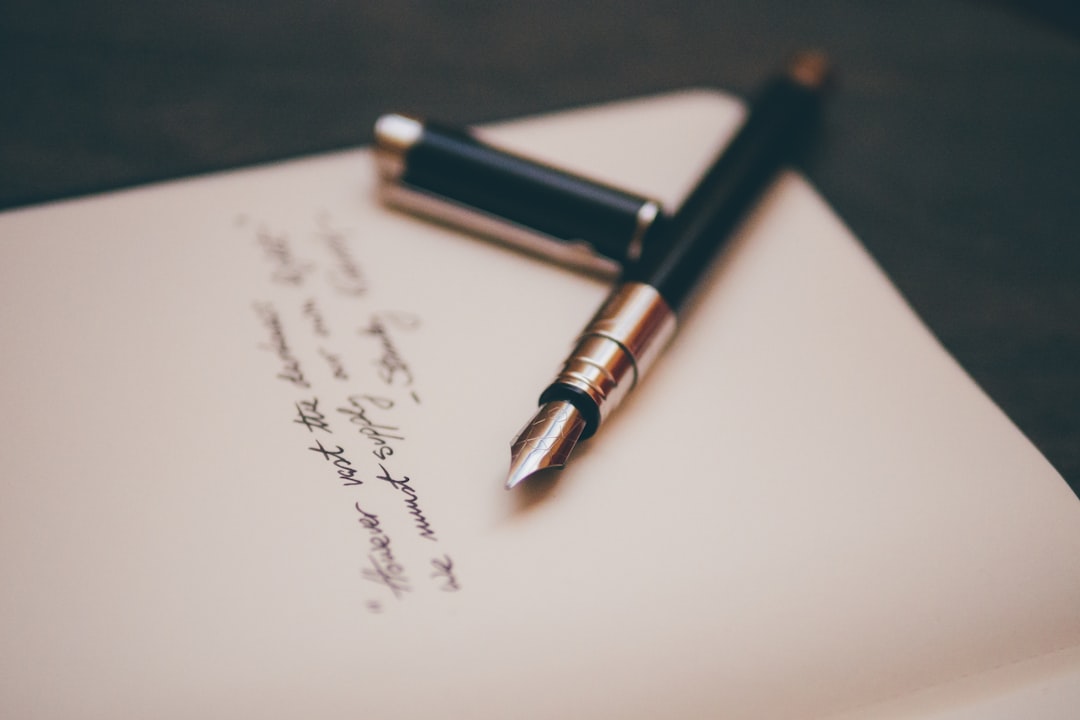
Photo by Álvaro Serrano on Unsplash
There's a moment in Ocean Vuong's "Clusterfuck" where the line break becomes a knife. The poem reads: "I wanted to know what it meant to be / wanted." That space between "be" and "wanted" doesn't just pause your breath—it rewires your understanding. For a split second, "be" stands alone, complete, vulnerable. Then the next line arrives and complicates everything. This is enjambment at its finest: a technical device that feels like poetry's most radical act.
Most readers barely notice line breaks. They're part of the furniture of poetry, as invisible and necessary as margins on a printed page. But once you understand how enjambment works—how it withholds, reveals, and manipulates meaning—you realize that poets have been deploying one of literature's most powerful tools almost invisibly. A line break can contradict a sentence's grammar. It can make you read a word twice, in two different contexts. It can transform a throwaway phrase into a profound statement simply by isolating it at the end of a line.
What Enjambment Actually Does (Beyond the Technical Definition)
Enjambment is when a sentence or phrase continues across a line break without punctuation, forcing the reader to move to the next line to complete the thought. Technically, it's the opposite of "end-stopped" lines, which conclude with punctuation. But this definition doesn't capture the real power of the technique.
Consider the difference between these two versions of the same thought:
"I love you but I'm terrified / of what that means."
Versus:
"I love you but I'm terrified of what / that means."
In the first version, the line break lands after "terrified," creating a moment of emotional exposure. You sit with that fear before understanding its source. In the second, the break lands on "what," which pulls focus toward the object of fear rather than the fear itself. The meaning is technically the same, but the emotional architecture is completely different. This is why poets obsess over line breaks the way architects obsess over load-bearing walls.
Mary Oliver, one of contemporary poetry's great enjambment masters, uses line breaks to create what she called "a different kind of silence." Her poems have almost no end-punctuation in traditional places. Lines spill into each other, and the reader's eye moves forward even as the breath catches. It's a technique that mirrors how consciousness actually works—thoughts don't arrive in neat packages with periods attached. They arrive in waves, overlapping, sometimes contradicting themselves.
The History: Why Poets Started Breaking Lines Like Rules
For centuries, line breaks were largely determined by meter. In iambic pentameter, a line break came at a natural stopping point because the form demanded it. Poetry was controlled. Predictable. Safe.
Then came modernism, and poets like T.S. Eliot and Ezra Pound started treating the line break as a tool of meaning-making rather than just a formal constraint. Suddenly, what had been a limitation became a freedom. The line break could create irony. It could isolate a word for emphasis. It could make you misread a line before the next one corrected you. By the time we reach contemporary poetry, enjambment has become so fundamental that free verse would barely exist without it.
The shift matters because it reveals something about how poetry evolved from being primarily about sound and pattern to being about how form shapes interpretation. When Adrienne Rich wrote, "I came to explore the wreck. / The words are purposes," that line break after "wreck" forces you to sit with the image before understanding that the wreck is metaphorical, a relationship, a life. The break itself becomes part of the meaning.
Why Modern Poets Can't Stop Breaking Lines
Walk into any creative writing workshop and you'll find students obsessing over line breaks with an intensity usually reserved for first drafts of opening sentences. There's a reason. Line breaks are where poets maintain control in a form that otherwise admits chaos.
Contemporary poets like Claudia Rankine have taken enjambment further, using it as a tool for disrupting syntax itself. In "Citizen," her prose-poetry hybrid, the lack of traditional line breaks itself becomes a statement—a refusal of the comfort that line breaks provide. But when she does use them, the effect is jarring precisely because we've been conditioned to expect them.
Young poets especially have embraced enjambment as a rebellion against the tidiness of earlier forms. It allows them to write in a way that feels urgent, uncontrolled, honest. The line break becomes a stutter, a gasp, a deliberate refusal to finish thoughts neatly. This connects to something larger in contemporary poetry: why poets are suddenly writing about their day jobs and why it matters. Just as poets are bringing the messy realities of work life into their work, they're using enjambment to bring the broken, stuttering quality of real speech into the formal space of poetry.
The Dangers and Rewards of Breaking Everything
There's a risk to loving enjambment too much. A poem broken into single-word lines, where every break is a dramatic pause, becomes exhausting. The technique loses power through overuse. The most skilled contemporary poets understand that enjambment matters most when it's strategic, when it surprises you because the previous lines had set a different expectation.
Sharon Olds is a master of knowing when not to break. Her lines are often lengthy, and when the break finally comes, it lands harder because it's unexpected. The reader has been lulled into a different rhythm, and the sudden enjambment jars them awake. This is what separates competent enjambment from brilliant enjambment: intention.
The real reward of understanding enjambment is that it transforms how you read poetry. You begin to see the line break not as a line of typography but as a decision, a statement, a withholding of something that could have been given more easily. Poetry, already a form about compression and precision, becomes even more concentrated when you understand that every single line ending has been chosen.
How to Notice (and Use) Enjambment Yourself
Start reading poetry with this question: Where did the poet break the line, and why there instead of somewhere else? Read the line as it's written, then read the phrase ignoring the break. Notice what changes. Notice what the break reveals that prose would hide.
Then, if you're writing poetry yourself, stop thinking about line breaks as something that happens to you and start thinking about them as something you do to readers. Each break is an act of timing, like a comedian's pause or a musician's rest. It's where poetry touches silence. It's where meaning multiplies through interruption.
Comments (0)
No comments yet. Be the first to share your thoughts!
Sign in to join the conversation.