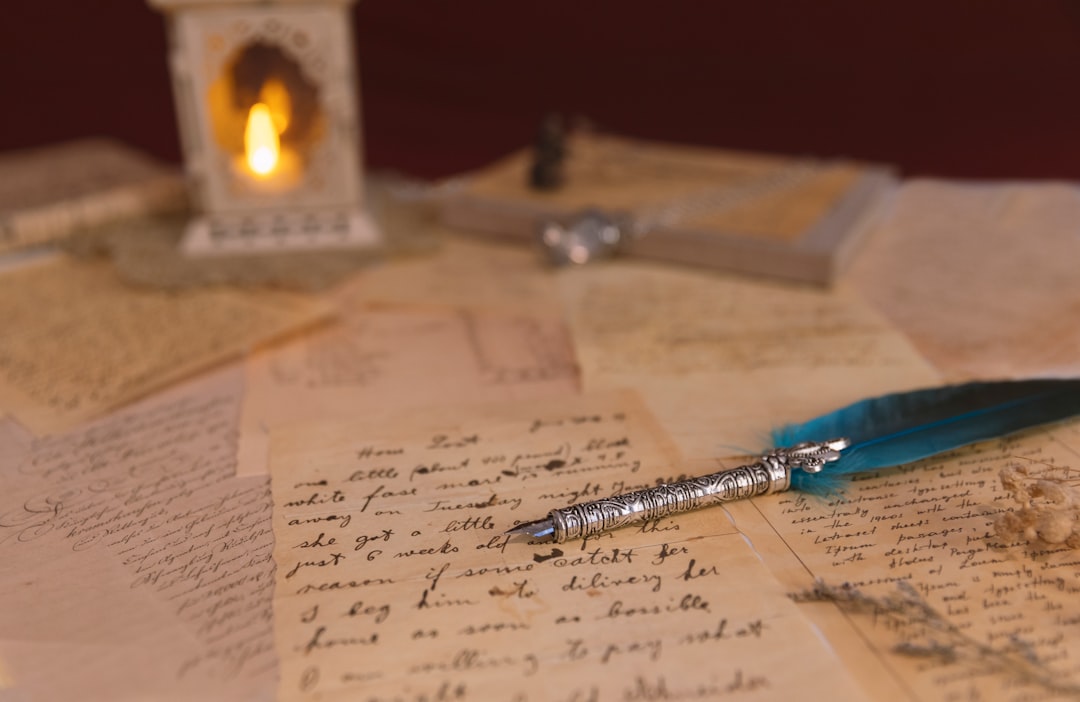
Photo by Mrika Selimi on Unsplash
Last Tuesday, I watched a poet read the same three lines aloud twice. The first time, she paused at the end of each line. The second time, she ignored the line breaks entirely and read straight through. Thirty people in that coffee shop audience gasped—because the poem meant something completely different.
That's the power of enjambment. And honestly, it's one of the most underrated tools in modern poetry.
What Enjambment Actually Does
Enjambment is the practice of breaking a sentence or thought across two or more lines without a pause. It sounds technical, but it's really about tension—the space between what your eyes see ending and what your ear hears continuing.
Consider these two versions of the same thought:
Version A (with line break):
"She walked out the door
and never looked back."
Version B (enjambed):
"She walked out the
door and never looked back."
In the first version, there's finality. We expect "back" to come—it's the natural conclusion we're waiting for. In the second version, we get yanked forward. "Out the" feels incomplete, fragmented. When "door" arrives on the next line, it lands with more weight because we had to reach for it.
This isn't just poetic flourish. This is how poets hijack your nervous system. They make your body do the work of meaning.
Why Contemporary Poetry Became Obsessed With Line Breaks
The modernist poets of the early 20th century—particularly T.S. Eliot and Ezra Pound—started treating the line break like a musical notation system. They realized that traditional punctuation belonged to the page, but line breaks belonged to the voice, the breath, the body reading the poem aloud.
This was radical. Before this, poets mostly respected the natural pause. A line ended where a thought ended. Simple. Predictable.
But then someone decided that prediction was boring.
Frank O'Hara, the New York School poet who wrote between sips of coffee and casual conversations, became famous for his enjambments that felt almost reckless. In his poem "The Day Lady Died," he enjambs his way through a grocery list, his afternoon plans, and then suddenly—death. The casual line breaks make the final revelation devastate you precisely because the poem didn't announce its sadness. It snuck up on you the way grief does.
Likewise, poets like Sylvia Plath used aggressive enjambment to create a sense of psychological fragmentation. In "Mad Girl's Love Song," her line breaks fracture meaning itself. Words that should connect become severed. You feel unmoored. That's intentional. That's brilliant.
The Reader's Experience: What Actually Happens to Your Brain
Neuroscience isn't really my field, but poetry audiences have confirmed something interesting: when you read enjambed poetry silently, your eyes move faster. Your brain anticipates completion. When the line break interrupts, your brain has to recalibrate.
When you hear enjambed poetry read aloud, something even stranger happens. The poet's voice carries through the line break, but your training as a listener expects a pause. This tiny conflict—between what you hear and what you expect—creates a kind of acoustic suspense.
Try this experiment: read a poem by Ocean Vuong or Claudia Rankine (both masters of strategic enjambment) out loud. Notice where you want to breathe. Then notice where the line breaks actually are. They're rarely the same thing. That mismatch? That's where the art lives.
It's why bad enjambment is so painfully obvious. Some amateur poets break lines at random, thinking it looks poetic. "The cat sat on the / couch." No. That's not enjambment; that's vandalism. Real enjambment serves a purpose. It creates a specific tension between form and content.
The Risk: Enjambment as an Excuse
Here's what bugs me about contemporary poetry circles: enjambment has become the crutch for lazy writing. Not all line breaks are created equal. Some poets—I won't name them—use dramatic enjambments to cover up the fact that they have nothing to say.
Real enjambment requires that the poet know exactly why that particular line break matters. What does breaking here accomplish? Does it create ambiguity? Does it accelerate the pace? Does it force a re-reading? If you can't answer those questions, your line break is just punctuation having an identity crisis.
The poets who understand this are using enjambment not as decoration but as argument. When Ada Limón enjambs, every break serves her exploration of desire, memory, or ecological grief. When Ocean Vuong enjambs, he's always investigating the space between identity and expression. The line break isn't random. It's necessary.
Why This Matters Beyond Poetry Circles
If you're not a poetry reader—and statistically, you probably aren't, since poetry readership has been declining for decades—you might wonder why any of this matters. But here's the thing: poets are the R&D department of language. They're experimenting with how meaning actually works at the smallest scales.
When you read an advertisement, a headline, a text message, you're experiencing the downstream effects of what poets figured out first. Line breaks, white space, rhythm—these aren't exclusively poetic concerns. They're how language functions. They're how communication happens at all.
And if you want to understand why some writing grabs you while other writing slides off your brain without leaving a trace, learning to read enjambment is essential. It teaches you that the way something is broken apart matters as much as what's being said.
You might also be interested in The Ghazal's Secret: How an Ancient Form Became Poetry's Most Addictive Structure, which explores another structural innovation that's transformed how contemporary poets construct meaning.
So next time you read a poem—or write one—pay attention to the line breaks. Ask yourself what they're doing. Ask yourself what they're preventing you from seeing. Ask yourself what you're made to feel in the space between the end of one line and the beginning of the next.
That space is where the poem actually happens.
Comments (0)
No comments yet. Be the first to share your thoughts!
Sign in to join the conversation.