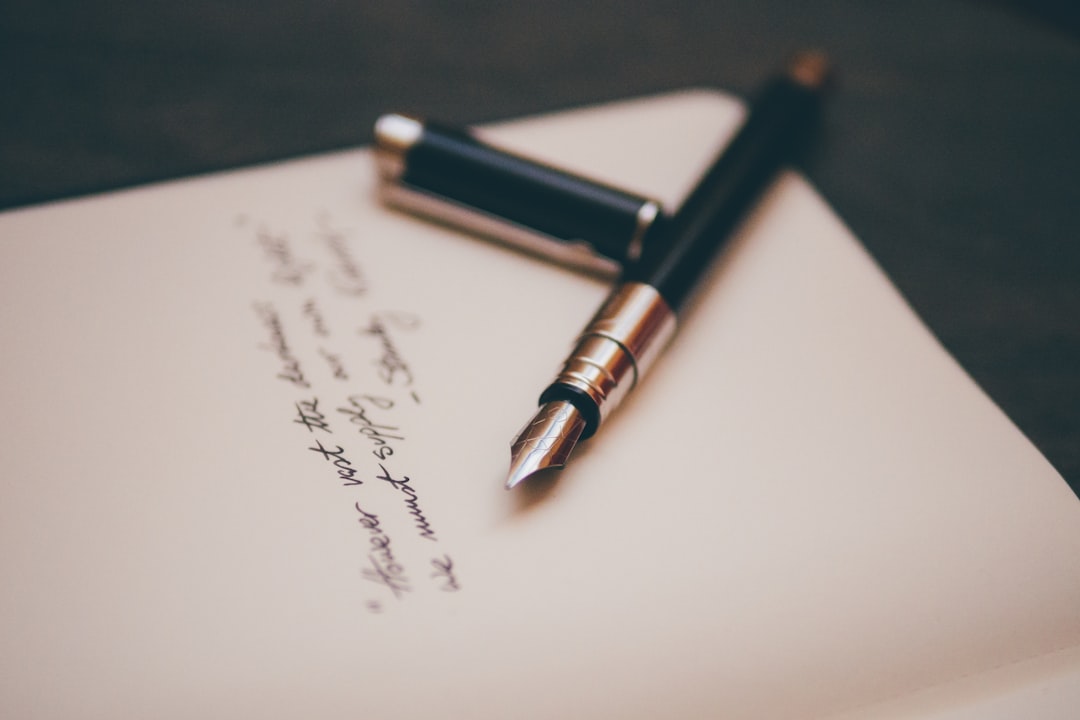
Photo by Álvaro Serrano on Unsplash
When you read a poem on the page, something strange happens. Your eye doesn't just absorb words the way it does in prose. It pauses. It hesitates at line endings. Sometimes it leaps forward with anticipation. That invisible choreography—that's enjambment at work, and it's possibly the most underrated tool in a poet's kit.
Most people don't realize how much power lies in where a line breaks. We're trained to think about rhyme schemes, meter, metaphor. But the simple choice of ending a line at one word instead of another can completely transform a poem's meaning, pacing, and emotional impact. It's the difference between a poem that whispers and one that shouts.
What Even Is Enjambment?
Let's start with the basics. Enjambment comes from the French word "enjamber," meaning to stride over or straddle. In poetry, it's the practice of continuing a sentence or phrase beyond the end of a line or stanza. The line break interrupts the grammatical sense, forcing readers to move to the next line to complete the thought.
Here's a simple example. Consider these two versions of the same sentence:
Version 1 (end-stopped):
She walked through the garden.
Roses bloomed around her feet.
Version 2 (enjambed):
She walked through the
garden. Roses bloomed around her
In Version 1, each line is a complete unit. The reader gets a full thought, then moves to the next line. Version 2 fractures the sentence across lines. Now "garden" becomes the object of desire—we must move to the next line to find closure. It creates tension. It creates yearning.
The best contemporary poets understand this intuitively. When Ocean Vuong writes, "I want to be the myth / of rain, how it falls / in the body without mercy," that enjambment across "the myth / of rain" makes us pause on "myth" for a microsecond. It emphasizes the transformation, the impossibility of the desire. Without that line break, the lines become flat.
The Physics of Reading a Poem
Here's something neuroscientists have actually studied: your brain processes line breaks differently than prose breaks. When you reach the end of a line in a poem, there's a tiny moment of suspension before your eye travels to the next line. During that moment, you're forced to hold incomplete information. The unfinished phrase hangs in your mind.
This creates what some call "semantic tension." The reader becomes active rather than passive. You're not just receiving information—you're participating in the poem's construction. You're filling gaps. You're making predictions that get confirmed or thwarted by the next line.
Mary Oliver, the poet who taught millions to pay attention, understood this deeply. In "The Journey," she writes: "But little by little, / as you left their voices behind, / the stars began to burn / through the sheets of clouds, / and there was a new voice." Notice how each line break creates a small revelation. Each line builds momentum. Without those breaks, the poem would just be a list. With them, it becomes an experience.
Poets call this effect "the turn." Every line break is a miniature turn—a pivot point where meaning shifts. Sometimes the shift is subtle. Sometimes it's seismic.
When Enjambment Becomes Art
Contemporary poets have pushed enjambment into wild territory. Some break lines mid-word. Others create such violent enjambments that you barely recognize the sentences beneath. The poet Claudia Rankine, in her book "Citizen," uses enjambment as a weapon—breaking lines in ways that mirror fragmentation, interruption, and the violence of being misrecognized in the world.
Consider the difference between a traditional sonnet (where lines often end with natural speech pauses) and experimental poetry (where lines might break in the middle of a thought, or even mid-word). A poem like Anne Carson's "Autobiography of Red" doesn't just use enjambment—it uses it as argument. The form becomes the content. The broken lines express the brokenness of the speaker's consciousness.
Frank O'Hara's "Lunchtime Poem" demonstrates masterful enjambment in a casual, almost conversational way. The line breaks feel natural, almost accidental, but they're precisely calibrated to create rhythm and emphasis. O'Hara makes enjambment look easy, which is how you know he's a master—like a figure skater who makes triple axels look like a gentle glide.
Why Your Reading Voice Matters
Here's what changes everything: when you read a poem aloud, enjambment hits differently. Some poets write specifically for the ear. Others write for the page. The best write for both.
If you ignore the line breaks and read enjambed poetry like prose, you miss about 40% of what the poet intended. But if you honor the breaks—pausing slightly at line endings even when the grammar pushes forward—you activate the full emotional architecture.
This is why poetry slams and poetry readings matter. When you hear someone read their work, especially when they respect the line breaks, it's like watching someone conduct electricity through their voice. The pauses become visible. The tension becomes audible.
The Personal Risk of Breaking Lines
Here's something rarely discussed: enjambment requires vulnerability from the poet. When you break a line at an unexpected moment, you're making a bet. You're betting that the reader will follow you into discomfort. You're betting they'll trust that there's a reason the line broke there.
Bad enjambment is maddening. It feels arbitrary. It feels like the poet is trying too hard. Good enjambment feels inevitable—like that's the only possible place the line could break.
The truth is, learning where to break a line is part craft and part instinct. It's learned through reading obsessively, through writing dozens of drafts, through saying the lines aloud until your mouth remembers where the emphasis needs to fall. If you're interested in how poets wrestle with obscurity and clarity in their line breaks, check out our piece on deliberately obscure poetry—it explores how some poets use line breaks to intentionally create confusion.
Next time you read a poem, don't skip over the line breaks. Pause at each one. Notice what that pause does to your understanding. Notice how a line break can turn a simple observation into something mysterious. That's not decoration. That's the poem doing what only poems can do.
Comments (0)
No comments yet. Be the first to share your thoughts!
Sign in to join the conversation.