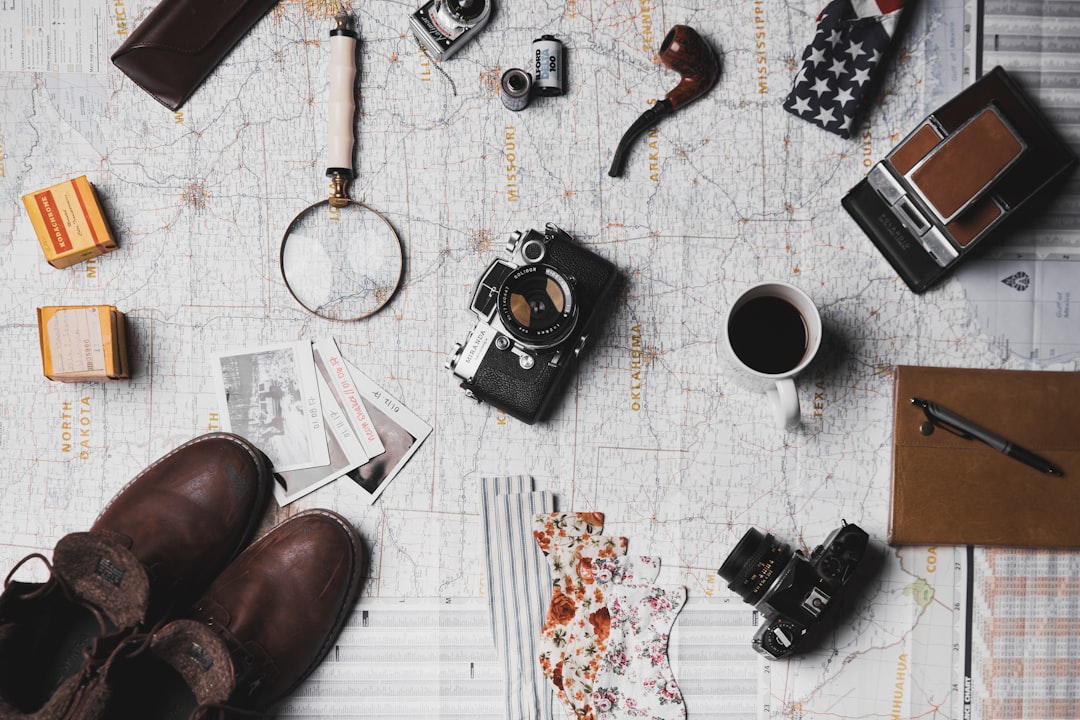
Photo by ian dooley on Unsplash
Last summer, I boarded a train in Budapest with zero concrete plans beyond "head east." My friends thought I'd lost my mind. My mother called three times before I left the station. But somewhere between the Danube and the Romanian border, I realized that Eastern Europe's greatest gift isn't its famous monuments—it's the freedom to get hilariously, wonderfully lost on purpose.
Train travel through this region has become my obsession, and after logging roughly 3,000 kilometers across seven countries, I understand why. Unlike the rigid tour buses that ferry travelers through Prague's Old Town Square for exactly 47 minutes, trains give you something rarer: the chance to witness real life happening at ordinary speeds.
Why Trains Beat Every Other Transportation Method
Let me be specific about what makes train travel different. When you're on a bus moving through Slovakia, you're sealed in a capsule with 45 other tourists, watching the world stream past like a video game. On a train? You're sitting in a compartment with a retired mathematics teacher from Kraków, a woman carrying three enormous bags of homemade sausages to her sister in Vienna, and possibly a cat in a cardboard box. This is where travel gets real.
The logistics alone make Eastern European trains an adventure. Most stations operate on a system that seems designed by someone with an avant-garde approach to scheduling. I once spent forty minutes deciphering whether my train was on Platform 3 or "Platform 3, other side." The solution involved asking five different people, all of whom gave different answers with complete confidence. This is not a problem. This is entertainment.
Prices seal the deal. A seven-hour journey from Budapest to Bucharest costs roughly what Americans pay for a decent breakfast in Manhattan. I rode through the Carpathian Mountains for about $15. That same breakfast situation? Still applies.
The Accidental Education You'll Receive
Here's what travel guides won't tell you: nobody learns a region's actual character from guidebooks. They learn it from the 68-year-old woman who boards at Brasov and immediately starts explaining, with theatrical hand gestures, why the dumplings in her village are superior to everyone else's dumplings. This is genuine cultural exchange.
During a twelve-hour stint between Bucharest and the Serbian border, I learned about Eastern European history from perspectives that wouldn't appear in any textbook. My compartment mates discussed the differences between Hungarian and Romanian approaches to paprika with the intensity usually reserved for political debates. One man spent twenty minutes explaining why his grandfather's village's specific type of sauerkraut represented the pinnacle of fermentation achievement.
These aren't curated experiences. They're the actual thoughts of actual people sharing space with you in a way that hotels and restaurants can't manufacture.
The Stations Between Destinations Matter More
Stop at Sibiu instead of blitzing through to Bucharest. Stay in Timisoara for a day because you liked the look of the station. These spontaneous detours produce the stories you'll actually tell years later.
I met a photographer in Temesvar (that's Timisoara if you're reading the signs) who'd originally planned a two-hour stop. She'd stayed for two years because she fell in love with how the light hit the buildings at 6 AM. Now she runs a small guesthouse and knows every vendor at the local market. This isn't uncommon. Eastern Europe has a gravitational pull that affects people who stick around long enough to notice it.
The smaller stations reveal things tourists usually miss. The food in station cafes tastes better than expensive restaurants attempting Eastern European cuisine for Western palates. The people move at a human pace. The prices reflect actual value rather than "travelers passing through value."
What Actually Goes Wrong (And Why It's Perfect)
Your train will probably be late. Budget about 30% extra time because "scheduled arrival" is more of a spiritual guideline than a literal commitment. Rather than treating this as a problem, treat it as bonus time in wherever you're stuck.
Once, my train broke down for three hours outside a small Hungarian town. The conductor seemed completely unbothered. Rather than making announcements, he simply opened all the doors and invited passengers to wander. Thirty of us ended up in the town's only restaurant, where we shared one massive family-style meal because nobody spoke quite enough of a common language to order separately. The cost was about $8 per person. The conversation lasted until the train was mysteriously repaired.
These aren't setbacks. They're the mechanism through which travel becomes interesting.
How to Actually Do This (Practical Stuff)
Buy a Eurail pass if you're visiting multiple countries, though honestly, buying tickets at individual stations costs less and involves more human interaction. Download the Trainline app or use Omio, but assume they'll give you partially incorrect information and plan accordingly.
Booking a sleeper car turns the journey itself into the destination. You'll wake in a completely different country, which is objectively cool. Night trains between Budapest and Vienna, or Vienna and Prague, cost surprisingly little and save you a night's hotel accommodation.
Pack light. I mean genuinely light. Eastern European trains have overhead storage designed by someone who believed luggage was merely decorative and would never actually need to fit through doorways. My 35-liter backpack was considered "pretty generous" by local standards.
Learn the word for "excuse me" in at least three languages, but don't stress about fluency. Pointing at a map with raised eyebrows is an international language that works everywhere.
The Actual Point
Travel has become increasingly choreographed. We download apps that tell us which restaurants to visit at which times, we book everything months in advance, we follow the same Instagram locations as 200,000 other travelers. Eastern European train travel resists this. It practically insists on spontaneity.
If this appeals to you, if the thought of boarding a train with only vague destination ideas excites rather than terrifies you, then you need to experience this region properly. Not the postcard version, but the actual version. The one that happens when you're sharing a compartment with people who have no particular reason to impress you and can't be bothered pretending to.
Start with Hungary, move to Romania, wander into Serbia if you're feeling adventurous. Follow whoever seems interesting off at a random stop. Have disagreements about dumplings with strangers. Get hopelessly lost in train stations where the signage seems intentionally cryptic. This is when travel stops being something you consume and starts being something you actually experience.
Your itinerary will fail you. Your train will be late. You'll miss connections. And somewhere in that beautiful chaos, you'll find the actual magic that made you want to travel in the first place. Similar stories happen when you take wrong turns—in fact, getting lost in the Swiss Alps proved that taking the wrong train can lead to the best travel stories.
Comments (0)
No comments yet. Be the first to share your thoughts!
Sign in to join the conversation.