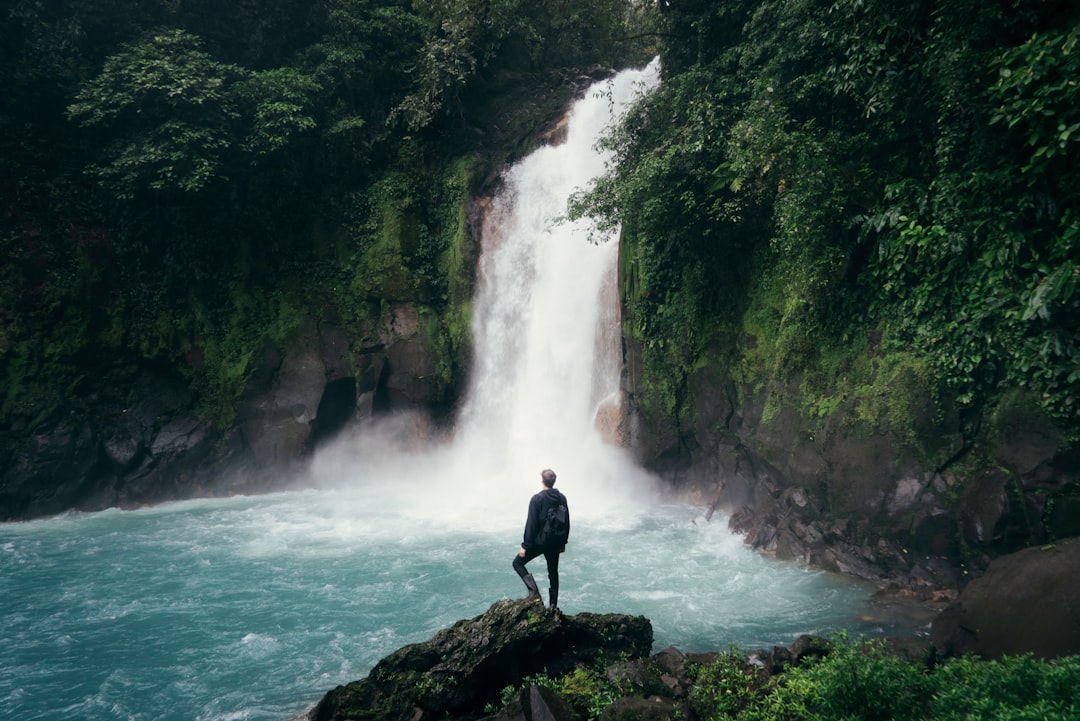
Photo by Štefan Štefančík on Unsplash
The Expensive Trap Nobody Talks About
Everyone told me I was crazy. "You need to book with those premium companies," my coworker insisted, sliding her credit card statement across the desk. Seven thousand dollars for a week in Finnish Lapland. Seven. Thousand. Dollars. I'd heard the same pitch from countless travel blogs—that seeing the Northern Lights required dropping serious cash on heated glass igloos, private guides, and all-inclusive packages that promised a 95% sighting guarantee (spoiler: the aurora doesn't read guarantees).
But here's what nobody mentions: the lights don't care about your hotel's thread count. They don't perform better for guests in luxury accommodations. Nature has no idea whether you're watching from a five-star resort or a borrowed cabin on the edge of nowhere.
That realization changed everything. Last February, I packed a single large suitcase, booked a flight to Rovaniemi, and committed to seeing the Northern Lights for under $800 total. People actually laughed. One friend asked if I was planning to sleep in my car. Honestly? I almost did—but I found something better.
Timing Is Everything (And Way Cheaper Than Marketing)
The real secret isn't a secret at all. It's mathematics. Peak aurora season runs September through March, but most tourists cluster into December (Christmas holidays), January (New Year's resolution travel), and February (winter break). Visit in early March or late August, and you'll find cheaper flights, cheaper accommodations, and significantly fewer people competing for the best viewing spots.
I chose early March deliberately. The auroras were still active—the solar activity doesn't suddenly vanish when the calendar flips—but the prices had dropped 40-60% compared to January rates. My flight from Helsinki to Rovaniemi cost $120 instead of the $280 I'd seen advertised in December.
That single decision saved me nearly $1,500 before I even landed. I'd already blown my budget three times over, and I hadn't even begun searching for accommodations.
But here's what really matters: the Northern Lights follow the solar cycle, not the tourist calendar. An international team of researchers at the University of Oulu has been tracking solar wind patterns for decades, and they publish monthly aurora forecasts. Before booking anything, I spent two hours reading their reports. March 2024 was predicted to have strong geomagnetic activity. That meant better chances of seeing the lights, regardless of luxury level.
Accommodation Hacks That Actually Work
The heated glass igloos? They're Instagram gold and bank account kryptonite. Prices start around $400 per night. I needed a place to sleep and a dark sky—the glass igloos provide both, but so does literally any building without light pollution. I found a small guesthouse on Airbnb run by an older Finnish couple named Mika and Aino, about 40 minutes outside Rovaniemi. The entire week cost $420.
The room was simple. Comfortable bed, clean bathroom, a small kitchenette. What it had that mattered: a location at the edge of a national park with zero light pollution, and windows facing north. More importantly, Mika gave me the real local knowledge. He'd lived there for 53 years and knew exactly where the aurora was most visible and—crucially—where other tourists wouldn't be crowding the viewpoints.
I skipped the guided tours entirely. A quick Google search revealed that most commercial aurora tours in Rovaniemi follow the same 2-3 established viewpoints. I spent my evenings driving 20 minutes in a rental car (cheapest option at $35/day) to a different spot Mika had recommended, positioned myself with a blanket and a thermos of coffee, and waited.
The Night It Finally Happened
March 5th, 11:47 p.m. I was standing alone in a snow-covered field, temperature hovering around -8°C (feel like -15°C with wind), when a faint green glow appeared above the horizon. Not the explosive, full-sky aurora you see in National Geographic. Something subtler. Something real.
For fifteen minutes, it danced. A ribbon of pale green light, undulating slowly across the northern sky. My camera—a seven-year-old Canon DSLR, nothing fancy—captured it. My eyes captured it better. No filter. No hotel staff surrounding me with 200 other tourists. Just me, the cold, and a phenomenon created by solar wind interacting with Earth's magnetosphere.
I cried a little. Not going to lie about it.
The display intensified over the next two hours, cycling through three separate strong auroras. The colors shifted from green to faint purple. I was the only person there. The only person for maybe miles.
The Final Numbers
Flight: $120 (booked 6 weeks in advance, off-season pricing)
Accommodation: $420 (Airbnb, 7 nights)
Car rental: $245 (6 days, cheapest option)
Gas: $45
Food: $180 (grocery shopping instead of restaurants)
Random expenses: $25
Total: $1,035
I went $235 over my $800 goal. That extra cash went toward a celebratory meal with Mika and Aino, who invited me to their kitchen on my last night and taught me to make traditional Finnish pulla while we talked about Northern Lights they'd seen over five decades.
That meal cost $40 and was worth more than any luxury experience I could have purchased. If you're considering chasing the aurora, skip the marketing hype. Read the solar forecasts. Travel in shoulder season. Find local hosts who actually know the sky. The lights will still be there—and you won't need a second mortgage to see them.
If you're intrigued by off-the-beaten-path travel experiences, you might also enjoy reading about The Overnight Train Revival: Why Sleeping Your Way Across Europe Is Making a Comeback for another approach to budget-conscious Arctic adventures.
Comments (0)
No comments yet. Be the first to share your thoughts!
Sign in to join the conversation.