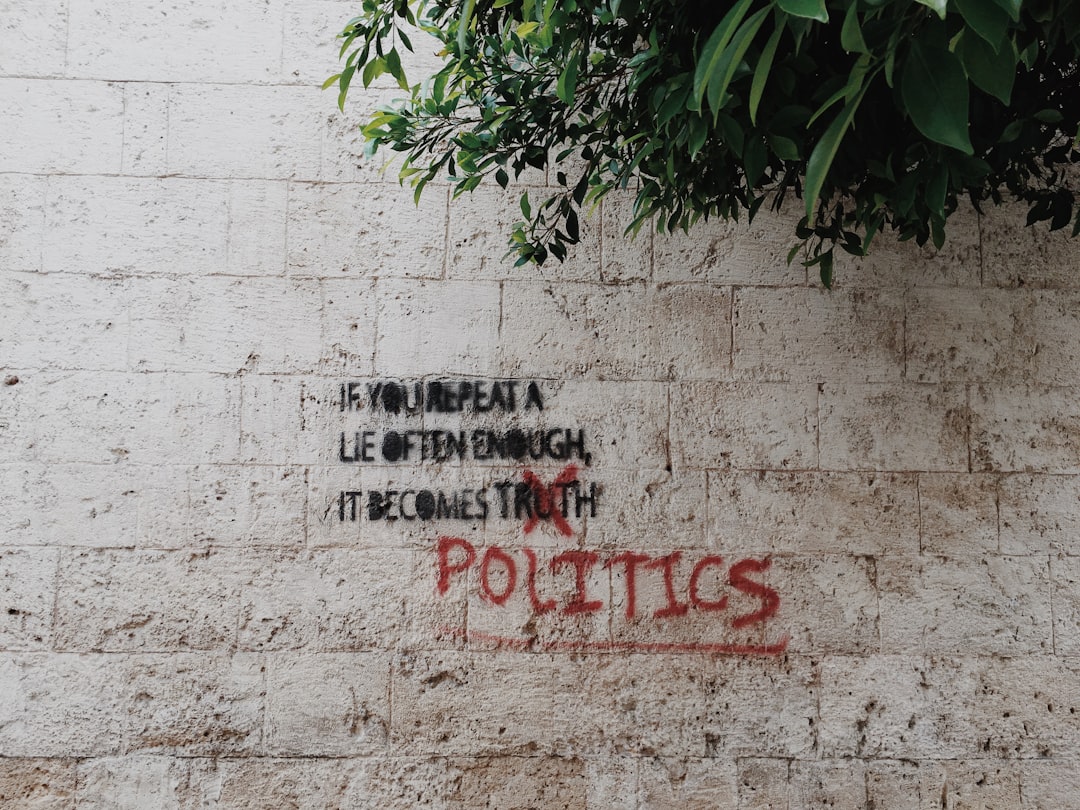
Photo by Brian Wertheim on Unsplash
Nobody knows who their state party chair is. And that's exactly the problem.
Walk into most diners in Ohio or Georgia and ask ten random people to name their state Democratic or Republican chair. You'll get blank stares. Maybe someone's elderly uncle will mutter a half-remembered name. But the vast majority of Americans—including plenty of politically engaged ones—couldn't tell you the person's name if you offered them $500.
Yet these largely anonymous figures wield extraordinary power over who gets to run for office, how campaigns are funded, which districts get attention, and ultimately, what policies actually have a chance of passing into law. They're the unelected gatekeepers of our political system, and their influence has grown dramatically in the past decade while remaining almost entirely invisible to public scrutiny.
The Quiet Power Behind the Party Machinery
Consider what happened in Michigan in 2022. The state Democratic Party chair, Lavora Barnes, made a unilateral decision to reallocate $500,000 in campaign funds away from state legislative races to focus on the gubernatorial contest. Nobody voted on it. No public hearing was held. Barnes simply decided this was the best use of party resources, and it happened. The move proved devastatingly effective—or devastating, depending on your perspective. Michigan's governor won by a comfortable margin while Democrats underperformed expectations in legislative races statewide.
This kind of power concentration isn't unique to Michigan. State party chairs across the country control hundreds of millions of dollars in campaign funding, make personnel decisions that determine who runs field operations in crucial districts, and—most troublingly—often have significant say in candidate recruitment and endorsements. In many states, they can effectively make or break a political career with a single phone call.
The irony is stunning: we lecture other countries about democratic accountability and transparent governance while allowing our own political parties to function with the oversight mechanisms of a 1950s country club. Most state party chairs are elected by party delegates at state conventions—meetings that most ordinary voters have never heard of, let alone attended. Some chairs have held their positions for longer than many elected governors, yet face virtually no term limits or meaningful accountability mechanisms.
How This Power Got So Concentrated
The shift happened gradually, almost invisibly. During the 1990s and 2000s, state parties began consolidating power as national politics became increasingly nationalized. Campaign consultants realized they could accomplish far more by working through party infrastructure than by building grassroots operations from scratch. Money followed. By the time of the 2016 election cycle, state party chairs had become crucial nodes in national political networks.
Then came 2020, and everything accelerated. The pandemic forced state parties to adapt quickly to mail voting, rapid-response digital operations, and complex coordination between federal, state, and local candidates. Chairs who managed these transitions successfully gained enormous credibility and influence. Those who stumbled lost standing but rarely faced real consequences.
The result is a system where a handful of state party chairs—maybe a dozen key figures out of 100 nationwide—essentially function as kingmakers in American politics. They're not politicians themselves, so they're not accountable to voters. They're not hired staff, so they're not truly accountable to the party establishment either. They occupy this strange gray zone where they make decisions affecting millions of people while answering to almost no one.
Real Consequences for Real People
You can see the practical consequences playing out constantly. In 2023, a group of progressive candidates for the Nevada Democratic chair position called out the outgoing chair's decision-making as opaque and unaccountable. Their critique resonated—not because voters suddenly cared about state party governance, but because they recognized that these decisions affected them. When a state party chair decides which races get resources, which candidates get promoted, and which voices get heard, that's not bureaucratic minutiae. That's politics.
The same dynamics appear nationwide. Texas Republicans have spent the past two years fighting internally over the state party chair's alleged mismanagement of funds and power. Meanwhile, New York's state Democratic chair oversees an operation that dwarfs many small countries' budgets. Yet most New Yorkers could walk past her on the street without recognition.
This concentration of power also creates perverse incentives. A state party chair facing pressure from national party leadership, major donors, and local activists must somehow navigate all three without being accountable to any of them. The incentive structure often pushes them toward abandoning moderate approaches that might actually appeal to undecided voters, instead serving the loudest voices in their coalition.
Why This Matters More Than You Think
State party chairs matter because state politics matter. While national attention focuses on presidential races and dramatic congressional battles, state legislatures are where most policy actually gets made. Education funding, healthcare decisions, voting laws, environmental regulations—these all happen primarily at the state level. The people controlling how resources flow to state candidates therefore wield more influence over your daily life than most people realize.
Moreover, state parties serve as the farm system for national politics. A state party chair's decision to support or oppose a particular candidate for state legislature can determine whether that person eventually runs for Congress or governor. Small decisions made in obscure state party meetings today can shape national politics a decade from now.
Toward Accountability
Some states are beginning to experiment with reforms. Minnesota's Democratic Party recently implemented stricter disclosure requirements for party spending. Arizona Republicans created a new appeals process for candidates unhappy with party endorsement decisions. These aren't revolutionary changes, but they suggest that transparency and accountability can be built into party structures without fundamentally destroying them.
The challenge is that party insiders benefit from the current system. Those holding power have little incentive to surrender it, and the public has little leverage to force change. Party chairs are elected by delegates, not by rank-and-file voters, so electoral pressure barely registers.
But the pressure is building. Younger activists increasingly demand more democratic governance within parties. Tech-savvy organizers are documenting party spending and decision-making with unprecedented transparency. The old closed-door system is becoming harder to maintain in an age of social media and instantaneous information spread.
State party chairs will remain important figures in American politics. The question is whether they'll continue operating as almost-invisible kingmakers or whether democratic accountability can finally catch up with their actual power. For now, most people still don't know who these folks are. But they should. Their decisions affect far more lives than most elected politicians ever touch.
Comments (0)
No comments yet. Be the first to share your thoughts!
Sign in to join the conversation.