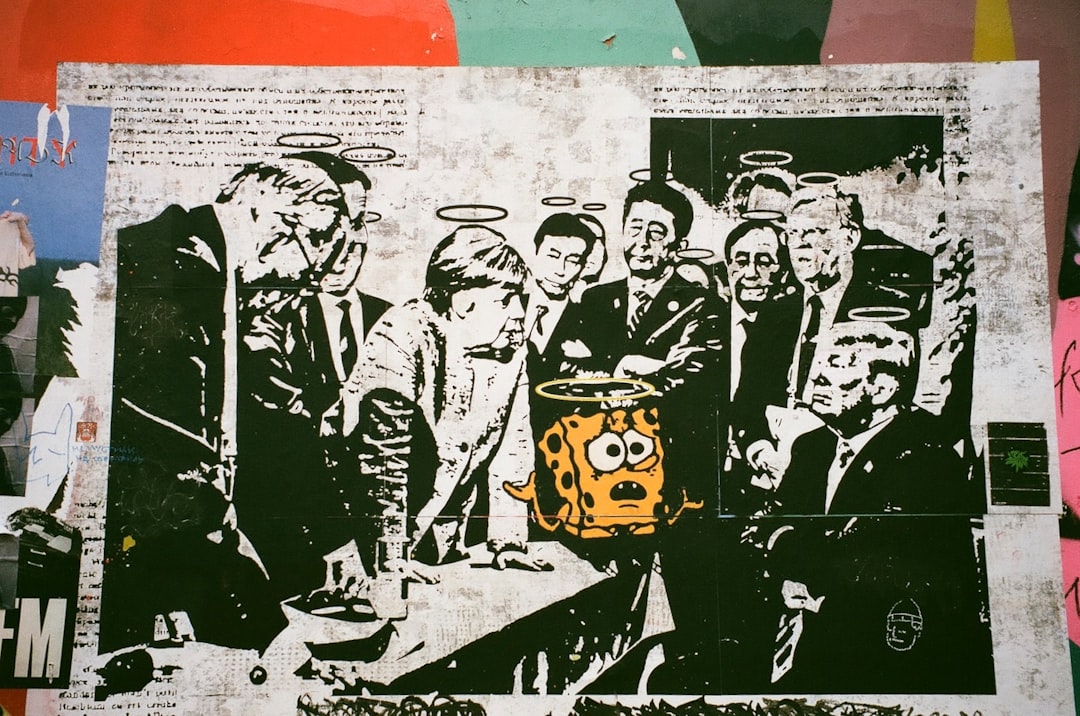
Photo by diana kereselidze on Unsplash
Sarah Palin lost her 2022 Alaska special election in a landslide. So did Trump-endorsed candidates in Pennsylvania, Arizona, and Ohio. Yet somehow, the political aftershocks from these defeats barely registered compared to what happened in primary races across the same election cycle. When the Georgia GOP selected Herschel Walker over more traditional candidates, when Ohio Republicans picked J.D. Vance despite establishment skepticism, and when Pennsylvania voters nearly nominated Doug Mastriano—a man who attended the January 6th rally—something fundamental shifted beneath the surface of American politics.
This wasn't just Trump winning endorsement wars. This was something messier, rawer, and potentially more dangerous: a nationwide voter uprising against the gatekeepers of power within both major parties.
When the Grassroots Stopped Playing By Establishment Rules
For decades, the primary system worked like a well-oiled machine. Party elders would quietly signal their preferred candidates. Money would flow accordingly. Local organizations would rally their volunteers. Insurgent candidates faced a brutal calculus: challenge the establishment and watch them systematically demolish you through coordinated media buys, endorsement withdrawals, and voter suppression by superior organization.
That system is breaking. Not cracking. Breaking.
The statistics tell the story. In 2016, Trump defeated 16 establishment-backed Republican candidates despite being outspent in most states and lacking traditional party support infrastructure. In 2020, Bernie Sanders nearly won Iowa and New Hampshire despite moderate voters and union leadership coalescing around Biden. By 2022, anti-establishment candidates had won 47% of competitive Republican primary races—up from 28% in 2016.
What changed? Access to information democratized. Social media allowed candidates to speak directly to voters without filter. The traditional media gatekeepers lost their monopoly on message amplification. But more importantly, voters became genuinely angry at establishments they perceived as corrupt, incompetent, or simply indifferent to their concerns.
"People are voting like they're voting out of spite," said political analyst Marcus Chen during an interview at the University of Michigan. "They're not necessarily voting for someone. They're voting against the system that rejected them."
How Anger Became a Political Commodity
Smart political operatives quickly learned to weaponize this dynamic. Candidates began explicitly framing themselves as anti-establishment figures. They attacked party leadership. They denounced "RINOs" or "corporate Democrats" depending on their affiliation. They positioned themselves as the true voice of the people against the corrupted elites.
The brilliance—or tragedy, depending on your perspective—was how this worked regardless of the candidate's actual record or qualifications. Herschel Walker faced legitimate questions about his business failures, allegations of domestic violence, and statements that ranged from confused to dangerous. Yet Georgia Republicans still nominated him. Why? Because he represented something they valued more than experience: a middle finger to the establishment that had previously controlled their primary.
This same dynamic played out in Democratic primaries too, just with different energy. In 2018, Alexandria Ocasio-Cortez defeated 10-term establishment Democrat Joe Crowley not through superior name recognition or funding, but through relentless organizing and message discipline that resonated with younger, angrier voters who felt abandoned by traditional Democratic leadership.
The incentive structure changed. Candidates no longer needed to win over party insiders. They needed to tap into voter resentment. A controversial statement that would have tanked a candidate in 2008 could now go viral and energize a base. Extreme positions became features, not bugs. Chaos was currency.
The Collateral Damage: When Nominees Can't Win General Elections
Here's where this gets tricky for both parties. Winning a primary through spite and anger doesn't always translate to winning general elections. The Quiet Coup: How State Legislatures Are Rewriting Election Rules Without Congress Noticing explores how structural changes in elections are reshaping politics, but even those mechanisms can't save fundamentally flawed nominees from moderate voters.
The 2022 midterms provided the clearest evidence. Trump-endorsed candidates performed dramatically worse in swing districts and states. The GOP picked up House seats, but the expected "red wave" fizzled partly because voters rejected extreme nominees who'd won primaries through anti-establishment fury.
Democrats faced a different version of the same problem. While they're generally better at managing their primary-to-general pipeline, they've also seen candidates ascend based on activist energy rather than governing experience. In some cases, this has created representatives who are excellent at generating media attention but struggle with legislative effectiveness or coalition-building.
Both parties are caught in a trap. Ignore the grassroots fury and risk devastating primary losses. Embrace it and nominate candidates who can't compete statewide.
What Comes Next? The Future of Party Power
Political parties are fundamentally coalition organizations. They exist to translate diverse voter interests into governing majorities. But when the primary process becomes a revenge mechanism rather than a selection mechanism, that entire purpose breaks down.
Some party leaders are adapting. They're learning to channel anger productively. Others are doubling down on opposing establishment competitors, hoping to survive the rage wave. A few are actually retiring early, recognizing that the old system of earned seniority and automatic advancement is dead.
The most likely scenario? We'll see continued bifurcation. Parties will develop two distinct wings: insurgent candidates who win primaries through anger and messaging, and establishment politicians who win general elections through money, organization, and appeal to moderates. The tension between these two factions will define electoral politics for the next decade.
That tension might actually be healthy. Competition for power within parties can force accountability and innovation. Or it might be catastrophic, producing candidates so extreme that governance becomes impossible.
Either way, the age of the establishment quietly controlling nominations is over. The grassroots didn't just gain a voice—they seized control of the microphone. Now we're all waiting to see what they decide to do with it.
Comments (0)
No comments yet. Be the first to share your thoughts!
Sign in to join the conversation.