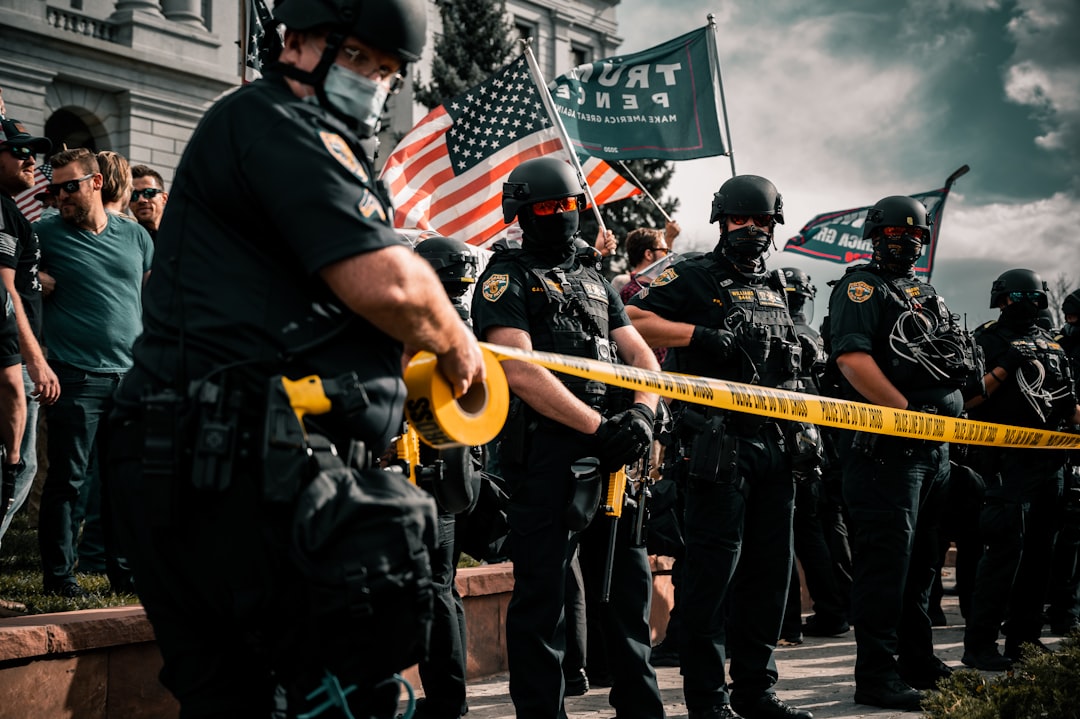
Photo by Colin Lloyd on Unsplash
Sarah Mitchell didn't plan to become an election integrity activist. The 52-year-old accountant from suburban Pennsylvania simply attended a town hall in early 2021 out of curiosity about some new voting legislation her state legislature was considering. What she heard shocked her. Within eighteen months, she'd connected with thousands of similarly alarmed citizens across the country—not because of a coordinated campaign, but because they'd each independently discovered that their state representatives were rewriting the fundamental rules of democracy, often with minimal public awareness.
This is the real political revolution happening right now. It's not about who wins the presidency or which party controls Congress. It's about who gets to vote, how their votes are counted, and who decides when an election is legitimate. And it's happening in statehouses from Arizona to Georgia to Wisconsin, often in special sessions, late-night votes, and legislative maneuvers that barely register on the national news cycle.
The Invisible Infrastructure of Democracy
Most Americans understand that the Constitution grants states significant authority over election administration. What fewer realize is how thoroughly some states are now exercising that power—and how radically they're changing the rules mid-game.
Start with Georgia. After the 2020 election, the state passed SB 202, a 98-page bill that touched nearly every aspect of voting. It cut the early voting period for runoffs, made it harder to request absentee ballots, reduced ballot drop boxes, and gave the state election board new powers to "examine" county election procedures. The bill passed on a party-line vote, with minimal debate and less public testimony. But here's what matters: approximately 180 million Americans live in states that have passed similar measures since 2020. That's more than half the country.
The changes aren't uniform. Arizona has made it easier for anyone to get flagged as a "provisional" voter. Texas has restricted voting methods and made it harder for election administrators to conduct voter registration drives. In Wisconsin, gerrymandered district maps mean Democrats could win the statewide popular vote by significant margins and still lose legislative control. These aren't coincidences. They're the result of deliberate choices made by people you've probably never heard of, in rooms you weren't allowed to enter.
Follow the Logic, Not Just the Partisanship
Now, here's where this gets complicated. These changes aren't all driven by the same motivation, and pretending they are misses something important about how politics actually works.
Some of these measures genuinely stem from concerns about election security—concerns that exist across the political spectrum, though they manifest differently depending on which election losses you're explaining. Others are clearly designed to suppress turnout among groups more likely to vote for the opposing party. Still others are simply the natural result of partisan legislatures wanting to protect their power. The Republicans in Wisconsin didn't suddenly become election-security obsessives after 2020; they were already trying to limit Democratic turnout. The 2020 election just gave them cover and urgency to go further.
But here's the crucial part: The Disappearing Swing Voter: Why Politicians Are Abandoning the Middle explains how this connects to a larger trend. When politicians stop competing for the middle, they start competing over who can energize their base and control the rules. State election administration becomes more important than persuasion. Winning isn't about convincing voters; it's about making sure the right people can vote.
Why Nobody's Talking About This (And Why They Should Be)
There's a paradox at the heart of this story. These changes are happening in public. They're documented in bills that anyone can read. State legislatures hold open sessions. Yet somehow, the vast majority of Americans remain unaware that their voting rights are being rewritten around them.
There are a few reasons for this. First, state politics is genuinely boring compared to presidential drama. Cable news doesn't make money covering obscure rule changes to early voting windows. National political reporters, based mostly in New York and Washington, have limited capacity to cover 50 different state legislatures. Second, these changes are technical. "Provisional ballot procedures" doesn't trigger the same visceral response as "voter suppression." The people making these rules know this. They deliberately frame things in procedural language that keeps the public at arm's length.
Third—and this matters most—the people being affected by these changes first don't have the infrastructure to fight back. A retired teacher in Atlanta who suddenly can't vote early in the morning before work doesn't realize 150 million other people just got the same rule change. They think it's just their problem. They don't know other people are experiencing the same thing. By the time the pattern becomes visible, the laws are already written and signed.
The Turning Point
We're reaching a critical moment. Some states are continuing to make voting more restrictive. Others are moving in the opposite direction, expanding mail voting and early voting access. This divergence is creating a patchwork election system where the rules of democracy depend almost entirely on your zip code.
More troubling: These state-level changes are creating conditions where the 2024 election—and the ones that follow—could be decided not by voters, but by election administration rules written by partisan legislatures. It's not a conspiracy theory. It's not speculation. It's what's actually happening, documented in state legislative records, and virtually invisible to the people it affects most.
The question now isn't whether these changes are happening. It's whether enough people will notice before they become permanent features of American democracy.
Comments (0)
No comments yet. Be the first to share your thoughts!
Sign in to join the conversation.