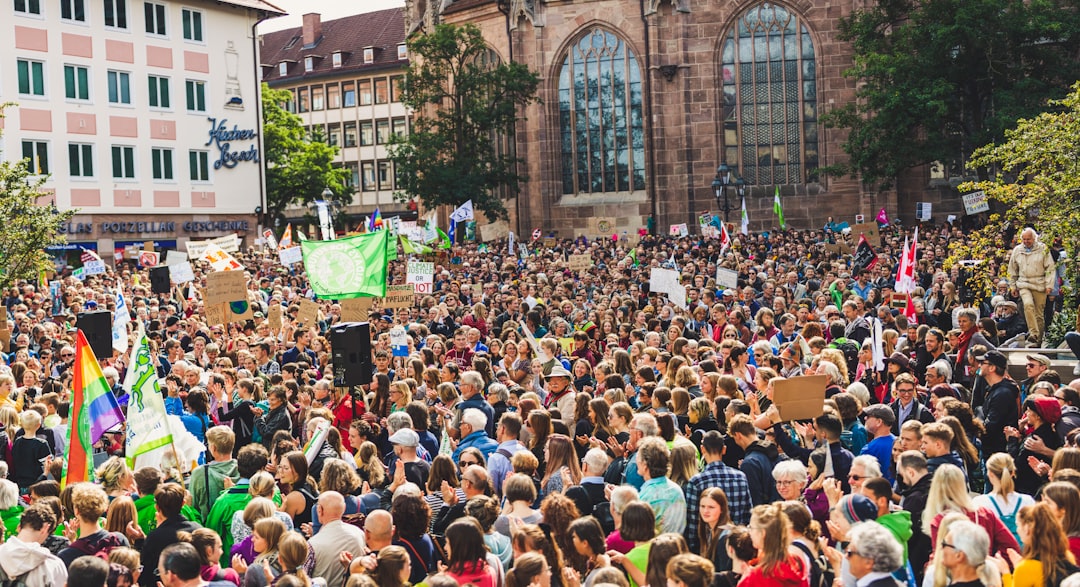
Photo by Markus Spiske on Unsplash
When Tom Hofeller died in 2018, nobody expected his hard drives to become the smoking gun in America's gerrymandering wars. Yet the Republican redistricting strategist's files, discovered by his estranged daughter, contained detailed instructions on how to use racial data to pack Black voters into specific districts. They proved what many suspected: the 2010 redistricting wasn't just political strategy. It was an algorithmic takeover of democracy itself.
Gerrymandering isn't new. Politicians have been manipulating district boundaries since 1812, when Massachusetts Governor Elbridge Gerry signed off on a district so bizarre it resembled a salamander (hence the name). But modern gerrymandering is different. It's faster, more precise, and more lethal to competitive elections than anything we've seen before.
The Data Revolution Changed Everything
For most of American history, gerrymandering required guesswork. You had election results, demographic hunches, and a map. A strategist might pack opposing voters into a few districts or scatter them across many, but it was all educated guessing. The margins of error were real.
Then came 2010. That year, Republicans invested heavily in sophisticated software and precinct-level voter data. They built models that could predict voting behavior down to the individual block. It wasn't magic—it was mathematics. By combining voter turnout data, consumer information, social media activity, and census records, they could create districts that were virtually impossible for Democrats to win.
The results were staggering. In 2012, despite winning the popular vote nationally in House races by over a million votes, Democrats gained zero seats. In some states like Pennsylvania and Wisconsin, Republicans locked in supermajorities that persisted for an entire decade regardless of how voters actually voted. A Republican could win a district 43-57 and still keep their seat because the remaining districts were drawn to be 65-35 Republican.
But here's where the story gets uncomfortable: Democrats didn't sit idle. When they gained control of certain state legislatures after 2018, they immediately deployed the same playbook. In Maryland, Illinois, and New York, Democratic cartographers wielded their own data wizards to create districts that guaranteed Democratic dominance. California's independent commission became a rare exception, but even that state saw plenty of strategic line-drawing.
Why This Matters More Than You Think
Gerrymandering doesn't just affect which party wins elections. It fundamentally warps what politicians believe their constituents want.
In a gerrymandered district, you're not competing for swing voters. You're competing against challengers from your own party in the primary election. This incentivizes extremism. A Republican in a heavily gerrymandered Republican district faces primary threats from the right, so they move right. The same applies to Democrats. Suddenly, compromise becomes political suicide.
Look at Congress. In 1992, according to the Brookings Institution, roughly 100 House seats could be considered competitive. By 2020, that number had dropped to 30. Fewer competitive districts means fewer politicians who need to appeal to moderate voters. It's one of the primary reasons Congress has become increasingly polarized and dysfunctional over the past two decades.
The effects ripple outward. Teachers can't find bipartisan support for funding. Infrastructure projects stall because representatives can't work across party lines. Even basic facts become contested because there's no political incentive to appeal to centrist voters anymore. You win by turning out your base, not by persuading the middle.
The Legal Maze Nobody Really Understands
You'd think the Constitution or federal courts would have stopped this by now. You'd be wrong.
The Supreme Court has been surprisingly permissive about partisan gerrymandering. In 2019, in Rucho v. Common Cause, the Court ruled that extreme partisan gerrymandering is a political question, not a legal one. Translation: courts can't stop it. The remedy, according to Justice John Roberts, is the ballot box—though that's hard to fix when the maps are rigged.
There's a parallel issue with racial gerrymandering. The Voting Rights Act originally prevented race-based manipulation of district lines. But the Shelby County decision in 2013 gutted much of that protection. Now, states don't need federal approval before changing voting rules. Some have used this freedom to draw districts that dilute minority voting power while claiming they're just being partisan.
The legal uncertainty creates perverse incentives. States fight gerrymandering cases for years, spending millions on litigation, betting that they'll eventually win or that the political winds will shift. Meanwhile, democracy becomes a game of legal brinkmanship.
The 2020s Redistricting and What's Actually Changing
After the 2020 census, the redistricting wars started again. This time, something unexpected happened in a few places.
California, Arizona, Michigan, and Colorado all used independent commissions instead of letting politicians draw their own districts. The results? More competitive elections. Suddenly, politicians had to appeal to actual swing voters again. These states didn't eliminate gerrymandering entirely, but they made it significantly harder.
Some reforms are working. Independent redistricting commissions with diverse representation tend to create more competitive districts. Multi-partisan or nonpartisan oversight reduces the ability of either party to create cartographic supermajorities. It's not perfect, but it's better than letting the incumbents choose their voters.
Yet most states still allow politicians to draw their own maps. And as long as that's true, both parties will continue the arms race, getting more sophisticated with each iteration. The next generation of redistricting software will incorporate even more data: social media activity, vehicle location data, purchase histories. The tech will outpace the legal constraints.
What Actually Needs to Happen
Real reform requires action at the state level. Federal solutions are unlikely—Congress can't be trusted to referee itself, and the Supreme Court has basically washed its hands of the issue. For a deeper understanding of how politicians manipulate election rules more broadly, read about how state legislatures are quietly rewriting election rules without Congress noticing.
States need independent redistricting commissions staffed by people without partisan incentives. They need transparency in the process. They need to prioritize competitive districts over partisan advantage. Some states are moving in this direction. Many are not.
Until gerrymandering is addressed seriously, American politics will remain a rigged game. Voters won't choose their representatives—representatives will choose their voters. And that's not democracy. It's just math.
Comments (0)
No comments yet. Be the first to share your thoughts!
Sign in to join the conversation.