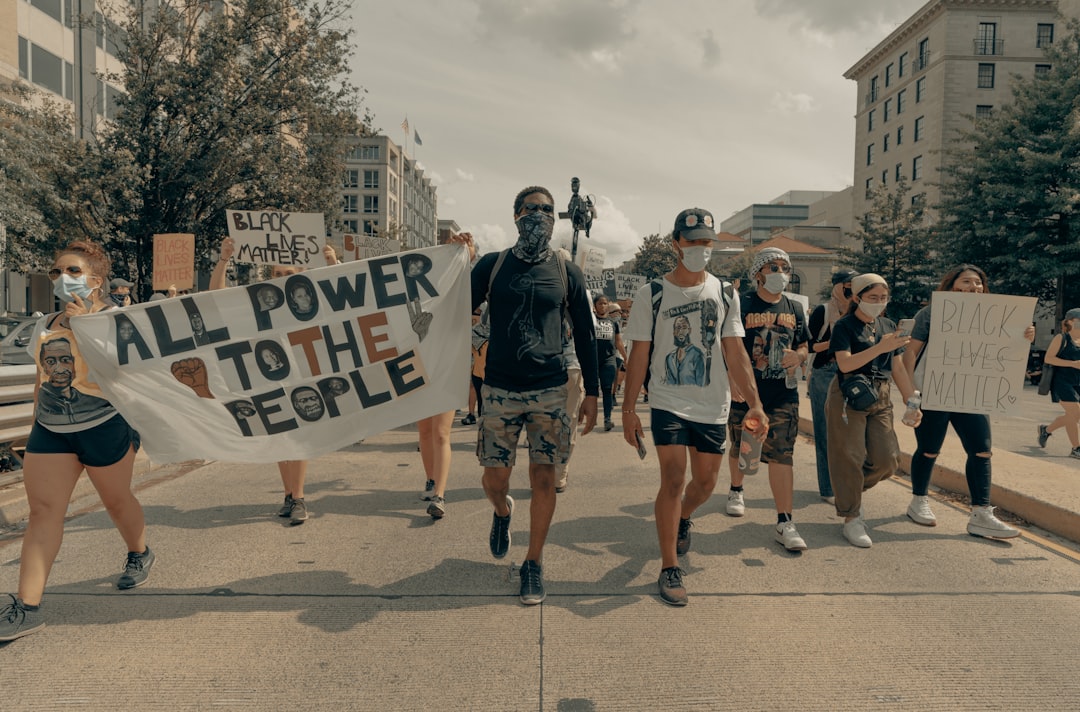
Photo by Clay Banks on Unsplash
Nobody campaigns to become a county election administrator. There are no billionaire-funded super PACs supporting your local clerk's reelection bid. Yet these bureaucratic positions—scattered across 8,000 jurisdictions nationwide—have quietly become some of the most consequential roles in American politics.
Consider what happened in Maricopa County, Arizona, during the 2020 election. The county's election officials made a decision to use Dominion voting machines. This single procurement choice became the flashpoint for months of audits, recounts, and conspiracy theories that consumed national attention. But here's the thing: the person who made that equipment decision? Most Americans couldn't name them. Most Arizonans couldn't either.
The Invisible Infrastructure of Voting
Election administration sounds boring, and that's partly by design. These officials manage ballot design, voter registration databases, poll worker training, equipment maintenance, and the actual counting of votes. It's procedural work. It requires technical competence more than charisma.
But boring doesn't mean unimportant. A 2022 analysis by the Brennan Center for Justice found that election administration decisions made at the local level directly affected the ability of roughly 21 million Americans to vote in recent elections. We're talking about voter purges, ballot rejection rates, polling place closures, and provisional ballot handling.
In Georgia's 2020 election, for instance, Fulton County's election director Richard Barron faced immediate scrutiny—and later, legal battles—over how the county managed its vote counting process. He became a household name almost overnight, not because he had political ambitions, but because procedural decisions he made became exhibits in a national controversy. Barron had been doing his job for years without anyone noticing. Then suddenly, everyone was watching.
This pattern repeats everywhere. In 2020, election officials from both parties received death threats for conducting elections the way they'd always done them. Dozens announced they wouldn't seek reelection. Some left the field entirely. Why? Because their administrative choices suddenly had national political consequences, and they became convenient targets for blame when outcomes disappointed various factions.
Where The Real Decisions Actually Happen
Most people think election outcomes are determined at the polling booth. The more engaged voters think outcomes are determined in state capitals, where legislatures pass voting laws. But talk to election officials, and you'll learn a different story.
Courtney Geacelași, who has run elections in three different Colorado counties, explains that state election laws often contain ambiguities that require local interpretation. Should a mail-in ballot postmarked on Election Day but arriving three days late count? The statute might not specify. The election official has to decide—and that decision could affect thousands of votes in a close race.
Voter registration is another massive discretionary area. State law sets broad guidelines, but county officials determine how aggressive to be with voter purges, how to handle name matching with DMV records, and how to process registration applications. Researchers have found enormous variation between counties that use identical state laws. Some counties purge voters at three times the rate of neighboring counties.
Poll worker selection and training is yet another invisible power center. Which neighborhoods get experienced poll workers versus first-timers? Which precincts use voting machines versus hand-counting? These staffing decisions directly impact wait times and error rates. In the 2000 Florida recount, differences in how various counties trained poll workers and managed ballots almost certainly changed the presidential outcome.
The Staffing Crisis Nobody's Talking About
Here's a crisis brewing beneath the surface: local election administration is experiencing a legitimacy crisis paired with a staffing collapse.
Before 2020, election administration positions were sleepy civil service jobs. You hired a competent manager, they stayed for 15-20 years, and continuity ensured smooth operations. But after 2020, everything changed. Trained, experienced election directors started leaving en masse. According to the Election Assistance Commission, roughly 30% of election officials surveyed in 2021 reported experiencing threats or harassment.
That matters tremendously. When experienced professionals exit, they're replaced by people with less institutional knowledge. When someone leaves after managing five elections, their replacement starts from scratch. Institutional knowledge walks out the door. The election system becomes more vulnerable to mistakes—not because of conspiracy, but because of ordinary human inexperience.
States have tried to recruit replacements with higher salaries, but election administration positions still pay far less than comparable private-sector work. A county election director in a mid-sized jurisdiction might make $65,000-$80,000 annually. A database administrator in a corporation makes $100,000-$150,000. Guess who wins that talent competition?
Why We Should Pay Attention
The rise of election administration as a hyper-visible political battleground is new and unstable. These positions were never designed to handle intense partisan scrutiny. Election officials traditionally operated as neutral, technical experts. But once their work becomes politically fraught—once every procedural decision is screenshotted and debated online—the job becomes nearly impossible.
If we care about election integrity, we should care about supporting the people doing this work. That might mean better pay to retain experienced staff. It might mean protecting election officials from harassment. It definitely means understanding that these aren't politicians playing games—they're administrators managing complex systems.
The alternative is watching the professionalization of election administration continue to erode. We'll see more departures, more inexperienced replacements, and more vulnerability to genuine mistakes. The irony is grim: the more we attack election officials for doing their jobs, the worse they might actually do them.
This connects directly to a broader shift in political power. If you want to understand where real authority is concentrating in American politics, don't just watch Congress or your state capital. Watch who's making local administrative decisions. As you explore this theme further, consider reading about how state legislatures are rewriting election rules—because those rules are ultimately implemented by local officials who have more discretion than most people realize.
Comments (0)
No comments yet. Be the first to share your thoughts!
Sign in to join the conversation.