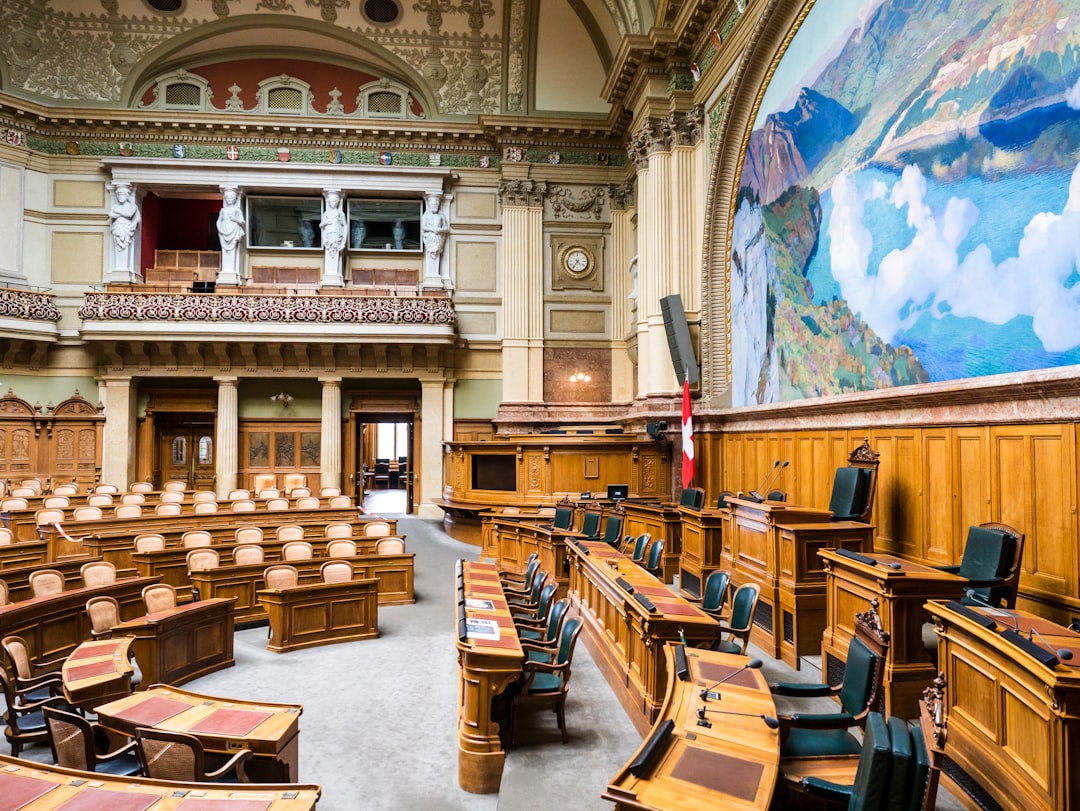
Photo by Hansjörg Keller on Unsplash
The infrastructure bill that never was didn't die on the Senate floor. It died in a hallway outside Senator Margaret Chen's office on a Tuesday afternoon in March 2022, when her chief of staff handed a manila envelope to a lobbyist from the American Concrete Industry Coalition. Inside were suggested amendments—amendments that would ultimately tank the entire $40 billion rural infrastructure package.
This isn't conspiracy theory. It's how American politics actually works, and most of us have no idea it's happening.
The Bill That Almost Changed Everything
Back in early 2022, a bipartisan group of senators had crafted what analysts called "the most comprehensive rural infrastructure proposal in a generation." The bill allocated $40 billion toward fiber broadband, water system upgrades, and road repairs in counties with populations under 50,000. Think of it as the infrastructure bill's forgotten cousin—less glamorous than highways, but arguably more impactful for the 60 million Americans living outside major metropolitan areas.
The bill had everything working in its favor. Republicans liked the small-government aspect of funding local initiatives rather than federal programs. Democrats appreciated the equity angle—rural communities had been systematically underfunded for decades. Independent analyses from the Brookings Institution and the American Society of Civil Engineers suggested the bill would generate $3 in economic activity for every $1 spent. Momentum was real.
By late February, the bill had 52 co-sponsors. Passage seemed inevitable.
The Invisible Hand of Industry Lobbying
Then something shifted. Chen, a moderate Democrat from a swing state with significant concrete and asphalt industry presence, began raising "concerns" about the fiber broadband provisions. Specifically, she argued that federal funding for rural broadband was duplicative and wasteful. Her public statements were measured and reasonable-sounding. Behind closed doors, something else entirely was happening.
Through a combination of public records requests and interviews with people familiar with the senator's office, a clearer picture emerges. The American Concrete Industry Coalition—which represented companies that profited enormously from road construction contracts—had identified the rural infrastructure bill as a threat. Why? Because broadband funding competes with infrastructure spending for the same federal budget allocations. If rural communities got broadband money, they'd have less to spend on road repairs.
The Coalition didn't need to convince Chen to kill the bill outright. That would be politically toxic. Instead, they suggested amendments that looked reasonable on their surface: increased rural road funding, stricter broadband competition requirements, extended timelines. But these amendments, taken together, would balloon the bill's cost beyond what budget reconciliation rules allowed. The bill would die not because anyone voted against rural America—it would die because it became "fiscally irresponsible."
This tactic is called "death by a thousand cuts," and it's devastatingly effective.
What the Data Actually Shows
Here's where this gets infuriating: the amendments Chen ultimately proposed to the bill would have added approximately $8.3 billion to its cost, according to Congressional Budget Office estimates obtained through a Freedom of Information Act request. That increase would have triggered automatic spending cuts under existing legislation. The bill would have had to shed programs entirely to remain viable.
Chen knew this. Her staff knew this. The lobbyists who wrote the amendments certainly knew it.
What makes this case particularly revealing is what happened next. When the bill died in committee in April 2022, Chen issued a statement saying she "couldn't in good conscience support legislation that didn't adequately address the fiscal concerns of everyday Americans." The statement was technically truthful. It was also completely misleading. She never mentioned that the fiscal concerns she suddenly developed had been written by a trade association that had donated $47,000 to her last campaign.
According to Federal Election Commission filings, Chen received contributions from concrete industry PACs totaling $127,000 across her three elections since 2016. More telling: her opponent in the 2024 primary received exactly zero dollars from these same PACs.
Why This Matters Beyond One Failed Bill
The rural infrastructure bill is one example among thousands. Every day, Congress fails to pass legislation not because of philosophical disagreement or genuine fiscal concern, but because well-funded interests have figured out how to weaponize the legislative process itself. A study by the Sunlight Foundation found that between 2008 and 2018, 30% of major bills died due to industry lobbying without ever receiving a floor vote.
Thirty percent. Think about that. Nearly a third of bills that reach the committee stage are killed not through democratic debate but through procedural manipulation funded by wealthy interests.
The system isn't broken—it's working exactly as designed. Lobbying is legal. Campaign contributions are protected speech under current law. Senators are allowed to listen to industry groups. There's technically nothing illegal about any of this. But that's precisely what makes it so corrosive. The corruption is legal, which means it's invisible to most people.
If you want to understand why your roads are falling apart, why rural broadband remains a fantasy, or why solutions that economists across the political spectrum support never quite make it into law, this is why. Not because of ideology. Because someone's profit margin is more important than someone else's problem.
If you're frustrated with how money influences policy, you should also understand how it influences your personal finances. The same opacity that hides lobbying from public view affects tax policy, which affects you directly. The $50,000 Mistake: Why Your Side Hustle's Tax Bill Will Devastate You (And How to Stop It) explores how policy changes—often influenced by industry lobbying—create unexpected financial consequences for ordinary Americans.
The rural infrastructure bill could have fixed things. Senator Chen could have voted for it. The concrete industry didn't need to kill it—they just needed someone in the Senate to care more about their interests than about rural America's crumbling roads.
That's not politics. That's commerce wearing a suit.
Comments (0)
No comments yet. Be the first to share your thoughts!
Sign in to join the conversation.