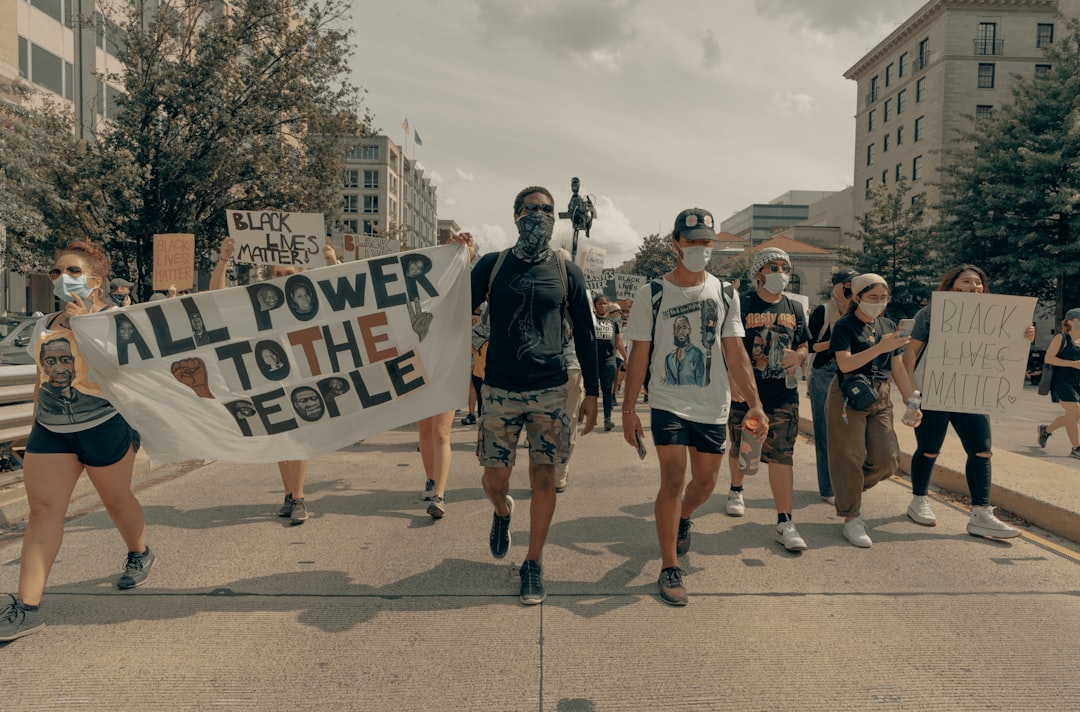
Photo by Clay Banks on Unsplash
Colorado just became ground zero for one of the most consequential legal battles American democracy has faced in decades. In December 2023, the Colorado Supreme Court ruled that Donald Trump could be removed from the 2024 ballot under the 14th Amendment's insurrection clause. But here's what really matters: the state's logic didn't stop at Trump. It opened a door that could fundamentally reshape how America elects its presidents.
Most people don't realize that the Electoral College isn't some fixed constitutional monument. It's more like a ship that's been patched and repaired so many times that nobody's quite sure what it looks like anymore. And this Colorado case is threatening to saw through the hull.
The 14th Amendment Isn't What You Think It Is
Section 3 of the 14th Amendment, ratified in 1868, contains remarkably straightforward language: "No person shall be a Senator or Representative in Congress, or elector of President and Vice President, unless he shall have taken an oath... and afterward engaged in insurrection or rebellion."
Notice that last phrase. "Elector of President and Vice President." That's not the president themselves. That's the person who casts the electoral vote. And here's where things get weird, because Section 5 of the same amendment says Congress gets to enforce it. But Colorado didn't wait for Congress. They just decided to enforce it themselves through their courts.
The Colorado court's reasoning was legally sound on its surface. But it raised an immediate problem: if Colorado could remove Trump from the ballot under the 14th Amendment, couldn't other states do the same? And if they could, what happens when multiple states start removing candidates from their ballots for different reasons?
The Domino Effect Nobody's Talking About
Imagine the 2028 election. A Democratic candidate faces accusations of insurrection after a chaotic protest outside the Capitol. Texas Republicans don't wait for federal courts. They go to their state Supreme Court and get the candidate removed from Texas ballots. Meanwhile, California's courts rule that a Republican candidate violated some other constitutional clause and removes them instead.
You end up with a patchwork presidency. A candidate who wins in some states but gets removed in others. A situation where your vote counts different depending on which side of a state line you live on.
This isn't hypothetical paranoia. It's the logical conclusion of Colorado's approach. And the U.S. Supreme Court apparently agreed it was dangerous. In March 2024, they unanimously reversed Colorado's decision, with even the most liberal justices concluding that individual states can't unilaterally remove candidates from federal elections.
But the Supreme Court's decision didn't actually settle the question. It just kicked it to Congress. The court basically said: "If you want to remove someone from the ballot under the 14th Amendment, Congress needs to pass legislation about it." And Congress, as usual, has done nothing.
The Real Threat to the Electoral College
Here's where this gets interesting. The Electoral College only works if states operate under a consistent set of rules. The whole system depends on each state being able to award its electors however it wants, sure, but within certain boundaries. You can't have states playing constitutional referee because then the institution itself becomes unreliable.
This connects to a broader erosion we're seeing in American politics. Politicians are increasingly abandoning the middle ground, and states are following suit. When Colorado acted unilaterally on the ballot question, they weren't following some established procedure. They were innovating. And once one state innovates in constitutional matters, others follow.
The Electoral College has survived slavery, secession, and two world wars. But it might not survive an environment where every state legislature feels empowered to reinterpret the Constitution on their own. That's the real danger lurking in the Colorado case.
What Actually Has to Happen
Congress could fix this tomorrow if it wanted to. They could pass legislation that establishes uniform national rules for 14th Amendment disqualification. They could create a process, maybe even a federal commission, to determine whether candidates meet the constitutional threshold for removal.
But Congress won't do this because it requires both parties to agree to something, and right now both parties think the 14th Amendment might benefit them at some future point. Democrats are holding onto the threat of using it against Trump allies. Republicans are envisioning scenarios where they could use it against Democratic candidates.
So we're stuck in a legal limbo. The Supreme Court has said states can't act alone. Congress has done nothing. And the next election cycle is already approaching.
The Elephant That Isn't in the Room
Nobody in mainstream politics wants to admit it, but this whole situation suggests the Electoral College itself might not survive another decade. Not because anyone will formally abolish it, but because it requires a level of institutional trust and uniform rules that we're actively eroding.
The Colorado case didn't just expose a gap in the law. It revealed something more fundamental: we no longer have agreement on who gets to interpret the Constitution. And without that agreement, the Electoral College becomes less an institution and more a gamble.
Whether that's good or bad might depend on who you ask. But it's definitely coming.
Comments (0)
No comments yet. Be the first to share your thoughts!
Sign in to join the conversation.