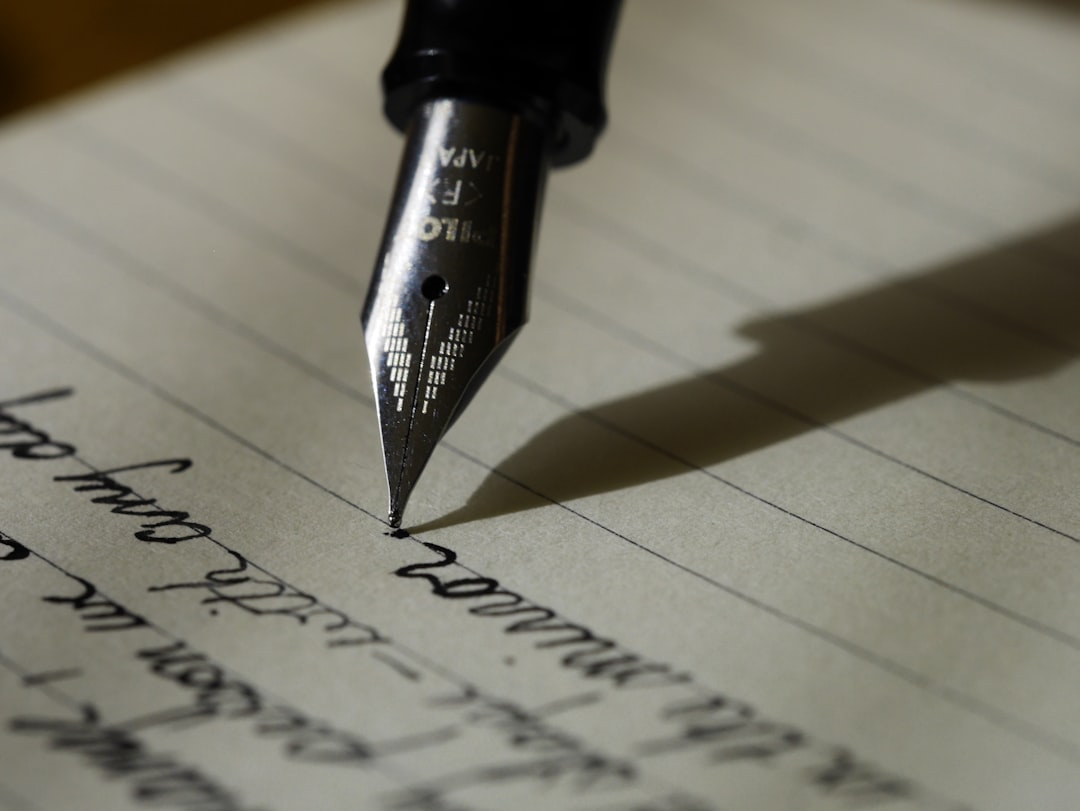
Photo by Aaron Burden on Unsplash
Most people don't realize they've experienced a volta. They've felt it, though—that stomach-dropping moment when a poem pivots beneath them like a chair being pulled out. One second you're reading about something ordinary, maybe a pair of worn shoes or a rainy Tuesday. The next second, the poem has twisted the knife and suddenly you're contemplating mortality, love, or the precise weight of regret.
The volta is poetry's most honest tool. It's where pretense dies and truth gets born.
What Exactly Is a Volta (And Why Does It Matter)?
A volta—Italian for "turn"—is a sudden shift in perspective, tone, argument, or emotion within a poem. It's not a gentle transition. It's a rupture. The poem essentially says: "Everything you just read? Flip it." That reversal is where the real magic happens.
Consider Sonnet 73 by Shakespeare, perhaps the most famous volta in English literature. For twelve lines, he describes his aging body: winter approaching, bare branches, dying fire. You think you know where this is going—another mournful meditation on decline. Then the volta arrives in line 13, and he redirects the entire poem's meaning. Suddenly his wrinkles aren't just sad reminders of time's cruelty; they're proof that he's loved deeply, that someone has chosen him anyway.
That's the volta. It doesn't erase what came before. Instead, it retroactively rewrites its significance.
The power lies in its ambush quality. Our brains are prediction machines. We anticipate patterns and get comfortable. A volta disrupts that comfort. When it lands correctly, it creates a neurological jolt—that tingling in your spine, that sudden moisture in your eyes. You've been reading one poem and ended up reading a completely different one.
The Volta Across Forms: From Sonnets to Free Verse
Most people associate the volta with sonnets because sonnets are structurally built for it. The Petrarchan sonnet practically mandates a volta between the octave and sestet. You get eight lines of problem-statement, then six lines of resolution or recontextualization. It's architectural. The volta isn't optional; it's load-bearing.
But here's what makes modern poetry exciting: poets started using voltas everywhere, even in forms that don't have traditional structures. Free verse poets discovered something crucial—you don't need iambic pentameter or a rhyme scheme to create that devastating turn.
Look at Ocean Vuong's "Aubade with Breakfast." The poem opens with domestic tenderness: coffee, morning light, a beloved sleeping nearby. Gorgeous stuff. But midway through, Vuong shifts into something darker, where that same domestic scene becomes weighted with the speaker's anxiety about mortality and absence. The volta recontextualizes everything. That peaceful breakfast scene? It's haunted by the knowledge that breakfast won't last, that mornings end, that people leave.
Contemporary poets like Ada Limón, Ocean Vuong, and Claudia Rankine have become masters of the volta precisely because they understand something ancient poets knew: you can dismantle a reader's certainty with nothing more than a well-placed line break and a sudden tonal shift. No sonnet form required.
Why Your Brain Loves a Good Volta (The Neuroscience Part)
There's actual science behind why voltas hit so hard. When we read, our brains build predictions based on context and pattern. We're constantly anticipating what comes next—it's how meaning-making works. A volta violates those predictions. It's a controlled crash.
That crash isn't unpleasant though. Research on aesthetic pleasure suggests that art works best when it delivers about 75% predictability and 25% surprise. Too predictable and you're bored. Too surprising and you're confused. A volta lands right in that sweet spot—you had enough context to feel grounded, but the shift is sudden enough to feel revelatory.
Your dopamine system rewards unexpected patterns. When a volta lands and suddenly you understand what the poet was setting up the entire time, your brain releases a chemical reward. You feel smart. You feel seen. You feel like the poem knew you were waiting for exactly this twist.
That's addictive. That's why people memorize poems with perfect voltas. That's why you can read a volta-driven poem a dozen times and still get goosebumps.
The Volta as Moral Tool: When Poetry Changes Minds
A volta doesn't just rearrange emotions; it can rearrange ethics. When a poet uses a volta to force you to reconsider your assumptions about a person, place, or situation, they're doing something radical. They're using form to change consciousness.
Claudia Rankine's work is particularly brilliant at this. In pieces like "The Condition of Black Life is One of Mourning," she builds careful scenarios of racial microaggressions, then uses tonal and perspectival shifts to make the reader complicit in those aggressions. The volta forces you to see yourself differently. It's uncomfortable. That discomfort is the point. The volta becomes a ethical instrument.
Or consider Marie Howe's "The Attic," where she recounts childhood memories with her siblings, then pivots in the final stanza to reveal that her brother—her focal point through much of the poem—is gone. The entire poem's meaning reorganizes itself. You realize you've been mourning something the whole time without knowing it.
This is the volta as truth-telling device. It mirrors how we actually discover hard truths: gradually, through accumulation, then suddenly—all at once.
How to Write Your Own Volta (And Know When You've Nailed It)
The key is preparation. A volta only works if readers have been set up properly. You can't just randomly shift tone. You need to build a stable context first, something readers can stand on before the ground shifts.
Start by identifying your poem's unstated assumption—what is the reader assuming to be true? Then violate that assumption in a way that feels inevitable, not random. The volta should feel surprising in hindsight, like the reader could have seen it coming, but they didn't.
You'll know you've nailed it when you read your poem aloud and hear the exact moment in the room where that tonal shift happens. If you're reading to an audience, they'll actually breathe differently. Their bodies will shift. That's the volta working.
For a deeper dive into how form itself can create these kinds of emotional shifts, check out "The Enjambment Revolution: How Line Breaks Became Poetry's Most Radical Tool" to understand how other structural choices work alongside the volta to create meaning.
The volta is why poetry matters. It's the moment where language stops being decoration and becomes a tool for seeing. It's the hinge on which the door to a new understanding swings open. Master the volta, and you've mastered poetry's most reliable path to changing how readers think.
Comments (0)
No comments yet. Be the first to share your thoughts!
Sign in to join the conversation.