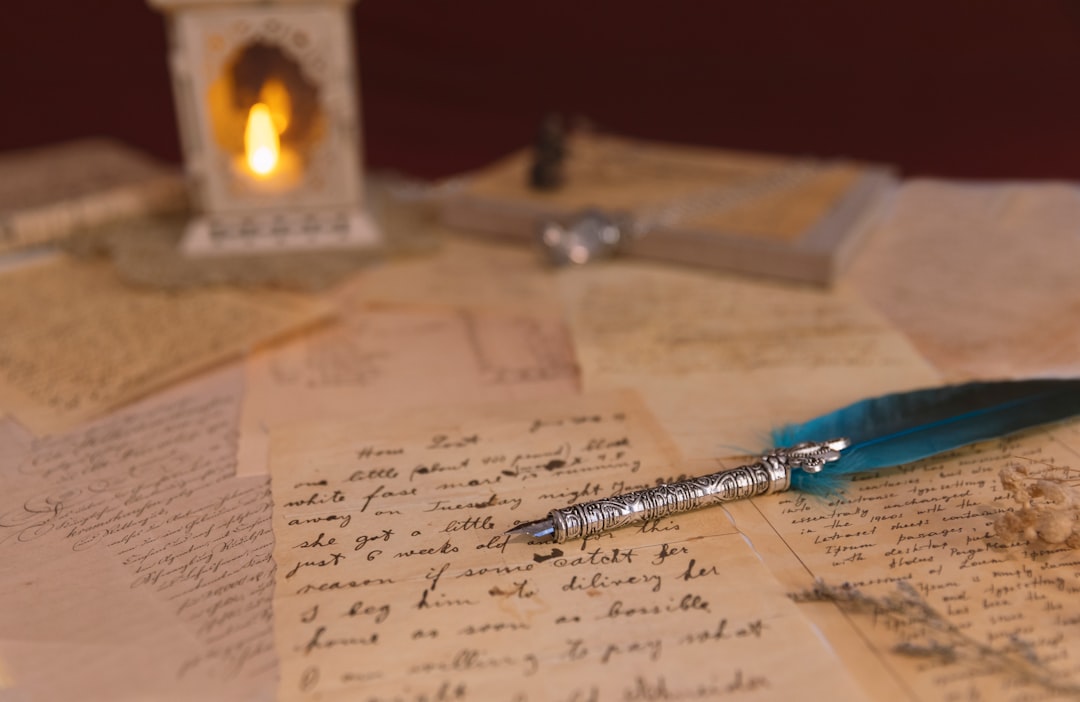
Photo by Mrika Selimi on Unsplash
My friend Sarah showed me a prose poem in 2019 and I didn't believe it was a poem. There were no line breaks, no stanzas, nothing that looked remotely like what I'd memorized in high school. "This is just a paragraph," I said. She rolled her eyes and handed me Charles Baudelaire's "Paris Spleen." Three pages later, I understood why prose poems have spent the last 150 years quietly revolutionizing how poets think about their craft.
The prose poem is poetry's identity crisis turned into an art form. It abandons the line break—that sacred architectural element of verse—and instead wraps itself in the sentence and paragraph structure of prose. Yet it refuses to be merely prose. It maintains compression, imagery, musicality, and that electric quality we recognize as poetic. It's a form that shouldn't work, and yet it absolutely does.
The Birth of Rebellion: How Baudelaire Started a Genre War
Charles Baudelaire didn't set out to create a new form. He was frustrated. In 1862, he published "Le Spleen de Paris," a collection of prose poems he described almost defensively as works "without rhythm or rhyme, but musical nonetheless." He was working in the 1850s, when poetry meant structure, meter, and predictability. For Baudelaire, this felt suffocating.
What made Baudelaire's work revolutionary wasn't that he broke the rules—poets had been doing that forever. It was that he created a *new* form specifically designed to capture modern urban life. You couldn't describe the sensory overload of 19th-century Paris in neat quatrains. You couldn't fit the experience of losing yourself in a crowd into a sonnet. So he didn't try. Instead, he wrote about a beggar woman, a drunk morning, and the smell of gaslight in language that felt both elegantly literary and genuinely alive.
The literary establishment didn't know what to do with him. Critics complained that these weren't real poems. Poetry journals rejected his work. But readers began smuggling his books around Paris anyway, drawn to how accurately his prose poems captured the texture of modern consciousness.
The American Adoption: When Free Verse Poets Discovered a Kindred Spirit
Prose poems remained largely a European phenomenon until the mid-20th century, when American poets experimenting with free verse suddenly realized something: if you could break the rules of meter and rhyme, why couldn't you also break the rules of line breaks?
Poets like Russell Edson and James Wright began publishing prose poems in literary magazines throughout the 1960s and 1970s. Wright, famous for his free verse explorations of grief and beauty, produced works like "Lying in a Hammock at William Duffy's Farm in Pine Island, Minnesota"—a piece that feels fundamentally poetic despite its prose-like appearance. The form found its tribe among experimental poets who were already dismantling traditional poetry structures.
By the 1980s, the prose poem had become genuinely fashionable in American literary circles. Anthologies devoted entirely to prose poetry began appearing. Universities started offering workshops dedicated to the form. What was once considered a genre misfeasor had become legitimate enough to teach.
Why Prose Poems Hit Different: The Psychology of Reading Without Breaks
Here's something fascinating: when readers encounter a prose poem, their brains behave differently than when reading either traditional poetry or prose. There's a cognitive friction created by the mismatch between form and content.
A traditional poem's line breaks function like visual breathing room. They pace the reader, control emphasis, and create rhythmic momentum. Remove those breaks, and the reader must find the poem's music themselves. This isn't easier—it requires more attention, not less. The prose poem reader becomes an active participant, listening for the poetic elements hidden within prose structure.
Consider Lydia Davis, whose prose poems often contain absurdist humor and philosophical depth simultaneously. Her piece "Happily Ever After" is a single paragraph describing a brief marriage. Without line breaks to heighten dramatic moments, the humor arrives from the sheer mundanity of the language itself. The reader's expectation of poetic arrangement is violated, which makes the subtle emotional weight land differently—perhaps more powerfully—than it would in traditional verse.
This is why prose poems often feel more intimate than traditional poetry. They disguise themselves as normal writing, which makes their occasional turns toward the profound feel like genuine revelations rather than manufactured moments of beauty.
The Contemporary Explosion: Why Every Young Poet Now Writes in This Form
If you've submitted work to literary magazines lately, you've noticed something: prose poems are everywhere. They dominate contemporary anthologies. They win prestigious awards. Some studies suggest they now represent roughly 30-40% of submissions to major journals—a staggering percentage for a form that was considered illegitimate just 60 years ago.
Part of this explosion stems from how naturally prose poems accommodate contemporary poetry's concerns. Modern poets want to explore narrative without writing traditional narrative poetry. They want compression and musicality without seeming precious about formal structure. The prose poem allows all of this simultaneously.
But there's another reason, too. Social media has trained us to read in paragraph form. Instagram and Twitter educated an entire generation on the power of unbroken blocks of text. When young poets encounter prose poems, they don't seem strange—they seem like poetry that exists in the medium where poetry actually gets read now. The conversation about line breaks has shifted from "why would you remove them?" to "why would you keep them?"
Writers like Ocean Vuong, Claudia Rankine, and Anne Boyer have demonstrated that prose poems can achieve the same artistic depth and cultural impact as traditional verse. Rankine's "Citizen," a hybrid text that mixes prose poetry with visual art and critical reflection, won the National Book Award in 2014. It proved that the form could reach mainstream audiences while maintaining absolute artistic integrity.
The Resistance: Why Poetry Gatekeepers Still Get Angry
Not everyone has accepted the prose poem's legitimacy. Some traditional poets see prose poems as a betrayal of poetry's essential nature. "If there are no line breaks, it's not a poem," goes the gatekeeping argument. "It's just poetic prose."
This resistance reveals something interesting about how we define poetry. We've inherited the assumption that poetry's form is as essential as its content. But consider: Do we say that free verse isn't poetry because it lacks meter? Do we dismiss contemporary haiku because they sometimes break the 5-7-5 syllable structure? At what point do we accept that poetry's definition has always been expanding, that form follows intention rather than dictating it?
The gatekeepers might be right that prose poems occupy a strange middle ground. But perhaps that's exactly their power. They exist in the liminal space between two forms, borrowing privileges from each while accepting the limitations of neither. This ambiguity isn't weakness—it's where all the most interesting contemporary poetry lives.
The prose poem started as rebellion. Now it's become the new grammar of how contemporary poets express themselves. Baudelaire would probably find the whole thing infuriating and wonderful.
Comments (0)
No comments yet. Be the first to share your thoughts!
Sign in to join the conversation.