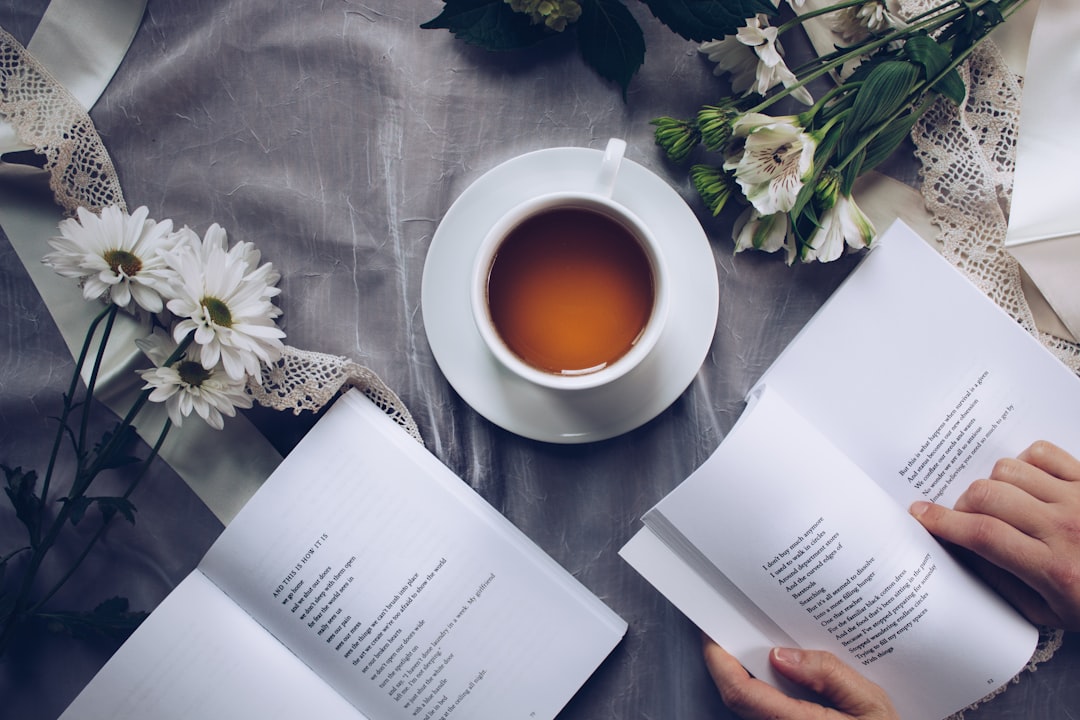
Photo by Thought Catalog on Unsplash
When you read a line of poetry that refuses to end where grammar says it should, something strange happens in your brain. Your eyes reach the margin, your breath catches, and you're forced to vault into the next line like a runner leaping an unexpected gap. That moment—that tiny crisis of expectation—is enjambment, and it's one of poetry's most underrated superpowers.
Most readers barely notice it. We've been trained to think of poetry's power as residing in metaphor, in rhythm, in the careful selection of words. But enjambment operates at a deeper level. It's the poet's way of controlling your body, governing the exact speed and texture of your reading experience, creating meaning through the sheer mechanics of how your eyes and lungs coordinate.
The Mechanics of Disruption
Enjambment occurs when a grammatical phrase or clause continues beyond the line break without a terminal punctuation mark. Simple definition, monumental effect. Consider these two versions of the same thought:
Version 1 (end-stopped): "The bird flew / toward the mountain."
Version 2 (enjambed): "The bird flew / toward the mountain's jagged teeth."
The enjambed version forces you to pause at "flew," leaving the destination hanging. Your brain is suspended in incompleteness. When you discover it's a mountain, and then—cruelly—that it has teeth, the delayed revelation feels violent, personal.
This technique emerged prominently in Renaissance poetry but didn't become truly fashionable until modernism exploded it into an art form. T.S. Eliot fragmented syntax across lines in "The Love Song of J. Alfred Prufrock," forcing readers to navigate the fractured consciousness of his anxious speaker. Marianne Moore bent lines at odd angles to create visual patterns that mirrored meaning. But the real revolution came with poets like Adrienne Rich, who weaponized enjambment to express the disorientation of being a woman in patriarchal systems, and later, contemporary poets like Ocean Vuong, who uses line breaks to interrupt, stutter, and restart like consciousness itself.
Why Line Breaks Matter More Than Words
Here's something that might surprise you: poets often report that they choose where to break lines before they fully know what they're saying. The form dictates the content. The container shapes what the contained becomes.
This is radical. It means that a poet's decision to break a line is not merely decorative—it's compositional. It's decision-making that precedes meaning.
Consider Ocean Vuong's "Night Sky with Exit Wounds." When Vuong writes about his immigrant mother, he doesn't just describe her strength through words. He embodies her through enjambment—sentences that push forward despite obstacles, that refuse to settle, that demand the reader keep moving. The line breaks mirror the urgency of survival. The form becomes the content.
Similarly, when Frank O'Hara enjambs casually through his lunch poems and urban narratives, he's not just breaking lines for effect. He's creating the syntax of spontaneity, of thinking-while-speaking, of poetry as living, breathing process rather than polished artifact. The broken lines feel like conversation interrupted by traffic, by distraction, by the real world pressing in.
The Reader's Body Gets Educated
We don't talk enough about the physical experience of reading enjambed poetry. Your eyes stop. Your breath pauses. You might backtrack to reread a line, creating a stuttering rhythm that's entirely different from how you'd read those same words in prose.
This is important because it means enjambment is a form of pacing that you cannot escape. When a poet uses end-stopped lines (where the line break coincides with grammatical completion), your reading speed is more controllable. You might speed through. You might slow for emphasis, but the choice is partly yours.
Enjambment removes your autonomy. The poet controls your tempo. They're telling your throat when to release, when to hold, when to gasp. This is why enjambment feels so intimate and sometimes so unsettling. You're not reading someone else's words at your own pace; you're being moved through them at the poet's tempo.
Contemporary poets have taken this further. Some use enjambment not just across two lines but across entire stanzas, creating ribbon-like sentences that snake through white space. Others use it selectively—end-stopping most lines but enjambing one crucial moment, which suddenly highlights that particular line's weight.
The Political Dimensions of Breaking Lines
It's not accidental that Black poets, queer poets, and immigrant poets have become particularly masterful with enjambment. When your narrative has been interrupted, fragmented, and silenced by larger systems, enjambment becomes a way of claiming syntax as your own. You're not writing in complete, confident sentences because your experience isn't complete or confident.
Claudia Rankine uses enjambment in "Citizen" to create fractured, interrupted meditations on racism that enact the experience of being constantly unsettled. The line breaks aren't beautiful in a conventional sense; they're uncomfortable. They're supposed to be. The form embodies the content in the most literal way possible: incompleteness, interruption, the refusal to give comfort.
This is why enjambment matters in contemporary poetry far beyond technical interest. It's a formal tool that has become a political tool. When marginalized poets use it, they're doing more than creating a stylistic effect. They're claiming the right to shape meaning on their own terms, to refuse the syntax of dominant systems, to create alternative rhythms of understanding.
If you want to understand how poets manipulate readers on a structural level, explore how the volta functions as poetry's greatest turning point—another moment where form becomes everything.
Start Reading Enjambment Actively
The next time you read a poem, notice where the lines break. Does the grammar end there, or does it continue? How does that choice affect your breathing? Does it create suspense, fragmentation, momentum, or something else entirely?
You'll find that once you start attending to enjambment, you can't stop seeing it. It's everywhere, in contemporary poetry especially, quietly reshaping how meaning moves through language. And that's the real secret: enjambment doesn't just affect how we read poetry. It affects how we understand the possibilities of English itself.
Comments (0)
No comments yet. Be the first to share your thoughts!
Sign in to join the conversation.