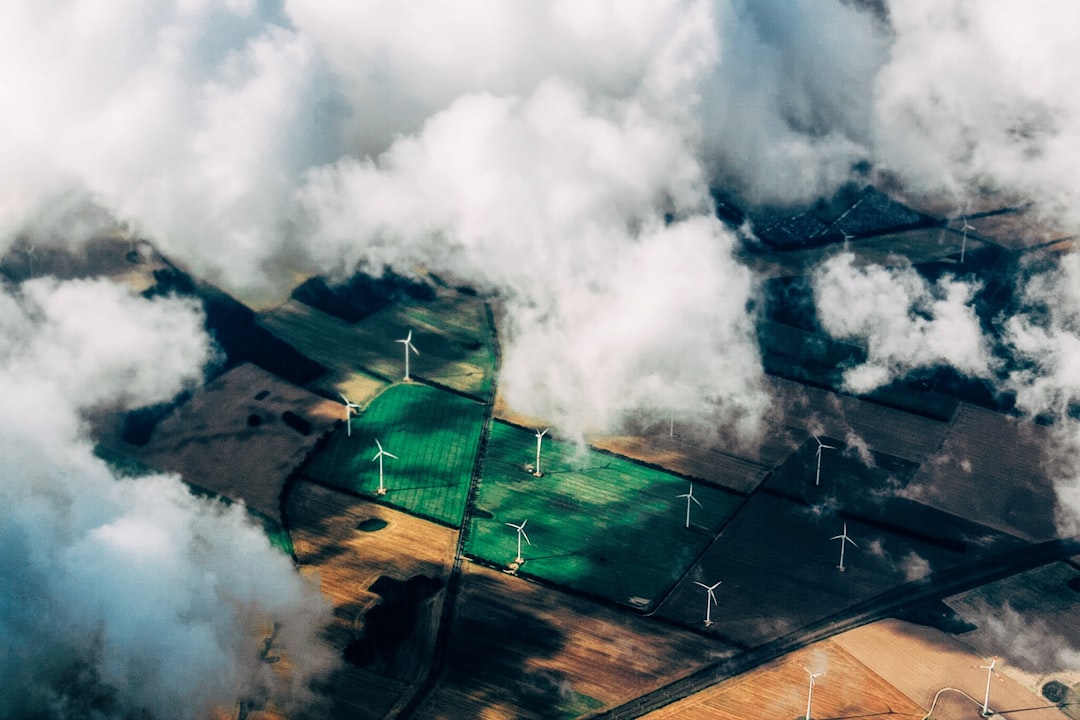
Photo by Thomas Richter on Unsplash
When farmer Marcus Wallinder walked across his 200-acre property in southern Sweden in 2015, he saw exhaustion. After forty years of intensive grain cultivation, the soil had turned gray and lifeless. The streams that once ran clear now carried sediment. He made a decision that would have seemed radical to his father: he stopped farming and let nature return.
Today, that same land hosts elk herds, nesting white-tailed eagles, and a ecosystem so vibrant that local universities use it as a research site. Wallinder's story isn't unique anymore. It's part of a global movement called rewilding—the practice of allowing degraded lands to recover their natural ecological function—and the results are forcing scientists to reconsider how quickly nature can bounce back when humans simply get out of the way.
The Numbers Behind the Green Rush
The scale of this shift is staggering. The European Environment Agency estimates that roughly 10 million hectares of agricultural land could be converted to natural habitats across Europe alone by 2050. In the United States, the Conservation Reserve Program has enrolled over 23 million acres since 1985, with landowners paid annually to transition working farms into conservation areas. These aren't marginal efforts anymore—they're becoming mainstream policy.
What makes this movement genuinely compelling isn't just the acreage numbers. It's the speed of recovery. Researchers at the University of Cambridge tracked 150 rewilding projects across Europe and found that biodiversity began rebounding within just 5-10 years of land abandonment. Species diversity increased by an average of 40% in the first decade. In some cases—particularly grassland habitats—recovery happened even faster, with native plant species recolonizing within 3-5 years.
One particularly striking example comes from the Velebit Mountains in Croatia. A 3,000-hectare estate that had been cleared for cattle grazing was abandoned in the 1990s during the Balkans conflict. Within twenty years, the area transformed into a Balkan lynx stronghold, with the first confirmed sightings in the region in over a century occurring naturally, without human reintroduction efforts.
Why Farmers Are Trading Tractors for Wilderness
The question most people ask is simple: why would anyone voluntarily stop farming? The answer reveals something important about modern agricultural economics and human values.
In many regions, particularly Europe, farming margins have compressed to the breaking point. The average EU farmer now makes approximately €20,000 annually—comparable to minimum wage work, but with higher risk and longer hours. Meanwhile, payment schemes for land conservation often exceed farming income. The UK's Environmental Stewardship scheme paid participants up to £600 per hectare annually. When you do the math, rewilding becomes economically rational.
But it's not just money. Many farmers express genuine relief at stepping away from the chemical treadmill. John Mould, who converted his English dairy farm to grassland habitat in 2012, described his first pesticide-free spring: "Suddenly the birds came back. The insects. The place felt alive in a way I'd forgotten it could be. You spray chemicals for forty years and start thinking that's just how nature works."
The cultural shift matters too. A 2022 survey by the UK Wildlife Trust found that 73% of farmers under 40 viewed rewilding positively, compared to 52% of farmers over 60. Younger agricultural professionals increasingly see themselves as stewards of ecosystems rather than purely as production-focused businesspeople.
The Complications Nobody Talks About
It would be naive to suggest rewilding is universally positive or simple. The complications are real and worth examining honestly.
For one, rewilded areas don't always produce the outcomes people expect. A 40-hectare rewilding project near Hampshire resulted in the return of adders and slow worms—excellent for biodiversity—but also created a maintenance nightmare when the rapidly expanding scrubland became a fire hazard during the 2022 UK heatwaves. Local residents weren't thrilled about snakes returning to areas their grandparents had spent decades clearing.
There's also the issue of what exactly rewilded land becomes. Without active management, some areas develop into monotonous bramble thickets or dense woodland that actually reduces certain types of biodiversity. The most successful rewilding projects increasingly incorporate some level of management—controlled grazing by herbivores, periodic burning, or strategic tree-felling—making them less "wild" and more "carefully managed restoration."
Perhaps most critically, rewilding can trigger genuine economic disruption. Rural communities depending on agricultural employment don't automatically benefit when those jobs disappear. This has created political backlash in some regions, with farming unions warning that rewilding threatens food security and rural livelihoods. These aren't trivial concerns—they're legitimate tensions between different values and needs.
The Future Isn't Just Hands-Off
The most interesting rewilding projects happening today aren't strictly "abandon and hope for the best." They're hybrid models that blend conservation science with economic pragmatism.
The Knepp Estate in Sussex pioneered what's called "rewilding with purpose." Rather than simply abandoning the land, founder Charlie Burrell introduced free-roaming livestock—cattle, pigs, horses—that naturally maintain habitat diversity. The approach simultaneously created a profitable agritourism business, restored endangered species like the turtle dove, and maintained rural employment. It's the kind of model that appeals to farmers and conservationists alike because it doesn't require anyone to lose entirely.
If you're interested in how our consumption choices affect these ecosystems, explore how agricultural practices like coffee farming compare to rewilding efforts in creating ecological change.
The rewilding movement represents something genuinely novel: a large-scale acceptance that humans don't need to optimize every square meter of land for production. That's not romantic idealism. It's pragmatic recognition that degraded monocultures are economically fragile and ecologically sterile. Nature, given space and time, demonstrates remarkable resilience.
What's happening across European farmland isn't a return to some pristine past. It's the emergence of new ecosystems shaped by centuries of human activity, now allowed to evolve without constant intervention. That process—messy, complex, and genuinely unpredictable—might be exactly what we need to imagine beyond our current binary choice between total human management and untouched wilderness.
Comments (0)
No comments yet. Be the first to share your thoughts!
Sign in to join the conversation.