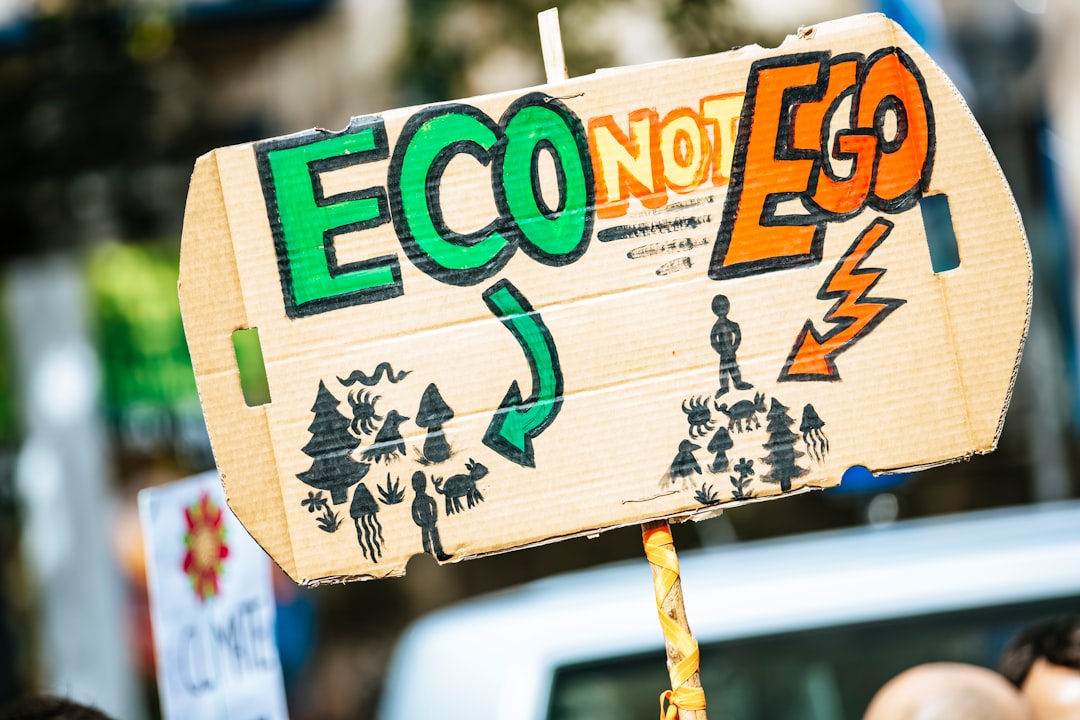
Photo by Markus Spiske on Unsplash
Your fiddle leaf fig looks sad again. Despite following every TikTok tutorial, adjusting the humidity, rotating it weekly, and talking to it like it's a sentient being, the leaves keep browning at the edges. You're not alone in this peculiar modern failure—and it's not really about your plant care skills at all.
What's happening in your living room mirrors a much larger environmental crisis unfolding across the planet. The same factors that make houseplant survival increasingly difficult for even the most dedicated plant parents are fundamentally altering how ecosystems function worldwide. Understanding this connection isn't just good for your Instagram-worthy shelf of greenery. It's a window into how our changing world affects every living thing, including us.
The Humidity Problem That's Bigger Than Your Bathroom
Most tropical houseplants evolved in environments where humidity hovers around 60-80 percent. Your apartment, especially during winter months when heating systems kick into overdrive, often sits between 20-30 percent. That's drier than many deserts. Your plant's leaves essentially shrivel as they attempt to transpire—releasing water vapor—into air that's already bone dry.
But here's where it gets interesting: the same disruptions affecting indoor humidity are altering atmospheric moisture patterns globally. Climate change is fundamentally messing with the water cycle. Warmer air holds more moisture, which sounds good until you realize it means some regions are getting torrential downpours while others are experiencing unprecedented droughts. Between 2000 and 2023, the area experiencing severe drought globally increased by roughly 29 percent, according to research published in Nature Water.
Plants in the wild can't simply mist themselves. When rainfall patterns become erratic, when growing seasons shift by weeks or even months, and when droughts stretch longer than any evolutionary adaptation prepared them for, entire forests begin to fail. Your crispy-edged monstera is experiencing a miniaturized version of what's happening to the Amazon rainforest, where trees are now spending more time in a stressed water-deficit state than they can handle.
The Light Question Nobody's Really Thinking About
You probably know that plants need sunlight. What you might not realize is that the quality and intensity of that sunlight is changing. When you move a plant away from the window because direct rays are too intense, or when you need to use grow lights because your apartment faces north, you're contending with shifts in solar radiation reaching Earth's surface.
Increased aerosol pollution, atmospheric dust, and even volcanic activity affect how much usable light plants actually receive. Some studies suggest that global dimming—the reduction in the amount of sunlight reaching Earth's surface due to increased aerosols—reduced surface solar irradiance by roughly 0.3 watts per square meter per decade between 1960 and 1990. While this trend has partially reversed due to air quality regulations in some regions, it demonstrates how invisible atmospheric changes directly impact photosynthesis.
In forests worldwide, this matters enormously. Trees that have spent millions of years optimized for specific light conditions suddenly find themselves in a different radiation environment. Understorey plants struggle when taller trees—shifting their growth patterns due to temperature changes—create unexpected shade. It's a cascading reorganization of an entire system, one that happened gradually enough on your windowsill that you might not have noticed until your plant stopped responding to your efforts.
Temperature Swings: Why Your Plant Prefers Stability
Remember when you accidentally left your succulent in a drafty spot and it got cold at night? Plants have surprisingly narrow ranges where they thrive. Most tropical houseplants prefer temperatures between 65-75 degrees Fahrenheit, with nighttime drops of 10 degrees or so—a pattern that triggers flowering and healthy growth. The moment you violate these ranges repeatedly, your plant gets stressed.
This is precisely what's happening across Earth's biomes. Global temperatures have risen approximately 1.1 degrees Celsius since pre-industrial times, which might sound trivial until you understand that many plants can only tolerate temperature variations of a few degrees. Alpine meadows are shifting upward as temperatures warm. Spring arrives earlier, throwing off the synchronized timing between plants and their pollinators. Certain tree species are experiencing bud break during unexpected warm spells in late winter, only to get killed by subsequent frosts.
The predictability that ecosystems evolved over millennia is evaporating. Plants that depend on consistent patterns—dormancy cues, flowering triggers, seed germination signals—are receiving mixed messages from a climate in flux. Coastal ecosystems are experiencing particularly dramatic transformations, as rising seas and changing temperatures combine to create conditions trees have never encountered before.
The Soil Situation: Nutrients and Mysteries
When your houseplant stops responding to fertilizer, when fresh potting soil seems to run out of nutrients faster than it should, you're witnessing something microbiological. The health of potting soil depends on fungal networks, bacterial colonies, and mycorhizal associations—invisible communities that make nutrients available to plant roots.
Soil health in natural ecosystems is in similar jeopardy. Climate change is disrupting the microbial communities that make terrestrial ecosystems function. Soil organisms that thrive in specific temperature and moisture ranges are finding their habitats shifting. Decomposition rates are changing as temperatures warm, which affects carbon cycling and nutrient availability. The forest soil your great-grandfather's great-grandfather knew is not the same soil that exists today.
When you feed your plant and it still struggles, you're sometimes looking at a problem no amount of fertilizer can fix. Similarly, ecosystems can't be restored simply by adding nutrients—the entire foundation needs stability.
What Your Dying Plant Is Actually Telling You
The frustration you feel when your plant dies despite your best efforts mirrors a larger truth: we can't engineer our way out of environmental instability by micromanaging conditions. Your houseplant struggles because you're trying to force a tropical organism to thrive in an artificial environment with fundamentally mismatched conditions. Ecosystems worldwide face a similar crisis, except they can't be relocated to a sunnier window.
The disconnect between what plants evolved to handle and what the world now demands is the core problem. Some species are remarkably adaptable, but adaptation takes generations. We've changed the rules in a matter of decades. That's not giving evolution much to work with.
Your wilting fiddle leaf fig is a small, personal reminder that everything alive on this planet depends on conditions remaining within workable ranges. When those conditions shift rapidly and unpredictably, survival becomes a game of chance rather than certainty. Perhaps the real lesson isn't how to keep your houseplant alive, but rather understanding why keeping our planet's conditions stable matters so much.
Comments (0)
No comments yet. Be the first to share your thoughts!
Sign in to join the conversation.