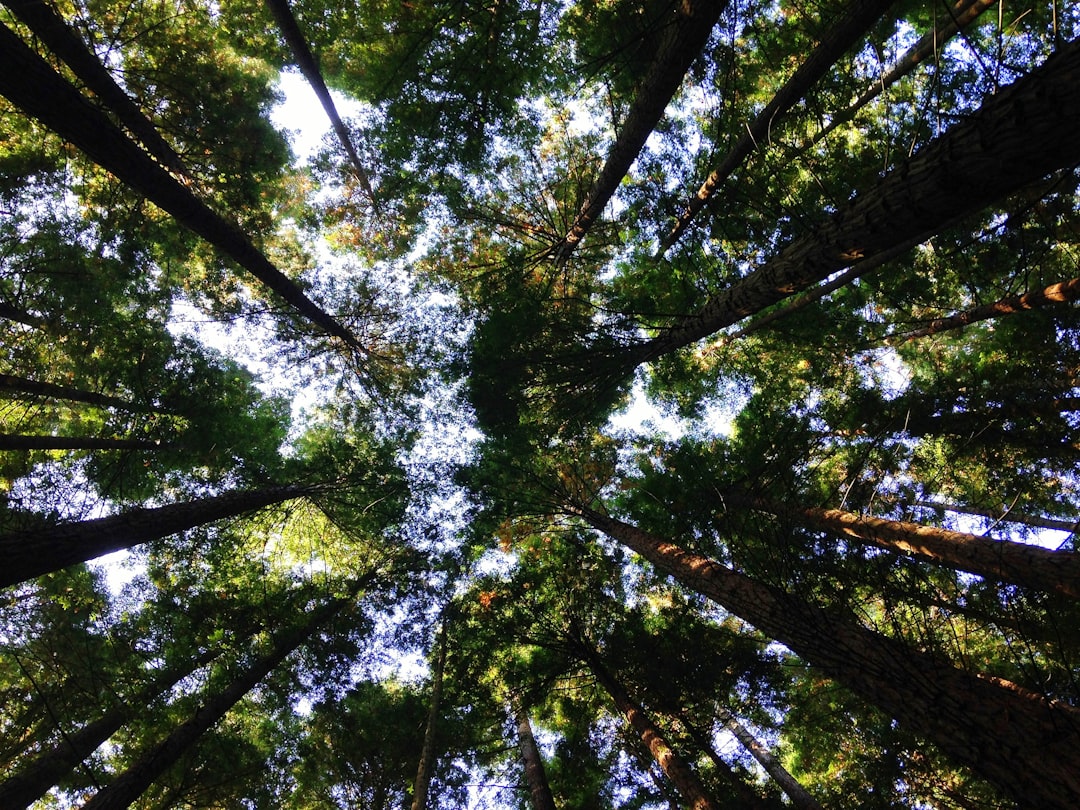
Photo by ANGELA BENITO on Unsplash
Every morning, roughly 2 billion people worldwide reach for a cup of coffee. It's the world's most beloved beverage, a ritual so ingrained in our daily routines that we rarely stop to consider where those beans actually come from. But if you care about forests, wildlife, and the communities that depend on them, what happens on a coffee farm matters more than you might think.
The coffee crisis isn't about what's in your cup—it's about what's been removed from the earth to grow it. Over the past 50 years, coffee production has fundamentally reshaped Central and South America's ecosystems. And most of us have no idea.
How Coffee Became a Forest Destroyer
Coffee didn't always require bulldozers and chemicals. Traditionally, coffee plants grew under the shade of native forest canopies in regions like Colombia, Ethiopia, and Guatemala. Indigenous people and early farmers worked with the land's natural structure, planting coffee among existing trees and vegetation. The ecosystem remained largely intact. Wildlife thrived. Soil stayed rich.
Then, in the 1970s, everything changed. The "Green Revolution" brought high-yield coffee varieties that needed direct sunlight to produce maximum beans. Agricultural scientists promoted full-sun coffee plantations as the path to prosperity. Governments incentivized deforestation. Coffee companies saw enormous profit potential. Within decades, vast tracts of Central American cloud forests—some of the most biodiverse ecosystems on Earth—were razed and replaced with endless rows of coffee plants.
The numbers are staggering. Colombia alone lost approximately 1.3 million hectares of forest between 2000 and 2020, with coffee farming playing a significant role. Mexico's coffee-growing regions have seen similar devastation. Guatemala's cloud forests, which once covered roughly 40% of the country, now represent less than 3% of its territory. Much of that loss is directly tied to agriculture, particularly coffee.
What disappeared with those forests weren't just trees. The Resplendent Quetzal, a bird so stunning that the Aztecs considered it sacred, lost its habitat. Jaguars vanished. Hundreds of plant species found nowhere else on Earth simply ceased to exist. The soil eroded without root systems to hold it. Water sources dried up. Indigenous communities watched their ancestral lands transform into monocultures that employed them as poorly paid laborers rather than as stewards of their own territory.
The Hidden Cost of Your Morning Ritual
Sun-grown coffee doesn't just destroy forests—it creates ecological dead zones. Without shade trees, farms require constant chemical inputs: pesticides, herbicides, and synthetic fertilizers. These chemicals leach into groundwater, poisoning drinking supplies for millions of rural people. They run off into rivers and eventually reach coastal areas, where they contribute to dead zones similar to those documented in The Silent Crisis: How Dead Zones in Our Oceans Are Expanding Faster Than We Thought.
The soil itself becomes increasingly degraded. Coffee plants are hungry, nutrient-demanding crops. In full-sun plantations without natural shade cover, soil depletes rapidly. Farmers respond by using more fertilizer, creating a vicious cycle. The result? Farm productivity drops after 25-30 years. Owners abandon the land, moving on to clear more forest, while leaving behind barren earth that takes decades to recover.
Workers suffer too. Full-sun plantations require more pesticide applications, exposing laborers to chemicals linked to cancer, reproductive problems, and neurological damage. The intense heat without shade trees makes working conditions brutal. Pay remains minimal—many coffee farmers barely survive on their crops' earnings, even as global coffee sales exceed $100 billion annually.
Shade-Grown Coffee: A Different Model
Here's where hope enters the story. A growing number of farms are returning to shade-grown coffee—a system that works *with* nature instead of against it. Under this model, native trees are preserved or replanted among coffee plants, creating a multi-layered forest structure that mimics natural ecosystems.
The results are remarkable. Shade-grown coffee farms support up to 200 bird species compared to just 5-10 on sun-grown plantations. They provide habitat for jaguars, ocelots, and countless other animals. The soil stays healthier, retains more water, and requires fewer chemical inputs. Farmers use less pesticide, protecting both workers and local water supplies. The shade trees themselves provide additional crops—bananas, plantains, timber—creating economic diversification that makes farms more resilient.
A study published in Conservation Biology found that shade-grown coffee farms can retain up to 60% of the biodiversity found in intact native forests. That's not perfect restoration, but it's infinitely better than the biological wastelands created by sun-grown monocultures.
Farmers who transition to shade-grown coffee often find their long-term sustainability improves. Yes, yields per hectare are lower in the first few years. But soil health increases. Disease pressures decrease naturally. Water retention improves, making farms more resilient to droughts. Over 15-20 years, many shade-grown operations become more profitable than their sun-grown counterparts, without the ecological devastation.
Why This Matters for Your Next Cup
The coffee you buy sends a signal about what kind of farming deserves to exist. When you choose shade-grown, bird-friendly, or forest-certified coffee, you're not just feeling good about yourself—you're actually directing market demand toward farms that preserve forests and wildlife.
Several certification systems exist to help you identify responsible coffee. Look for labels from the Smithsonian Institution's "Bird Friendly" program, the Rainforest Alliance, Fair Trade USA, or organic certifications that specifically emphasize shade-growing practices. These certifications aren't perfect—no label is—but they represent meaningful commitments to better practices.
The price is often slightly higher, maybe 50 cents to a dollar more per pound. For most coffee drinkers, that's trivial. For farmers transitioning away from chemical-intensive monocultures, it's transformative. For the Resplendent Quetzal and hundreds of other species clinging to existence in Central American forests, it might mean the difference between survival and extinction.
Your morning coffee represents a choice. Keep that in mind next time you're deciding which bag to buy. The forests are counting on it.
Comments (0)
No comments yet. Be the first to share your thoughts!
Sign in to join the conversation.