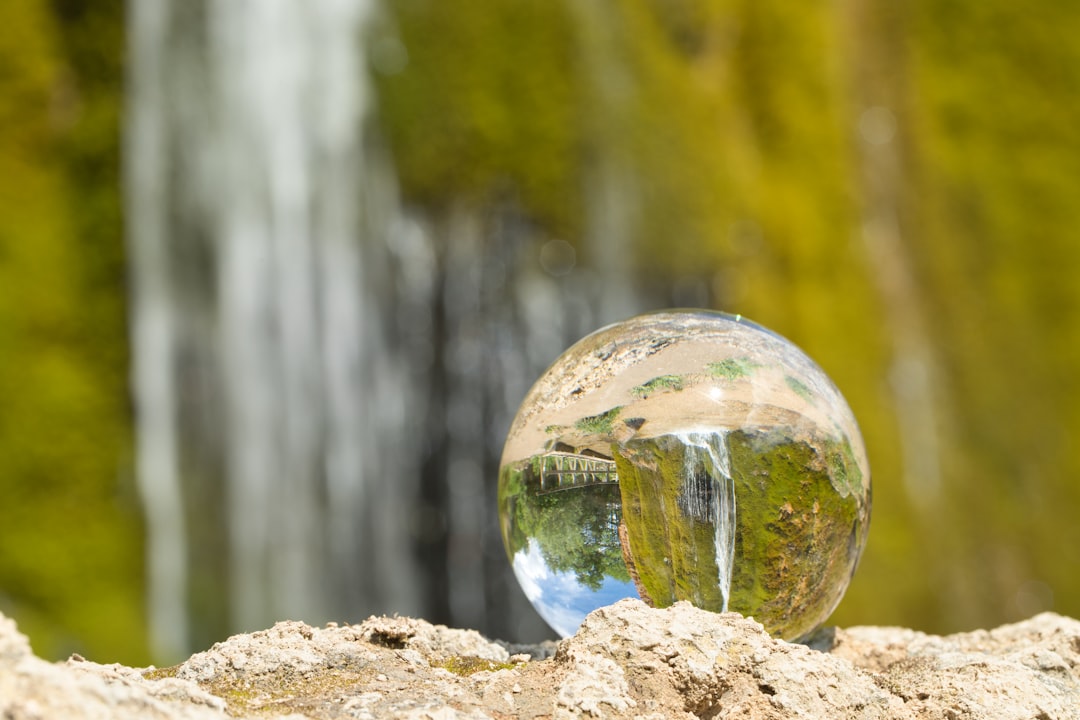
Photo by Marc Schulte on Unsplash
The Wood Wide Web Isn't Science Fiction—It's Saving Our Forests
About fifteen years ago, a forest researcher named Suzanne Simard conducted an experiment in a British Columbia forest that fundamentally changed how we understand trees. Using radioactive isotopes, she tracked carbon moving between a Douglas fir and a paper birch—trees of different species, separated by several feet of soil. The isotopes appeared in both trees. They'd been connected the entire time, communicating through fungal threads thinner than a human hair.
What Simard discovered wasn't just fascinating. It was revolutionary. Trees weren't solitary organisms competing for survival. They were networked. They were talking to each other.
Today, this fungal communication system—popularly called the "Wood Wide Web"—is becoming central to forest restoration efforts worldwide. And it couldn't come at a better time. As we face accelerating deforestation, climate-driven wildfires, and ecosystem collapse, the humble mushroom network offers something we desperately need: a biological shortcut to healing.
How the Underground Network Actually Works
Let's be concrete about what's happening beneath your feet. Mycorrhizal fungi—the funky organisms that produce mushrooms—form partnerships with about 90% of plant species on Earth. In exchange for sugars that trees produce through photosynthesis, fungi extend their threadlike hyphae into the soil, dramatically expanding the tree's ability to absorb water and nutrients like phosphorus and nitrogen.
But here's where it gets interesting: these fungal networks don't just serve individual trees. They connect entire forest communities. A mature tree can transfer carbon to a younger, struggling sapling through fungal partners. A healthy oak can send nitrogen to a nearby maple. Dead trees transfer their remaining nutrients to living ones. In some cases, a mother tree might actively nurture her own offspring through the network—something researchers observed in paper birches.
The system is so robust that it essentially functions as a forest's circulatory system. Remove it, and the ecosystem becomes fragmented, isolated, weak.
This is exactly what happens when we clearcut forests or use certain fungicides in agriculture. We don't just remove trees. We demolish the network that holds the entire ecosystem together.
Why Restoration Failed—Until Now
For decades, forestry experts approached reforestation like an engineering problem. Plant seedlings. Water them. Fertilize if necessary. Wait. Repeat. The success rates were abysmal. Studies from the United Nations show that roughly 40% of reforestation efforts fail within a decade. Young trees planted in degraded forests often simply died, even with careful management.
We now understand why. We were planting trees in isolation, expecting them to thrive in disconnected soil without the fungal partnerships they'd evolved to depend on for 300 million years.
A team at Oregon State University tested this theory directly. They planted Douglas fir seedlings in two conditions: sterile soil with no fungal networks, and healthy forest soil teeming with mycorrhizal fungi. The difference was staggering. Seedlings in living soil grew 400% larger. They showed significantly greater stress tolerance. Survival rates jumped from 25% to nearly 75%.
The insight was simple but transformative: restoration isn't about planting trees in dirt. It's about rebuilding networks.
The Practical Revolution Happening Right Now
Forward-thinking restoration projects are already implementing this knowledge with remarkable results. In the Amazon, researchers are inoculating degraded soil with mycorrhizal fungi before replanting. In Australia, organizations recovering bushfire-damaged forests are deliberately preserving dead wood and leaf litter—the food source that fungal networks need to thrive. In Europe, some reforestation programs now test soil fungal health before and after planting.
One particularly promising approach involves using mycorrhizal fungi as a kind of biological inoculant. Companies are now cultivating these fungi and adding them to planting sites, essentially jump-starting the network reconnection process. The results have been transformative. In one Portuguese reforestation project, trees planted with fungal inoculant survived at rates 60% higher than controls.
This matters enormously because reforestation is happening at an unprecedented scale. Governments and organizations have committed to planting 5 billion trees by 2050. If we can improve survival rates and establishment speed through understanding fungal networks, we're talking about the difference between symbolic tree planting and genuine ecosystem recovery.
As you might expect, this same fungal principle applies to coffee plantations and other agricultural systems. Understanding how shade-grown coffee preserves forest networks can fundamentally change how we approach sustainable agriculture—a fact that's only just being acknowledged by the coffee industry.
What This Means for Our Future
The fungal revolution in forest restoration points toward something larger: the recognition that we can't engineer our way out of ecological collapse. We can't just plant more trees and expect them to survive if we've destroyed the living systems that make forests function.
Restoration isn't about imposing human solutions. It's about understanding the networks that already exist and helping them do what they've evolved to do—heal themselves.
The mushroom network won't solve climate change alone. We still need to reduce emissions dramatically and transform how we use land. But it does offer something increasingly rare: a tool that actually works, that operates at the scale we need, and that costs far less than conventional approaches.
Every time a forest manager inoculates soil with mycorrhizal fungi, every time a restoration ecologist protects fungal networks instead of destroying them, every time we remember that trees aren't individuals but nodes in a living internet—we're remembering something ancient. Something that might just save us.
The forest has been trying to tell us this for millions of years. We're finally starting to listen.
Comments (0)
No comments yet. Be the first to share your thoughts!
Sign in to join the conversation.