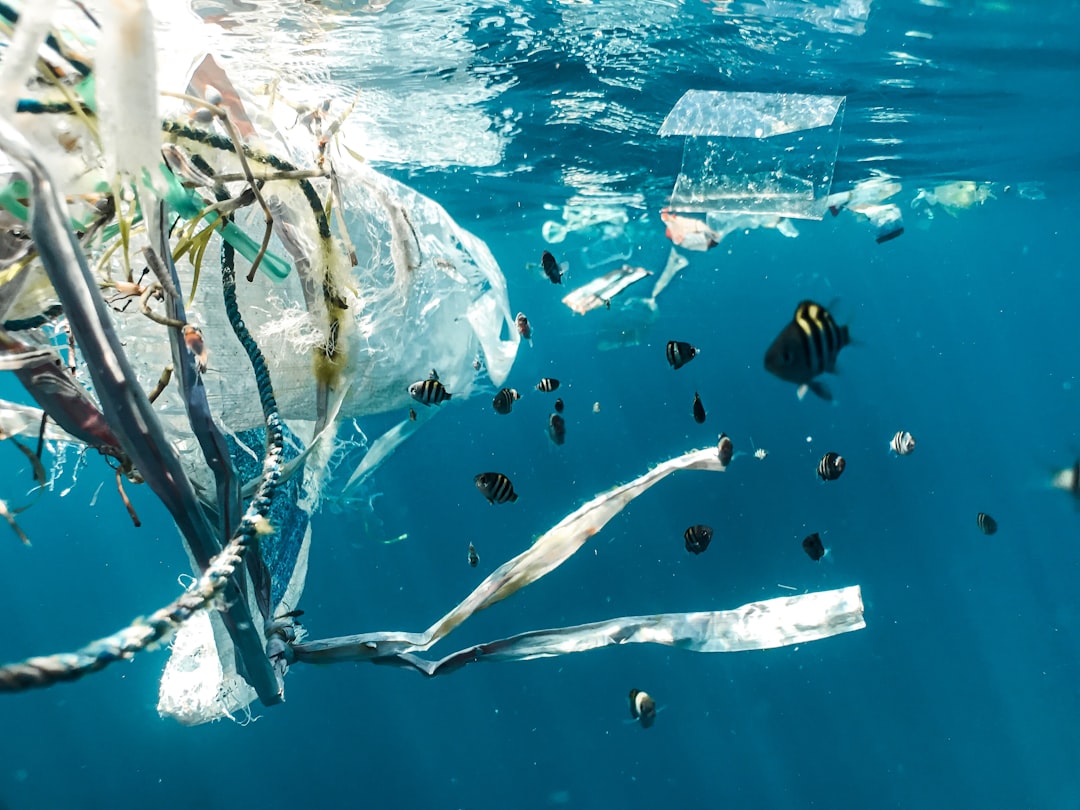
Photo by Naja Bertolt Jensen on Unsplash
Last year, a team of researchers at the Netherlands' University of Amsterdam made a discovery that sent shockwaves through the scientific community: microplastics were present in human blood. Not in trace amounts either. In their study of 77 healthy volunteers, they found plastic particles in 77 percent of the samples. These weren't large chunks of plastic—we're talking about particles smaller than a grain of salt, invisible to the naked eye, circulating through veins and arteries like microscopic invaders.
The worst part? Most people had no idea this was happening to them.
What Exactly Are Microplastics and Where Do They Come From?
Microplastics are fragments of plastic less than 5 millimeters in diameter. They're not some obscure industrial byproduct—they're everywhere. Your synthetic clothing sheds them every time you wash it. Your car's tires leave them on the road as they wear down. That plastic bag you used once ends up broken into thousands of pieces over the years. Even teabags and cosmetic products release them into our environment.
The journey these particles take is genuinely unsettling. Rain washes them into rivers and oceans. Wastewater treatment plants can't filter them out effectively, so they slip right through. Fish and other marine life ingest them. Then we eat the fish. We drink bottled water that contains them. Studies have found microplastics in table salt, in beer, in honey—basically everywhere scientists have bothered to look.
Consider this: a 2018 study found that people who ate seafood regularly were ingesting thousands of microplastics annually. Someone eating just one portion of mussels per week could be consuming up to 11,000 plastic particles yearly. Most of these get eliminated through our digestive system, but the ones entering our bloodstream? That's the truly troubling part.
The Blood Problem: What Happens When Plastic Gets Inside
So microplastics are in our blood. The immediate question everyone asks is: how bad is this actually? Honestly, we don't know yet. That's what makes it frightening.
The research is still in its infancy. We know that some particles are small enough to cross the blood-brain barrier—the body's primary defense system against unwanted substances entering the brain. We know they can lodge in organs. We know that in laboratory studies, certain types of microplastics trigger inflammatory responses in human cells. But we don't know the long-term health consequences yet because humans haven't been accumulating microplastics in their bodies for that long—this is a genuinely new problem.
Preliminary findings are concerning but not conclusive. A study published in the Journal of Hazardous Materials found that polystyrene microplastics (the kind used in food packaging and foam products) could potentially pass through the intestinal barrier and accumulate in the liver, pancreas, and other organs. Another research team discovered that microplastics might carry toxic chemicals that leach into surrounding tissues. But scientists are careful to emphasize that more research is needed before we can say with certainty that microplastics are causing specific diseases.
What we do know is that inflammation is a precursor to most chronic diseases—heart disease, cancer, autoimmune conditions, dementia. If microplastics are consistently triggering inflammatory responses, that's a problem we should be taking seriously.
This Isn't Just a Personal Health Crisis—It's an Environmental One Too
Here's the thing that keeps environmental scientists up at night: we've created a pollution problem that's almost impossible to contain. You can't see microplastics. You can't filter them out of the air you breathe effectively. We're basically dumping synthetic materials into our environment and then acting surprised when they show up in our bodies.
The sheer volume is staggering. Researchers estimate that approximately 8 million tons of plastic enter our oceans every year. When you break down existing plastic already in the environment, you're looking at billions and billions of microplastic particles. The EPA estimates that there are roughly 5 to 50 trillion microplastics in the ocean alone.
This connects directly to another environmental catastrophe we're still grappling with. If you haven't read about how our consumption habits are destroying ecosystems, check out our investigation into how your favorite coffee brand is destroying the Amazon—it's part of the same system of thoughtless consumption.
Practical Changes You Can Actually Make
Okay, so the problem is real and unsettling. The good news is that unlike many environmental issues, this one has some relatively straightforward individual solutions.
Start with synthetic clothing. Switch to natural fibers—cotton, linen, wool—whenever you can. When you do buy synthetic fabrics, wash them less frequently and use cold water (microfiber shedding is worse with hot water and agitation). Consider getting a microfiber-catching laundry bag. Yes, it sounds extreme, but it actually works.
Reduce single-use plastics dramatically. Every plastic bottle, bag, and wrapper eventually becomes microplastics. Buy a quality reusable water bottle. Use cloth bags for shopping. Choose products with minimal packaging. These aren't revolutionary suggestions, but they genuinely reduce the amount of plastic entering the environment.
Be selective about seafood. Shellfish like mussels and oysters are the worst offenders because they filter-feed and accumulate microplastics. Larger fish species tend to have fewer particles.
Support systemic change. Vote for politicians who prioritize environmental regulations. Buy from companies with genuine sustainability commitments, not just greenwashing marketing. Push your local water utility to upgrade their filtration systems.
The Real Issue: We Built This Problem Into Our Society
Ultimately, the microplastics in our blood are a symptom of a larger problem: we've built an economy around a material we never figured out how to dispose of safely. Plastic is miraculous in many ways—durable, cheap, versatile. But that durability is exactly why it's become such a catastrophe. Plastic doesn't biodegrade. It just breaks apart into smaller and smaller pieces that never truly disappear.
We're not going to solve this overnight. But awareness is the first step. Once you know microplastics are in your blood, once you understand the mechanism of how they got there, you can't unsee it. And that knowledge changes how you make choices, every single day.
Comments (0)
No comments yet. Be the first to share your thoughts!
Sign in to join the conversation.