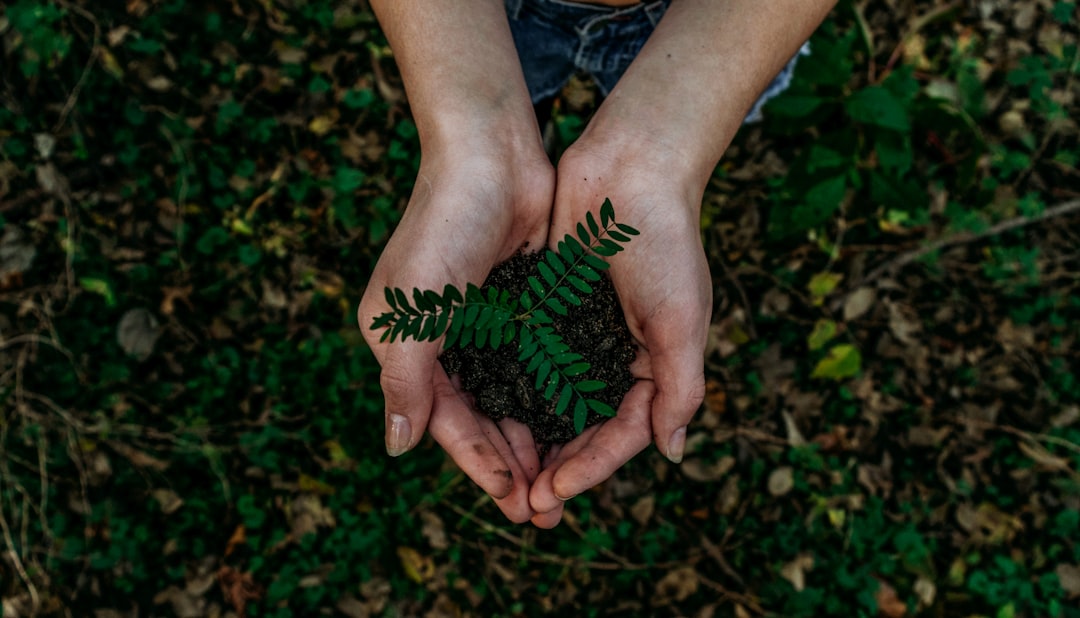
Photo by Noah Buscher on Unsplash
Last spring, a farmer in Iowa named Marcus Johnson decided to test his soil for microplastics out of sheer curiosity. He'd heard rumors on agricultural forums about plastic fragments turning up in cropland, but he didn't expect much. The results stunned him: his 200-acre field contained somewhere between 50 and 150 pounds of microplastic particles per acre. When he showed the findings to a soil scientist at a nearby university, she went pale. "You're not unusual," she told him. "If anything, you're ahead of the problem because you're testing at all."
Most farmers never check. And that's the real crisis unfolding beneath our feet—one that makes headlines about ocean plastic look quaint by comparison.
Where All That Plastic Actually Goes
We obsess over plastic straws clogging sea turtles' nostrils and garbage patches swirling in the Pacific. But here's what nobody talks about at dinner parties: roughly 80% of plastic waste eventually ends up in the soil or freshwater systems that feed our farmland. Not the ocean. The ground.
Microplastics—particles smaller than 5 millimeters—arrive through multiple pathways. Conventional plastic mulches used in agriculture break down over years, fragmenting into dust. Sewage sludge, which contains microplastics from washing synthetic clothes and degrading consumer products, gets spread on fields as fertilizer. Atmospheric fallout contributes particles from tire wear and plastic degradation happening kilometers away. One study published in *Science Advances* in 2021 found that atmospheric microplastic deposition could be delivering between 365 and 1,000 tons annually to the continental United States alone.
Consider what happens when a factory releases microplastics into a river. Municipal water treatment systems capture some particles, but the concentrated sludge—now loaded with plastic—gets shipped to farms as a "soil amendment." Farmers spread it thinking they're improving their earth. They're actually seeding it with polymers.
The Slow Poisoning Scientists Can't Yet Fully Explain
The truly terrifying part? We don't fully know what microplastics do to crops yet. We're in the early stages of figuring this out, which is exactly when we should be panicking.
A 2020 study from Jilin University in China showed that wheat plants exposed to microplastics absorbed them into their tissues. The plastic particles damaged root development and reduced water uptake. But wheat isn't the only problem. Researchers have found microplastics in rice, lettuce, carrots, and cucumbers. Some studies suggest the particles can migrate from soil into vegetables—meaning microplastics could be on your plate at dinner.
Then there's the soil ecosystem angle. Soil isn't just dirt; it's a living metropolis of bacteria, fungi, earthworms, and insects. Microplastics physically interfere with this world. They create barriers that disrupt fungal networks that help plants absorb nutrients. They can release chemical additives (like phthalates and bisphenol A) that leach into pore water, affecting microbial communities. An earthworm that burrows through microplastic-laden soil experiences chronic stress that researchers are only beginning to document.
Dr. Melissa Landon, a soil ecologist at UC Davis, told me during an interview that the situation resembles asbestos research from the 1970s. "We knew asbestos was harmful, but it took decades to prove exactly how damaging it was," she explained. "With microplastics, we're in that dangerous gap between suspicion and certainty. Meanwhile, the contamination keeps accumulating."
The Agricultural Industry's Blind Spot
Big agriculture isn't ignoring microplastics entirely, but the attention is shockingly minimal given the stakes. Most major farm equipment manufacturers have no testing protocols for microplastic accumulation. Soil testing labs—the ones farmers use every year to check nitrogen and pH levels—don't routinely test for microplastics because there's no standardized method yet and no regulatory requirement.
The USDA hasn't established maximum contaminant levels for microplastics in soil, unlike limits that exist for heavy metals like cadmium. The EPA hasn't issued guidance. Farmers operating under good faith are inadvertently participating in a massive, uncontrolled experiment.
Some companies are experimenting with biodegradable mulches instead of conventional plastic, which helps. But these alternatives cost more upfront, and when you're operating on thin margins—which most commodity crop farmers are—the decision becomes financial rather than environmental. A farmer might know that plastic mulch fragments into microplastics, but switching costs thousands extra per acre annually.
What Happens When Contaminated Food Reaches Your Table
The possibility that microplastics in soil translate to microplastics in food shouldn't surprise anyone paying attention. If plants absorb the particles, then livestock eating those plants would accumulate them. A cow consuming microplastic-contaminated feed over its lifetime would likely build up a burden of plastic in its tissues. You'd then consume that.
We already know microplastics exist in human bodies. Research published in 2018 found them in human blood, lungs, and placentas. A 2022 study detected microplastics in every human stool sample tested. The health implications remain unclear—are we experiencing inflammation? Are particles lodging in organs? Does polymer composition matter?—but the presence is undeniable.
This connects to a broader pattern. If you want to understand where environmental crises begin, follow the path from agriculture. Agricultural practices shape ecosystems at scale, whether through chemical runoff, deforestation, or now, plastic contamination.
What Actually Changes This
Marcus Johnson, the Iowa farmer who discovered his microplastic problem, didn't wait for government guidance. He switched to compostable mulches despite the cost increase. He stopped accepting municipal sewage sludge. He started tracking his soil health with a local lab that would test for particles using custom protocols.
"My granddaughter will farm this land someday," he told me. "I can't hand her a field full of plastic."
That mentality needs to spread, but it requires structural change. Regulations establishing microplastic limits in soil amendments and irrigation water. Subsidies making biodegradable alternatives economically viable. Mandatory testing protocols that create transparency. Right now, we're asking individual farmers to shoulder costs that should be shared across the food system.
The microplastic crisis in soil won't make for viral TikTok videos about dying animals. There's no single dramatic moment when a farmer suddenly sees the damage. Instead, it's a slow accumulation of invisible particles—building, fragmenting, persisting. By the time we have comprehensive data proving agricultural catastrophe, decades of contamination will have already occurred.
That's the real horror of this story. The damage is already underway, and most of us are just learning it exists.
Comments (0)
No comments yet. Be the first to share your thoughts!
Sign in to join the conversation.