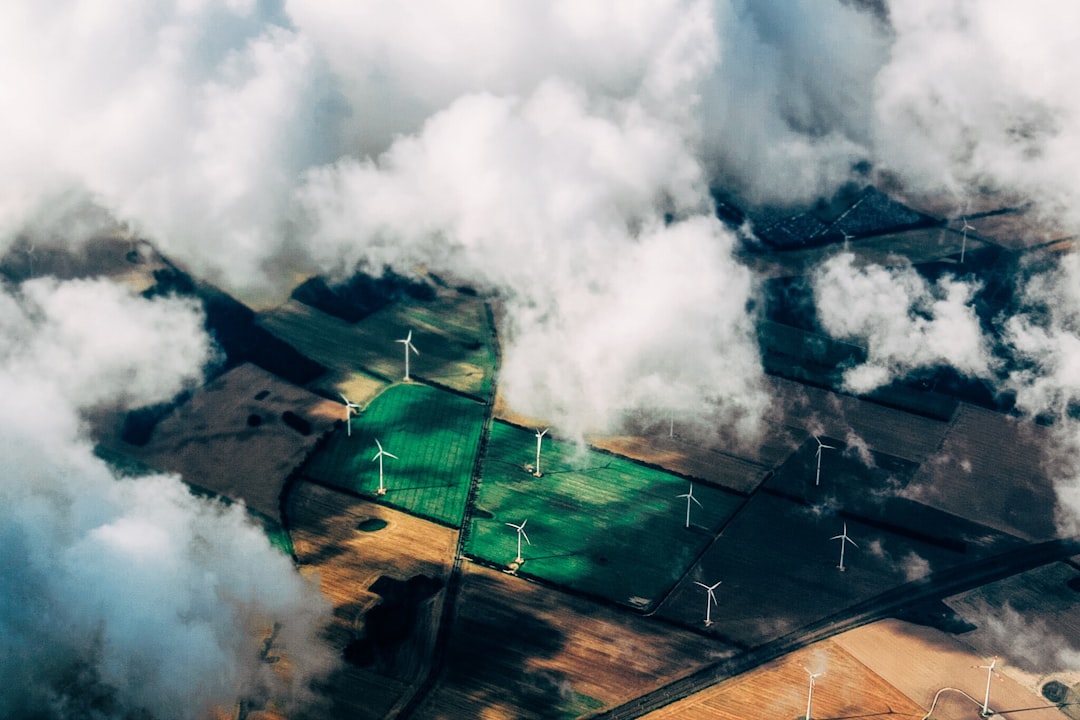
Photo by Thomas Richter on Unsplash
Every morning, roughly 2 billion cups of coffee are consumed worldwide. That's staggering. What's more staggering is what happens behind the scenes to make that possible: vast tracts of rainforest being cleared, biodiversity collapsing, and indigenous communities losing their ancestral lands.
Most people don't connect their caffeine fix to environmental destruction. But the numbers don't lie. Coffee production is now one of the top three causes of tropical deforestation, ranking right alongside cattle ranching and agricultural expansion. The industry has fundamentally transformed some of our planet's most biodiverse regions into monoculture plantations. And the problem is accelerating as global demand continues to climb.
The Dark Side of Coffee's Golden Age
Let's talk specifics. Brazil alone produces about a third of the world's coffee supply. To meet growing demand, massive areas of the Atlantic Forest—one of the world's most biodiverse ecosystems—have been bulldozed for coffee farms. Vietnam, the second-largest producer, has cleared significant portions of the Central Highlands to establish coffee plantations, devastating habitats that are home to endangered species found nowhere else on Earth.
Colombia, historically known for high-quality coffee grown in biodiverse mountain regions, has also experienced concerning deforestation trends. Between 2016 and 2020, the country lost approximately 174,000 hectares of forest annually, with coffee expansion playing a notable role alongside cattle ranching and coca cultivation.
What makes this particularly tragic is that traditional shade-grown coffee—where coffee plants grow beneath a canopy of native trees—actually supports biodiversity. Migratory birds, jaguars, and countless other species thrive in these mixed systems. But shade-grown coffee produces lower yields per hectare. So instead, we've largely shifted to sun-grown coffee plantations: rows of coffee plants bathed in direct sunlight with virtually no other vegetation. It's efficient for producers. It's terrible for ecosystems.
The consequences are immediate and severe. Soil erosion accelerates without forest cover. Water sources become contaminated with agricultural runoff. Species extinction rates in coffee-growing regions rival some of the worst environmental crises on the planet. A study from the University of São Paulo found that coffee expansion was responsible for habitat loss affecting over 1,000 species of birds.
The Hidden Costs Nobody Talks About
Here's what rarely makes it into coffee shop conversations: the workers growing your beans. Many coffee farmers operate on razor-thin margins, trapped between the rising costs of inputs like fertilizer and pesticides, and volatile global coffee prices. When prices crash—which happens regularly—farmers respond by clearing more land to increase volume. It's a desperate math equation with environmental consequences.
Additionally, the pesticides used on conventional coffee plantations create runoff that pollutes rivers and groundwater. This affects not just wildlife, but the actual communities living in these regions. Children in coffee-growing areas have been found to have elevated pesticide residue in their bodies. Women working on plantations during pregnancy face increased miscarriage rates.
The carbon footprint of coffee is also substantial. Between land clearing, fertilizer application, processing, and international shipping, a single cup of conventionally grown coffee carries a carbon cost equivalent to driving a car for roughly a kilometer.
What Actually Works: Beyond Feel-Good Labels
Now for the hopeful part. Change is possible, but it requires understanding what actually matters.
Fair Trade and Rainforest Alliance certifications exist, and they do provide some environmental protections. But here's the uncomfortable truth: these certifications don't guarantee shade-grown coffee, and they don't prevent all deforestation. They're a step forward, not a solution.
More meaningful is choosing certified shade-grown coffee. Organizations like the Smithsonian Institution's Migratory Bird Center certify shade-grown coffee that maintains forest cover. Yes, it's usually more expensive. But it directly supports farmers for using methods that preserve ecosystems rather than destroy them. Some specialty roasters explicitly source shade-grown beans, and they'll tell you so proudly on their packaging.
Direct trade coffee is another option. Rather than buying through conventional supply chains, some roasters work directly with coffee farmers. This allows for better pricing, environmental oversight, and actual relationships. When roasters visit farms and know exactly where beans come from, it creates accountability that commodity trading doesn't.
Beyond individual purchasing decisions, supporting organizations fighting deforestation in coffee regions matters too. Groups working to expand shade-grown production and help farmers transition away from destructive practices are making real headway, though they're chronically underfunded.
The Bigger Picture
Coffee isn't the only agricultural product driving deforestation—palm oil, soybeans, and beef production cause far greater forest loss. But coffee matters because it's personal. It's something millions of us consume daily. Every purchasing decision either supports regenerative practices or accelerates destruction.
The encouraging thing? The coffee industry is starting to shift. Some of the largest producers are committing to reforestation initiatives. Demand for sustainable coffee is growing, which creates economic incentives for farmers to adopt better practices. This doesn't happen overnight, but it does happen.
The real issue is that the current global coffee market prices commodities based purely on quantity, not the environmental cost of producing them. A pound of coffee that destroys rainforest and contaminates water sources is priced the same as coffee grown under native trees that actually restores ecosystems. That's insane economics, but it's how markets function when the true cost of environmental destruction isn't factored in.
If you care about preserving tropical forests and the incredible species living there, you don't need to quit coffee entirely. You just need to care about where it comes from. Seek out shade-grown, direct trade, or genuinely certified options. Talk to your local coffee roaster about their sourcing. Support organizations working on this issue. If enough people did this, it would create real market pressure for change.
Your morning cup could be part of the problem. Or it could be part of the solution. The choice, unlike the coffee supply chain, is actually straightforward.
Want to explore more interconnected environmental crises? Consider reading about The Ghost Forests Rising from Our Coasts: Why Trees Are Drowning and What It Means for Us to understand how environmental destruction shows up in unexpected places.
Comments (0)
No comments yet. Be the first to share your thoughts!
Sign in to join the conversation.