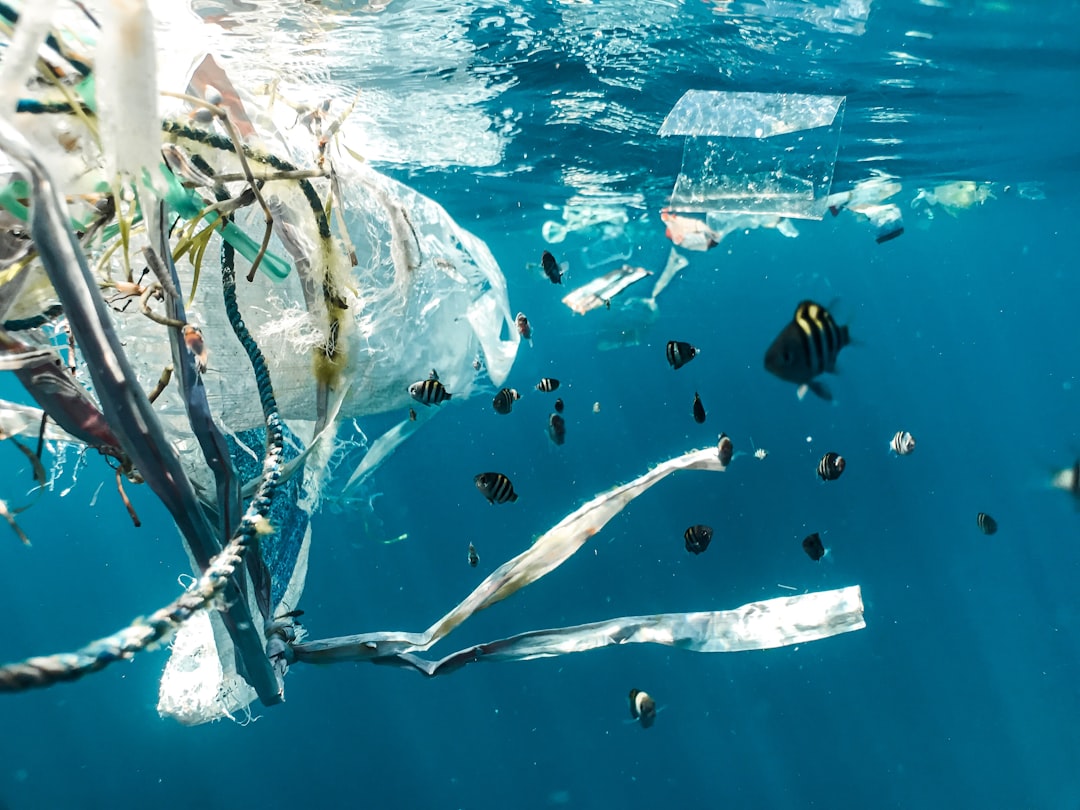
Photo by Naja Bertolt Jensen on Unsplash
Drive along the backroads of North Carolina's Outer Banks, and you'll encounter something that looks like a scene from a post-apocalyptic film. Skeletal trees jut from brackish water, their bark stripped bare, their branches reaching toward the sky like desperate fingers. These are ghost forests—and they're spreading faster than most people realize.
What we're witnessing isn't natural forest succession or seasonal flooding. These trees are being murdered, slowly and relentlessly, by saltwater intrusion caused by rising sea levels. And it's happening on every coast in America.
When Trees Can't Survive the Salt
Most trees are freshwater organisms. Their roots evolved to absorb water and nutrients in soil that stays relatively fresh and stable. But when sea levels rise and saltwater creeps inland—sometimes moving hundreds of feet per year—it fundamentally changes the chemistry of the soil itself.
The salt concentration becomes toxic. Tree roots can't function properly. They stop transporting water and nutrients up through the trunk. Within a few years, even previously healthy trees begin to die. The process is relentless and, once it starts, nearly impossible to reverse.
In the Alligator River National Wildlife Refuge in North Carolina alone, researchers have documented the loss of over 2,000 acres of forest in just two decades. That's not a small patch. That's an area roughly the size of 1,500 football fields, reduced to ghostly remains.
Similar patterns are emerging in Louisiana, Virginia, Maryland, Delaware, and even as far north as Maine. The U.S. Geological Survey estimates that saltwater intrusion is currently affecting hundreds of thousands of acres across the nation. By 2050, that number could triple.
The Invisible Culprit: Subsidence and Rising Seas
Here's where it gets complicated. Sea level rise isn't uniform. Some places are affected more severely than others, and it's not always because ocean levels are rising everywhere equally. Two factors work together like a one-two punch.
First, the actual sea level is rising—about 3.4 millimeters per year on average, driven by melting ice sheets and thermal expansion from warming oceans. But here's the second factor that often gets overlooked: the land itself is sinking. In some coastal areas, particularly around the Mississippi River Delta and parts of the Atlantic coast, the ground is subsiding by several millimeters annually. This subsidence happens due to groundwater extraction, oil and gas drilling, and the natural compaction of sediments over time.
When you combine rising water with sinking land, the relative sea level change becomes dramatic. In some parts of Louisiana, the combined effect equals roughly one foot of sea level rise per century—more than three times the global average. That's why ghost forests are appearing there faster than almost anywhere else.
More Than Just Dead Trees
You might think: okay, so some trees die. It's sad, but is it really an emergency? The answer is absolutely yes. Ghost forests represent a cascading environmental catastrophe with consequences we're only beginning to understand.
These forests once served as critical buffers against storms, their root systems stabilizing soil and breaking wave energy. They provided habitat for countless species—from songbirds to insects to fish that nursed their young in the brackish waters at the forest edge. When the trees die, that entire ecosystem collapses.
Additionally, dying forests release carbon. Trees that have been killed by saltwater don't decompose like healthy fallen trees—they decay slowly in waterlogged conditions, releasing methane and carbon dioxide over years. We're essentially converting carbon sinks into carbon sources.
There's also the agricultural angle. Saltwater intrusion doesn't just kill forests; it renders agricultural land unusable. Farmers across the coastal Southeast are already experiencing crop failures as salt creeps into their fields. Some are abandoning land their families have worked for generations.
What Can Actually Be Done?
The honest answer is that there's no silver bullet. We can't stop sea level rise overnight. We can't reverse subsidence in areas like Louisiana. But there are meaningful interventions being tested.
Some researchers are exploring managed retreat—strategically allowing water to reclaim certain areas while protecting others with natural and engineered barriers. Others are experimenting with replanting salt-tolerant species in vulnerable zones, essentially helping forests adapt faster than they naturally would.
The most impactful solution, though it's not a quick fix, is addressing climate change itself. Reducing greenhouse gas emissions and slowing global warming is the only way to ultimately stabilize sea levels and prevent further deterioration.
Interestingly, food choices play a role too. Why Your Favorite Coffee Brand Is Destroying the Amazon (And What You Can Actually Do About It) explores how agricultural decisions in distant regions connect to climate change, which directly impacts coastal areas facing saltwater intrusion.
The Tipping Point
What makes ghost forests particularly alarming is their potential to accelerate other environmental problems. As forests die, they release stored carbon, worsening climate change, which causes more sea level rise, which kills more forests. It's a feedback loop we're only beginning to fully appreciate.
The ghost forests standing along America's coasts today aren't just monuments to climate change. They're warnings—visible, tangible reminders that some environmental problems move slowly enough that we barely notice them until they're catastrophic. The time to act isn't when the trees are already dead. It's now, while we still have the chance to slow the forces driving their demise.
Comments (0)
No comments yet. Be the first to share your thoughts!
Sign in to join the conversation.