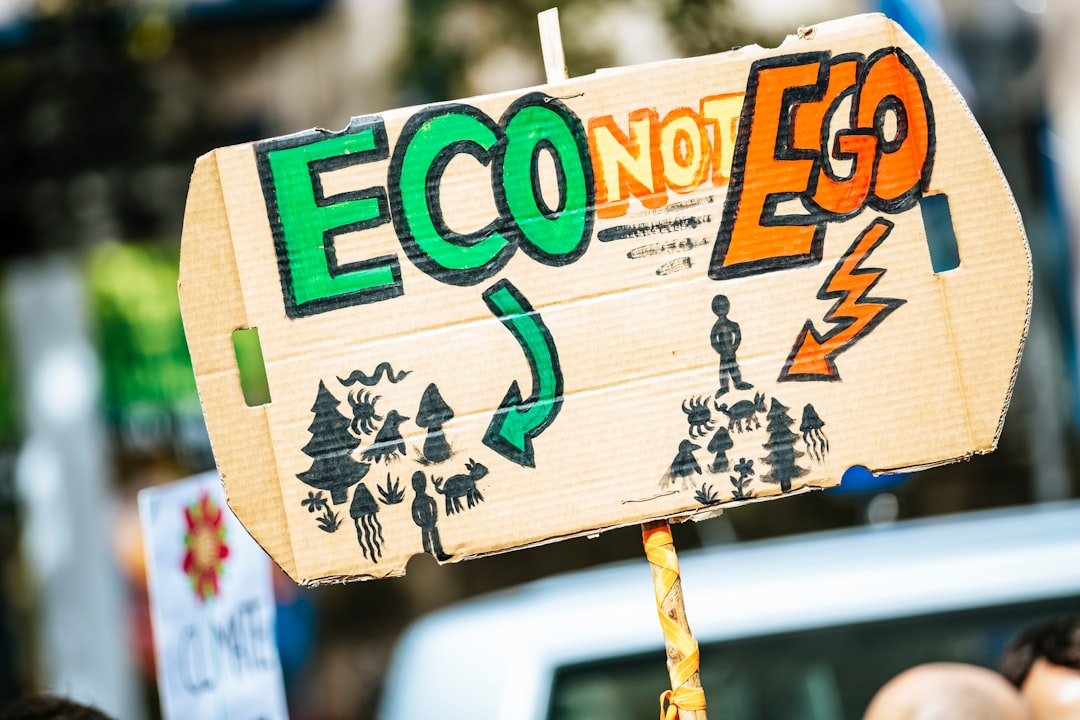
Photo by Markus Spiske on Unsplash
When Trees Drown: The Phenomenon Nobody Talks About
Drive along the backroads of coastal North Carolina or southeastern Virginia, and you'll encounter something that looks like a scene from a post-apocalyptic film. Thousands of bleached, skeletal tree trunks jut from murky water like the fingers of a drowned civilization. These are ghost forests—once-thriving woodlands now dead or dying because saltwater has invaded what used to be freshwater marshes and swamps.
The phenomenon isn't new, but it's accelerating. Scientists first documented widespread ghost forests in the 1990s, but recent research shows they're expanding at an alarming rate. A 2021 study found that ghost forests have increased by nearly 30% in the Mid-Atlantic region alone over just two decades. The cause? Rising sea levels driven by climate change.
What makes ghost forests particularly unsettling is how visible they are as a warning sign. Unlike melting glaciers on distant mountain peaks or invisible carbon dioxide in the atmosphere, you can actually stand in front of a ghost forest and witness environmental collapse in real time. The dead trees don't decay quickly—they can persist for decades, creating what researchers call a "slow-motion disaster."
Why Salt Water and Trees Don't Mix
The mechanics are straightforward, but the implications are profound. Most trees that occupy coastal marshes and swamps—loblolly pines, tupelo gums, bald cypress—evolved to handle freshwater. Their roots can't tolerate salt. When sea levels rise, saltwater gradually creeps inland, overwhelming the freshwater aquifers these trees depend on.
The trees don't die instantly. Instead, they experience what botanists call "chronic stress." The salt infiltrates their root systems, disrupting water and nutrient uptake. The trees grow weaker year after year, becoming susceptible to pests and diseases. Eventually, they simply can't produce new leaves or maintain their bark. Death comes slowly, which is almost worse—it's like watching someone you know fade away.
Consider what's happening in the Great Dismal Swamp, straddling Virginia and North Carolina. This 175,000-acre natural wonder has existed for thousands of years, supporting diverse wildlife and serving as a critical carbon sink. Now, saltwater is seeping in from the coast. Scientists estimate that at current rates, significant portions of the swamp could convert to salt marshes within this century. For the animals living there—black bears, bobcats, migratory birds—it means habitat loss. For carbon storage, it means catastrophic release.
The Hidden Costs Nobody's Counting
We talk about rising sea levels as an abstract threat. But ghost forests reveal the concrete, biological reality. When trees die, they stop absorbing carbon dioxide. Even worse, as they decompose (or are consumed by fire), they release the carbon they stored back into the atmosphere, potentially accelerating climate change further.
Beyond carbon, there's the wildlife component. Swamps and marshes aren't wastelands—they're some of the most productive ecosystems on Earth. They filter water, prevent erosion, and provide nurseries for fish species that support commercial fisheries worth billions of dollars annually. A 2019 study estimated that the loss of coastal forests in just the Mid-Atlantic region could result in the loss of critical habitat for 32 species of fish and shellfish.
There's also an economic dimension that rarely makes headlines. Coastal communities depend on tourism, fishing, and property values. Ghost forests are visually disturbing and signal environmental decline. Real estate agents in affected areas report that waterfront property values have begun declining in ghost forest zones. It's a feedback loop: climate change creates environmental damage, which reduces economic opportunity, which reduces the resources available to adapt to further climate change.
If you're curious about other environmental products affecting our ecosystems, why your favorite coffee brand might be destroying the Amazon offers another sobering look at how consumer choices have ecological consequences.
What Could Actually Be Done About This
Here's the frustrating part: there's no easy solution. We can't stop sea levels from rising overnight. The carbon we've already pumped into the atmosphere guarantees coastal flooding for decades, no matter what we do starting tomorrow.
Some researchers are exploring managed retreat—essentially abandoning certain coastal areas and allowing wetlands to migrate inland. This requires purchasing land, relocating infrastructure, and fundamentally reshaping how we think about coastal settlement. It's expensive and politically fraught, but it might be necessary.
Others are experimenting with adaptation. The Nature Conservancy has launched projects where they're planting salt-tolerant trees in areas already experiencing saltwater intrusion, essentially trying to guide the forest ecosystem through a managed transition. It's not perfect—the new ecosystem will be different, supporting different species—but it's better than abandonment.
The uncomfortable truth is that most solutions require accepting loss. We're not going to restore ghost forests to their original state. We're fighting to minimize further damage and manage the transition as humanely as possible.
Why Ghost Forests Matter Beyond Themselves
Ghost forests are a warning system we've finally learned to read. They're visible, measurable, and undeniable. You can't dismiss them as statistical artifacts or computer models. They're real trees dying in real time because we haven't addressed climate change.
They're also a reminder that environmental change isn't always gradual. Yes, it happens slowly enough that we can ignore it if we're not paying attention. But pay attention, and the horror becomes clear: we're witnessing the dissolution of ecosystems that took millennia to develop.
The next time you hear about climate change in abstract terms—2.3 degrees Celsius warming, 400 parts per million CO2—remember the ghost forests. They're the physical translation of those numbers. They're what climate change actually looks like.
Comments (0)
No comments yet. Be the first to share your thoughts!
Sign in to join the conversation.