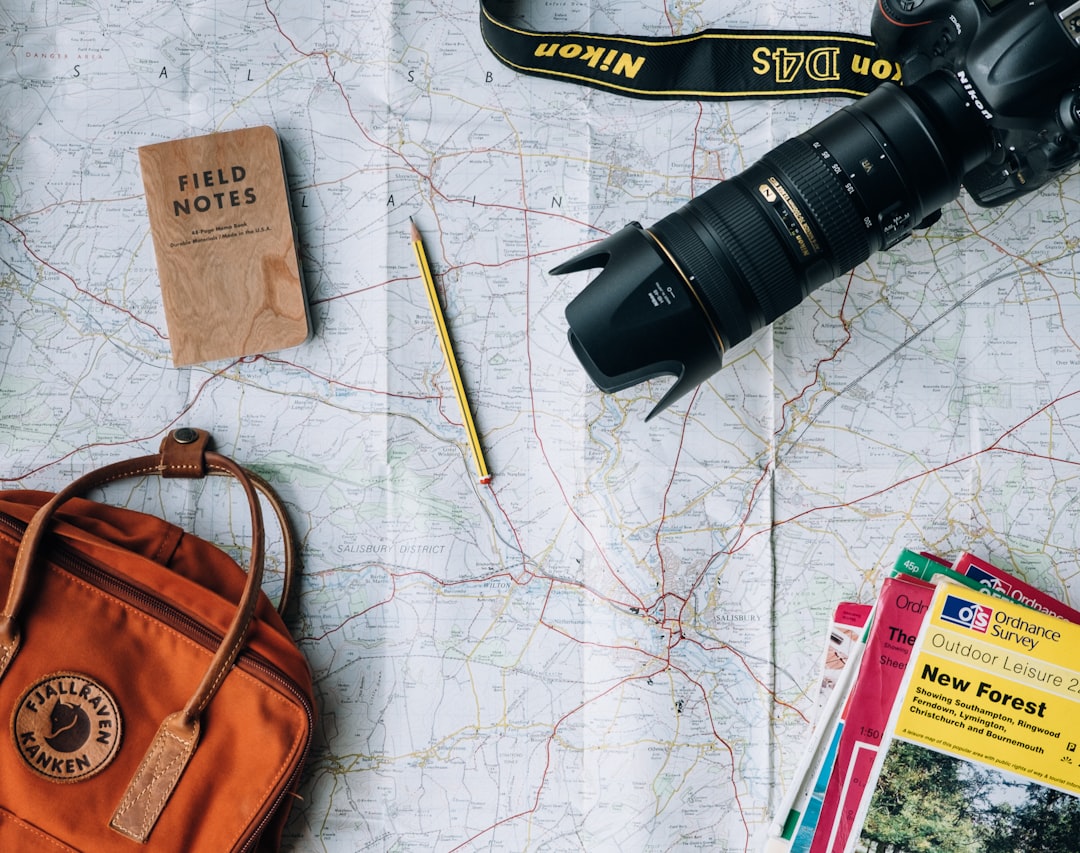
Photo by Annie Spratt on Unsplash
The conductor's whistle blew at 6:47 AM in Budapest, exactly three minutes late. I'd been awake for two hours already, too excited to sleep in my cramped cabin berth, watching the Danube fade behind us as we rolled toward Romania. This was day four of what would become a two-week solo train odyssey that would fundamentally change how I travel.
Most people fly over Eastern Europe. They parachute into Prague, spend three days, hit the major checkboxes, and leave. I'd done that once. This time, I wanted something different. Something slower. Something real.
Why Trains Beat Planes (Even When They're Slower)
Here's what nobody tells you about train travel: you don't lose eight hours of your life in security lines and airport mediocrity. You also don't arrive at your destination feeling like you've been packed into a sardine tin by someone with a vendetta against human comfort.
When you board a train, you board an actual experience. My Vienna to Krakow overnight journey cost about the same as a budget flight, but instead of arriving groggy and disoriented at 6 AM, I woke naturally as the sun painted the Polish countryside gold. I'd slept reasonably well. I could see where I was going. I'd watched the entire transition between two countries unfold before my eyes—the architectural shifts, the vegetation changes, the way people's fashion subtly transformed at the border.
According to Eurostar data, train travel across Europe has increased 23% among independent travelers since 2019. It's not just nostalgia driving this surge. People have figured out what I was experiencing: trains are the forgotten middle ground between flying and driving. They're efficient enough to make real distances possible, but slow enough to actually see something.
Plus, there's the simple physics of it. On a train, you can move freely. Read a book. Chat with fellow travelers. Actually use the bathroom without contorting yourself into origami. The difference between this and a six-hour flight is astronomical.
The Accidental Community of the Rails
I met Yuki in the dining car somewhere between Prague and Vienna. She was a retired Japanese teacher heading to Istanbul overland, and we spent four hours comparing notes about the best local restaurants we'd discovered, the small towns worth exploring, and why neither of us owned suitcases that rolled anymore.
Train cabins create an odd intimacy. You're sharing tight quarters with strangers, but not the performative proximity of an airplane. On a train, there's room to breathe. There's a rhythm to the hours that feels almost civilized.
Yuki told me she'd been traveling by train for six months. Six months! She'd been to 14 countries without a single flight. "Planes make you arrive," she said, stirring her coffee in that dining car. "Trains make you travel."
I met three other solo travelers that week. A German architect escaping Berlin for a month. A British woman in her seventies taking her first major trip alone after her husband passed. A Ukrainian music student heading home for the holidays. None of us would have naturally connected in our regular lives, but the train somehow made friendship feel inevitable rather than forced.
The Logistics That Actually Work
Before I started, I thought navigating Eastern European train systems would be chaotic. I'd heard stories. I was prepared for confusion and disaster.
It was actually remarkably straightforward. The Eurail Pass gave me flexibility I never expected—I could decide on a whim to stop in a small Polish town for an extra day without penalty. Apps like Omio and Trainline showed me every option across borders. Yes, some trains were older. Yes, some didn't have English announcements. But every single one arrived, and every single one was cheaper than flying.
My math: A seven-country trip that would have cost roughly $1,200 in flights and internal transportation cost me $340 for a two-week Eurail Pass, plus about $400 in accommodations along the route. Even accounting for meals and local travel, I spent less than half what a traditional itinerary would have required.
The hidden benefit? Trains stop in smaller cities that flights ignore completely. I spent an afternoon in Pécs, Hungary—a town of 150,000 that I'd never heard of—that was genuinely more memorable than my time in Budapest. No tourists. A thermal bath built by the Ottomans. Paprika hanging from balconies like Christmas decorations. The kind of place you find when you have time and proximity, not destination-focused urgency.
What Airlines Don't Want You to Know
Budget airlines have convinced us that flying is the efficient choice. It's faster, they say. It's cheaper, they promise. But those promises evaporate the moment you factor in airport transfers, baggage fees, and the fact that you've spent $80 on airport coffee before you've even boarded.
Train stations sit in city centers. You step off the platform and you're already where you need to be. No two-hour taxi rides to find your hotel. No security theater. No middle seat anxiety.
If you're curious about how the airline industry maintains its dominance despite these advantages, there's actually a fascinating breakdown of their tactics that explains a lot.
The Moment I Decided
Somewhere between Budapest and Krakow, watching the Carpathian Mountains roll past my window while I sipped terrible coffee from a train trolley, I made a decision. Unless I'm crossing an ocean, I'm probably never flying for European travel again.
It's not about being romantic or nostalgic. It's about valuing my actual time. The 12 extra hours a train takes versus a plane isn't lost time. It's the travel itself. It's the point.
When I landed back in reality two weeks later, I felt transformed in a way that no traditional European tour ever accomplished. I'd covered 2,000 miles. I'd seen more of how people actually live than any guidebook could show me. I'd made unexpected friends. I'd discovered towns that didn't make the Instagram algorithm.
Most importantly, I'd remembered that sometimes the journey really is the destination—and the train is the vehicle that makes you remember it.
Comments (0)
No comments yet. Be the first to share your thoughts!
Sign in to join the conversation.