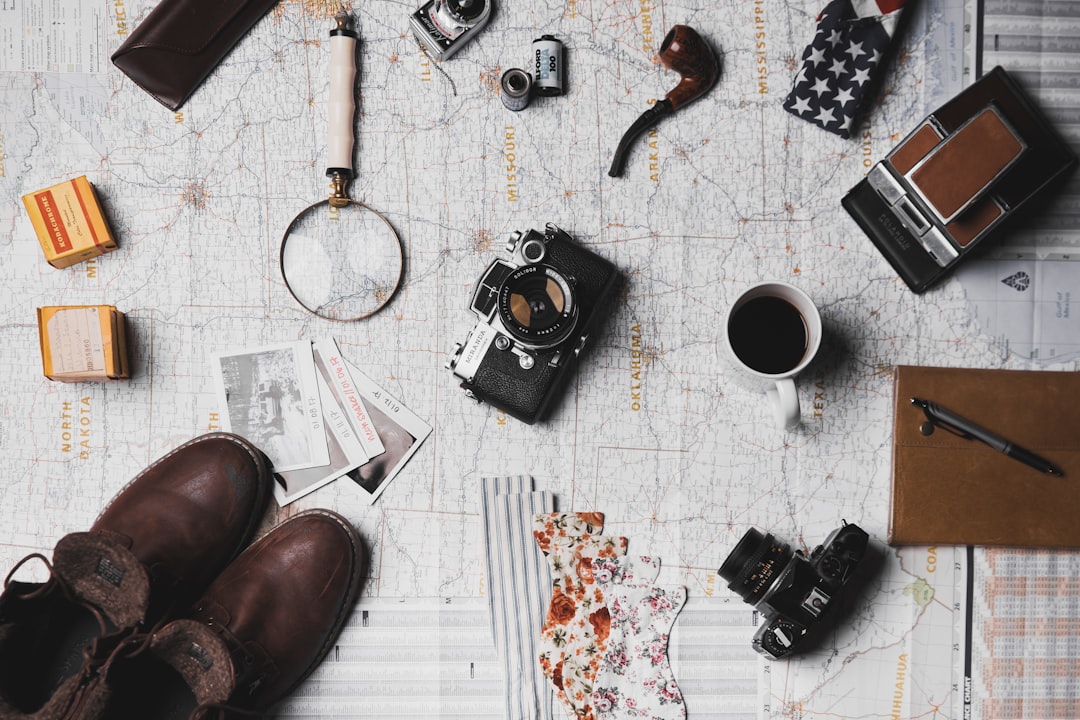
Photo by ian dooley on Unsplash
My phone died somewhere between a wet market in Chiang Mai and a Buddhist temple I couldn't pronounce. I stood there at dusk with no GPS, no translation app, and no way to ask for directions beyond pointing at a map and hoping. What should have been a disaster became the most magical night of my entire month in Thailand.
I'm not talking about the carefully curated "authentic experiences" you find in guidebooks or the trendy neighborhoods Instagram influencers have already claimed. I'm talking about what happens when you deliberately walk into situations where language is no longer your safety net. It's terrifying. It's also absolutely transformative.
Why Language Barriers Actually Deepen Travel Experiences
Here's what I've learned after traveling to countries where I speak roughly zero percent of the local language: people are fundamentally kind, and communication goes way deeper than words. When you can't rely on verbal eloquence, you start noticing everything else. A shopkeeper's smile. The way someone's eyes light up when they understand what you're trying to ask. The patience of a stranger who spends ten minutes acting out directions instead of just dismissing you.
Research from the Journal of Travel Research found that travelers who engaged with locals despite language barriers reported 34% higher satisfaction rates and formed more meaningful connections than those who stuck to English-speaking tourist areas. They spent more time in neighborhoods, tried more local food, and came away with more complex, nuanced stories about their destinations.
When language isn't available, you become hyperaware. You watch how people move through spaces. You pay attention to architectural details you'd normally scroll past. You listen to the actual rhythm and music of how people communicate, even if you don't understand the words. My week in rural Vietnam without knowing Vietnamese taught me more about Vietnamese culture through observation than years of documentaries ever could.
The Art of Communicating Without Words (And Why It Works)
There's a specific magic in pointing at something on a menu and being genuinely shocked—delighted or horrified—by what arrives. I've ordered what I thought was a vegetable soup in Istanbul only to get something involving chicken liver that I'm still not sure about. The restaurant owner found my face absolutely hilarious and spent the next hour bringing me different dishes to try. That dinner cost five dollars and gave me three new friends and an invitation to a family celebration I unfortunately couldn't attend.
Some of my most effective communication tools in foreign countries aren't sophisticated. They're embarrassingly simple: drawing pictures, pointing at things, using Google Translate's camera function to identify street signs, making exaggerated expressions of confusion, nodding enthusiastically, and being genuinely apologetic about my linguistic incompetence. This combination seems to unlock something in people. Maybe it's because you're showing vulnerability. Maybe it's because you're making an effort. Either way, people respond.
In Budapest, I couldn't find a specific ruin bar everyone kept mentioning. I showed the name to four different people. The fourth person didn't just point—she walked with me for three blocks to make sure I got there. We couldn't speak beyond "thank you" and "you're welcome," but she felt invested in my successful navigation of her city.
Choosing Destinations Strategically: Where Language Barriers Matter Most
Not all language barriers are created equal. If you're monolingual English speaker like me, choosing countries where English absolutely isn't the default lingua franca changes everything. I'm not talking about avoiding safety or going somewhere genuinely dangerous—just somewhere where you can't coast on English.
Consider countries like Japan, Korea, Poland, Portugal, Greece, or Vietnam. Major tourist areas in these places usually have English speakers, but venture even slightly off the beaten path and you're genuinely communicating across a genuine divide. This isn't romantic fantasy—it's real limitation that requires real problem-solving.
The beauty is that these countries also tend to be incredibly well-set up for foreigners despite the language barrier. Japan's train system has English signage. Korea's subway has English announcements. These places have clearly thought about how to help people navigate when translation isn't happening.
That creates this perfect tension: you can survive fine, but you need to actually engage with people to thrive. You'll never accidentally slide into the comfortable tourist bubble because the bubble isn't big enough to shelter you entirely.
The Stories You Only Get When You're Lost
I've traveled to forty countries and the stories I tell most frequently, the ones people actually lean forward to hear, are almost always from moments of genuine linguistic confusion. The time I accidentally booked a "massage" in Bangkok that was definitely not a massage. The night I ended up at a family's dinner table in rural Portugal because I couldn't figure out how to get back to my hotel and they decided I was staying for food. The market vendor in Morocco who taught me five words of Darija while we negotiated over spices.
These things don't happen when you can ask for what you want in perfect English. There's no happy accident. There's no story because there's no real stakes, no real need for connection.
I've also noticed something else: I actually learn the most useful phrases in every language because I need them to survive. I can order food, ask for directions, use the bathroom, and find the nearest metro station in about eight different languages because I've been forced to learn these things. They stick because I've had to use them in real conversations with real people, not from an app.
Before You Go: Practical Tips for Thriving With a Language Barrier
If this appeals to you, here's what actually helps: download offline maps before you leave. Get a phone number for your accommodation. Buy a pocket dictionary (yes, really—people think it's charming). Learn ten phrases—hello, thank you, excuse me, where's the bathroom, I don't speak [language], help. Take screenshots of important things written in the local language.
But also, go prepared to be confused sometimes. That's the point. Confusion is where the real travel happens. If you're interested in more stories about unexpected travel experiences, I'd genuinely recommend Getting Lost in the Swiss Alps: Why Taking the Wrong Train Led to My Best Travel Story—it's about how being directionally lost can actually unlock something profound.
Travel isn't about collecting passport stamps or finding the best Instagram angles. It's about being changed by places and people. And you don't get changed when everything is convenient and familiar. You get changed when you're genuinely, uncomfortably lost, and someone kind helps you find your way.
Comments (0)
No comments yet. Be the first to share your thoughts!
Sign in to join the conversation.