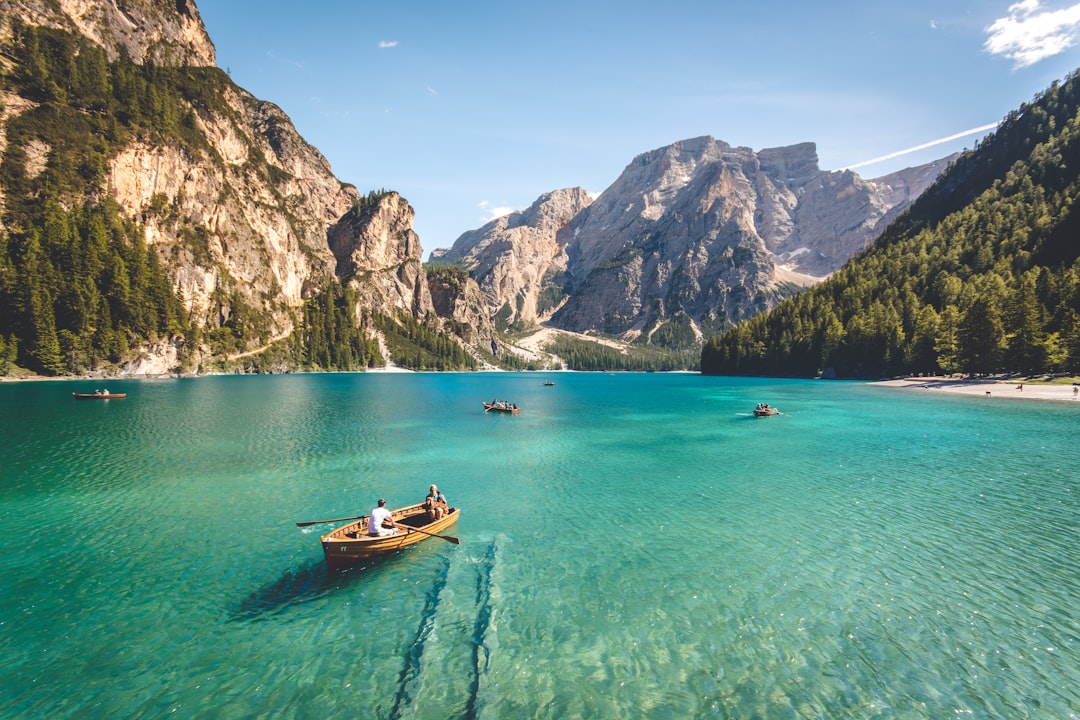
Photo by Pietro De Grandi on Unsplash
My feet barely fit on the stone ledge they called a bed. The "cave hotel" in Cappadocia had looked charming enough in photos—whitewashed rooms carved directly into 1,000-year-old volcanic rock, authentic Turkish breakfast included, the works. What the pictures didn't show was the claustrophobia that hits you at 2 AM when you realize the only window overlooks another person's bedroom carved into the same cliff face.
But something unexpected happened that night. Instead of resenting my poor booking choice, I found myself awake, genuinely curious. Why had I chosen this place? Was it actually because I wanted to experience authentic Turkish hospitality, or because the Instagram aesthetic had convinced me this was what "real" travel looked like?
The Performance of Travel Has Replaced Actual Travel
We've all done it. We've selected hotels based on how they photograph, chosen restaurants because they're trending on TikTok, and spent more time finding the perfect angle for a shot than actually tasting our food. According to a 2023 study by the Journal of Travel Research, 74% of leisure travelers now use social media to plan their trips, and nearly half of them adjust their itineraries specifically to capture content. We're not traveling anymore—we're auditioning for an audience.
The cave hotel thing crystallized this for me. Cappadocia's underground dwellings aren't some Instagram-worthy novelty. They're genuine historical artifacts born from necessity. Medieval residents carved them out for protection from raiders. People lived entire lives in these caves—births, deaths, celebrations, mundane Tuesday afternoons. Now? Now we show up for two nights, complain about the Wi-Fi, and leave one-star reviews because the shower pressure wasn't Instagram-ready.
That's not travel. That's consumption with a passport.
What Happens When You Stop Performing
I made a decision that night in the cave. I was going to stop. No photos for Instagram. No curating my experience for an algorithm. Just... existing in the place.
The next morning, I skipped the famous sunrise balloon ride that every travel blog recommends. Instead, I walked to a small tea garden I'd noticed the previous day—the kind with no English menu, no tourists, just locals nursing their çay at 7 AM. An older man in a worn cap sat next to me. We couldn't speak the same language, but he kept refilling my tea and pointing at things in the newspaper he was reading, seemingly trying to explain the news. It was awkward. It was perfect.
Later, I got genuinely lost trying to find lunch. Not the curated "getting lost" that leads to a hidden gem restaurant that's somehow featured in five travel guides. Actual lost. A woman hanging laundry from her window noticed me studying my map upside down and invited me in for manti—handmade Turkish dumplings her daughter had just prepared. I sat in her kitchen for two hours. We used Google Translate like it was a sacred text. Her grandson showed me TikTok videos on his phone. It was mundane and extraordinary simultaneously.
Here's what I didn't do: post about it. Not because I was being performatively "authentic," but because the moment I started thinking about how to caption it, I felt the performance creeping back in. The magic of the experience lives in the fact that only three of us will ever really know it happened.
The Real Cost of Instagram Tourism
Look, I'm not suggesting we all abandon social media and become hermits. That's not realistic and honestly, it's just another form of performative travel—the performance of being "too cool" for tourism. But we should be honest about what we're optimizing for.
When travel becomes primarily about content creation, weird things happen. Venice has literally started charging day-trippers €5 to enter the city because the Instagram crowds have made it unbearable. Bali's infrastructure is buckling under the weight of digital nomads chasing the aesthetic. Machu Picchu now has timed entry slots because Instagram made it so popular that the site itself was being physically damaged.
The places we're desperately trying to photograph are suffocating from the attention. And we're not actually experiencing them—we're checking boxes on a list designed by an algorithm.
How to Actually Travel (Without Being Weird About It)
I'm not advocating for some impossible level of purity here. Just... recalibration. Start by doing something radical: spend at least one full day in each place without planning anything. This isn't about aimless wandering for content purposes. The 48-Hour Rule offers a framework for actually experiencing a city instead of just collecting photos, and it's genuinely worth thinking about.
Talk to people without your phone as a safety net. Yes, it's uncomfortable. Yes, some conversations will be awkward. But awkwardness is where actual connection happens. Eat somewhere that doesn't have an English menu or a five-star review. Stay in a place recommended by a real person, not an algorithm. Prioritize experiences that don't photograph well—a two-hour conversation, a terrible play at a local theater, a bus ride where you're the only foreigner.
When you do take photos, take them for yourself. Not as proof of experience, but as memory anchors. There's a difference, and your nervous system knows it.
I left that cave hotel with exactly one photo—a blurry shot of my tea that I took accidentally. It's terrible. I treasure it. More importantly, when I think about Cappadocia now, I don't picture the famous hot air balloons or the Instagram-famous sunsets. I picture that woman's kitchen, the taste of homemade manti, a stranger's kindness. That's what actually stays with you.
Travel isn't a performance. It's permission to be uncertain, to be lost, to be changed by something you didn't plan for. The moment we start optimizing for an audience, we lose the entire point.
Comments (0)
No comments yet. Be the first to share your thoughts!
Sign in to join the conversation.