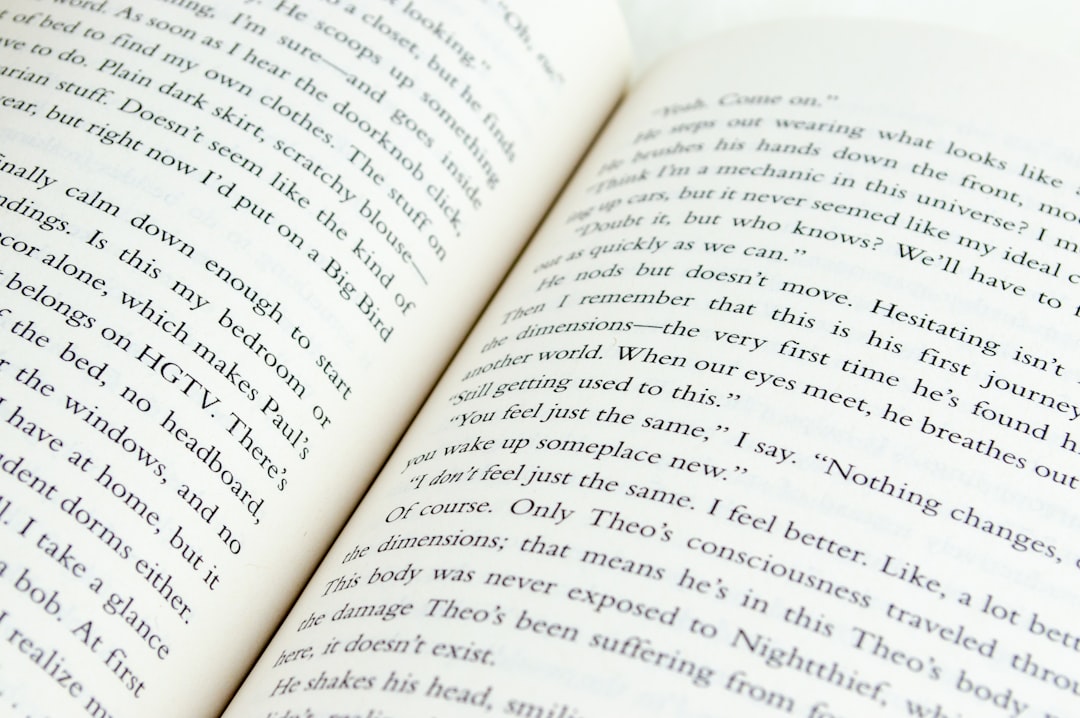
Photo by Mel Poole on Unsplash
The bookmark fell out somewhere between chapters seven and eight. Margaret caught it before it hit the coffee table—a cream-colored envelope with her name written in handwriting she hadn't seen in seven years. Her heart stopped. Actually stopped. She had to sit down.
She'd bought the book at an estate sale, a first edition of "The Night Circus" marked down to eight dollars because the spine was cracked. The kind of find that made her love those dusty Saturday morning hunts through other people's abandoned things. Except this wasn't just any abandoned thing. This was evidence.
When Objects Carry Secrets
Margaret's hands shook as she opened the envelope. The letter inside was dated March 15th, 2016. The date hit her like a punch. That was three days before James stopped calling. Three days before she'd convinced herself he'd met someone else, or lost interest, or simply moved on without explanation. She was twenty-six then, newly promoted at her marketing firm, telling herself she didn't have time for complications. He'd been a bartender with dreams of opening a restaurant. They'd been together for two years.
The letter began: "Margaret, I'm writing this because I'm a coward and I know it."
She read it three times without understanding the words properly. The fourth time, they sank in. He'd written about his father's diagnosis. Stage four pancreatic cancer. About how he needed to move home to North Carolina to help manage things. About how he couldn't ask her to come with him—he knew her career meant everything, knew she'd sacrificed enough already. He wrote about loving her enough to let go, that horrible cliché that suddenly felt revolutionary and devastating in his careful penmanship.
But he never sent it. Why? Margaret turned the envelope over, looking for clues. The back was blank. Had he lost his nerve? Changed his mind? Decided that clean silence was better than messy truth?
The Mathematics of Alternate Timelines
Margaret did something she'd never done before. She searched for him online.
It took twenty minutes. Facebook, Instagram, LinkedIn. There he was. Forty-three years old now, with a wedding ring and two kids. His restaurant had opened in Asheville in 2018. "James Chen's Table" had won several local awards. The photos showed a warm, inviting space with exposed brick and soft lighting. She recognized his aesthetic immediately—the things they'd discussed over late-night drinks.
She clicked through photos of his life. His wife was beautiful, clearly loved him. The kids—a boy and a girl—had his eyes. There was a picture from last year, all of them sitting at a table in the restaurant, celebrating what looked like an anniversary. Fifteen years in business. He'd done it.
Margaret closed her laptop and sat in darkness for an hour.
Here's what she realized: he'd probably moved on quickly. Found someone who could be present, who didn't measure everything against career advancement. Maybe his wife had been in North Carolina. Maybe they'd met while he was there, taking care of his father. Maybe he'd decided that the unsent letter was the right choice—why burden her with his struggles when she had everything she wanted?
But Margaret hadn't had everything. Not really. She'd had promotions and titles and a 401k that grew steadily. She'd had a corner office by thirty-two. She'd had exactly zero people waiting for her when she came home at night. She'd had the life she chose, and somewhere around year seven of that life, she'd realized she didn't much like it.
What We Choose Versus What Chooses Us
The thing about unsent letters is that they exist in a quantum state. They're both confession and protection, apology and accusation. James's letter was all of those things. It was also a mirror.
Margaret didn't reach out to him. That seemed like the kind of narrative cliché that happened in bad movies. Instead, she did something quieter and possibly more important. She called her therapist and scheduled an extra session. She updated her LinkedIn to reflect that she was exploring career options. She started saying no to things. To drinks with colleagues she didn't like. To the Sunday night meetings that served no purpose. To the version of herself that measured worth in spreadsheets and quarterly earnings.
She kept the letter. Not hidden away, but framed on her desk at home. A reminder that the choices we make at twenty-six shape the lives we live at thirty-nine, but don't have to define them forever.
Six months later, Margaret left her job. She freelanced for a while, took a pottery class, started volunteering with a literacy nonprofit. She went on dates. Some were terrible. One might be becoming something real. She's not religious about any of it—she's learned that certainty is mostly an illusion anyway.
Sometimes she wonders if James ever thought about that unsent letter. If he ever regretted not sending it, or felt grateful that he hadn't. If he's happy. The internet says he is, but the internet says lots of things.
What Margaret knows is this: his silence gave her a gift, even if accidentally. It showed her that sometimes the most important person you can be honest with is yourself. If you're interested in other stories about how small moments reshape lives, check out The Last Customer at Midnight: How a Stranger's Final Order Changed Everything.
She's keeping that copy of "The Night Circus" on her bookshelf. Not because it's a first edition. Because it's the book that held his secret long enough for her to be ready to hear it. And sometimes, that's exactly what we need—time, and someone else's abandoned words, to remember who we actually wanted to be.
Comments (0)
No comments yet. Be the first to share your thoughts!
Sign in to join the conversation.