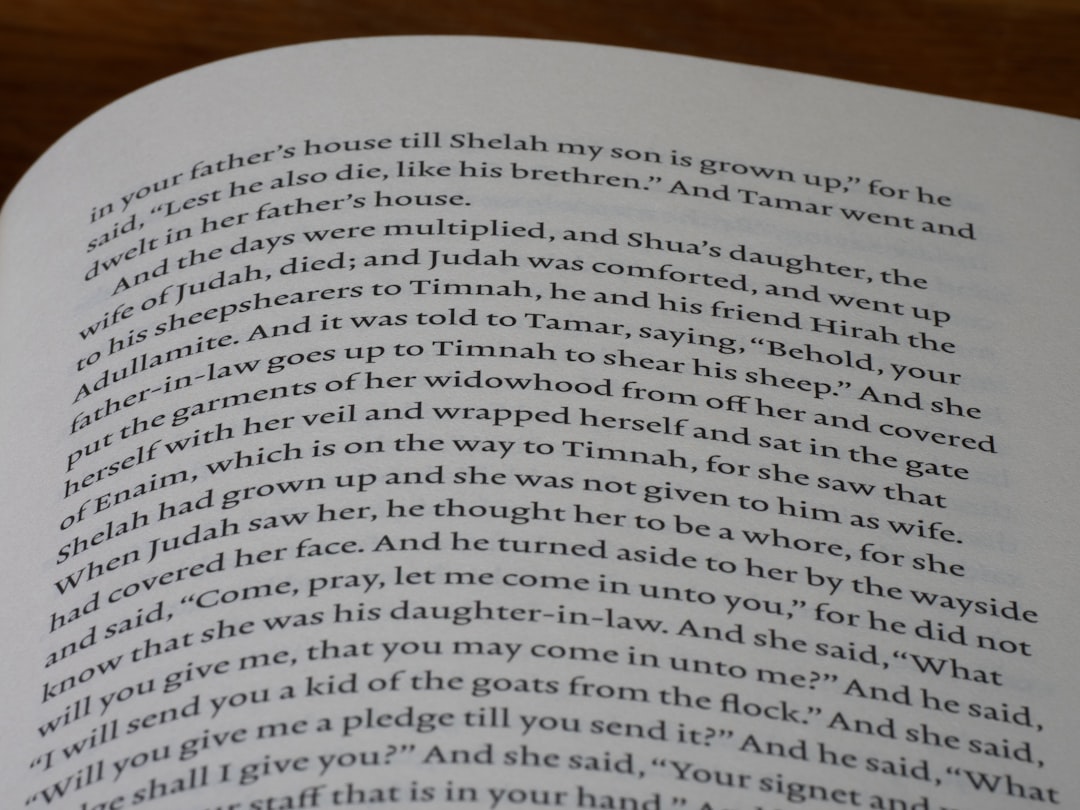
Photo by Brett Jordan on Unsplash
Margaret found the first letter wedged between pages 247 and 248 of a water-damaged copy of "Wuthering Heights." It was addressed to someone named James, written in fountain pen that had faded to the color of old tea. The date read March 15th, 1987. She almost threw it away. Almost.
Instead, she slipped it into a manila envelope and kept it in her desk drawer at the library where she'd worked for thirty-two years. By the time she discovered the second letter—this one tucked inside a first edition of "Jane Eyre," naturally—Margaret had already convinced herself the first was a peculiar accident.
The second letter changed that reasoning entirely.
A Collection Grows
Over the next six months, Margaret found seven more farewell letters. Each one was different. A woman named Patricia had written to her daughter, explaining why she couldn't stay in the marriage anymore. A man called Robert had addressed his parents, apologizing for disappointments they never knew he'd felt. One letter, undated, was simply signed "Thomas" and contained three sentences that made Margaret sit down hard in the stacks: "I'm sorry I couldn't be the person you needed. I tried. I hope you know I tried."
Margaret wasn't naturally sentimental. She was the kind of librarian who wore her reading glasses on a beaded chain and corrected patrons' pronunciation of "Dostoevsky" with the gentleness of a surgeon wielding a scalpel. But something about these letters—the raw honesty of them, the careful handwriting that spoke of multiple drafts—got under her skin like a splinter she couldn't quite extract.
She began searching for the letters intentionally. Not obsessively, not yet. Just with a particular attention during her evening shelving routine. She found them in marked-up paperbacks and pristine hardcovers. They appeared in psychology textbooks and romance novels, suggesting that unhappy people reached for all kinds of stories. One was hidden inside the dust jacket of "Beloved." Another lay flat as a bookmark in "The Bell Jar."
By the end of two years, Margaret had collected forty-three letters.
The Weight of Words
She kept them organized in a leather suitcase under her bed, sorted by date. Some were fragments—half-written thoughts that stopped abruptly mid-sentence, as if the author had lost courage. Others were meticulous, some running to multiple pages, single-spaced. Margaret read them slowly, respectfully, always wearing her cotton gloves so the oils from her skin wouldn't further damage the paper.
What struck her most wasn't the sadness. It was the specificity. Nobody wrote generic goodbyes. They wrote about the exact shade of blue their partner's eyes were. They mentioned specific kitchen tables and particular songs. In one letter, a woman named Susan spent an entire paragraph describing the peculiar way her mother laughed at sitcoms, as if the physical memory of that sound mattered more than any declaration of love.
Margaret began keeping a notebook where she recorded what she learned: Eighty-five percent of the letters contained an apology. Seventy percent mentioned something about trying harder. Only two contained anger. The rest were variations on regret, resignation, and a curious tenderness that Margaret found almost unbearable to read.
She wondered about the people who'd abandoned these letters. Had they changed their minds? Did they send different versions, the carefully edited iterations? Or had they simply decided that the act of writing was enough—that the letter was less about communication and more about bearing witness to their own pain?
The Librarian's Dilemma
The problem arrived on a Tuesday morning in March, when Margaret found herself holding a letter signed "To: Sarah" in handwriting she recognized immediately. It was from her own brother, Tom, written in 1994—the year before he died. Margaret's hands shook as she read it. In four paragraphs, Tom explained why he'd been distant, why he'd missed her wedding, what he'd been struggling with in those final months.
Tom's Sarah—his ex-wife—might still be alive. The letter sat in a book called "The Art of Letting Go," which was the kind of cosmic joke Tom would have appreciated. Margaret spent three days not sleeping, not eating much, just sitting with the letter and the knowledge it contained.
She could look Sarah up. It wasn't impossible—people left traces. Facebook profiles, old addresses, professional websites. Margaret had sixty-three other addresses in her collection, and for two years she'd done nothing but read and remember and respect the sanctity of these private confessions.
But this one was different because it was hers.
Margaret pulled out her laptop on the third evening and searched for "Sarah Collins 1990s California." Seven results. She clicked through slowly, methodically, like she was sorting books according to the Dewey Decimal System. The third result was a woman's professional profile on LinkedIn—Sarah Chen, educational director at a nonprofit serving at-risk youth. The photo was small, but she was smiling.
Margaret closed the laptop.
The Gift of Unfinished Things
The next morning, she called the nonprofit and asked to speak with Sarah. When they connected, Margaret didn't explain anything at first. She simply asked if Sarah had ever been married to someone named Tom. The silence on the other end stretched for what felt like years.
"Yes," Sarah said finally. "How do you—who is this?"
Margaret explained about the letter. She read the entire thing aloud, her voice wavering on the phrase "I loved you better than I loved myself, and that was my problem." When she finished, Sarah was crying. Not quietly. Real, broken sobs that Margaret could hear through the phone.
"He never sent this," Sarah whispered. "I always thought... I've spent thirty years thinking he didn't care enough to explain."
That conversation changed something fundamental in Margaret. She began the process of researching addresses, of drafting careful letters of her own, of reuniting people with the words that had been waiting for them in the stacks. Some recipients didn't respond. Some cried. A few were angry that their privacy had been violated. But most—most said something close to what Sarah had said: "I thought I was alone in this."
Like Tom's letter, Margaret discovered that some words are never really finished until they're heard. If you want to understand how one moment of bravery can unravel years of silence, you might want to read "The Apology That Came 23 Years Too Late," which explores similar territory with stunning emotional precision.
Margaret is seventy-four now, and there are still three letters in her suitcase that she hasn't found the courage to deliver. She takes them out sometimes, rereads them, and wonders about the exact right moment. Because sometimes the bravest thing isn't sending a letter. It's knowing when to finally let someone else read it.
Comments (0)
No comments yet. Be the first to share your thoughts!
Sign in to join the conversation.