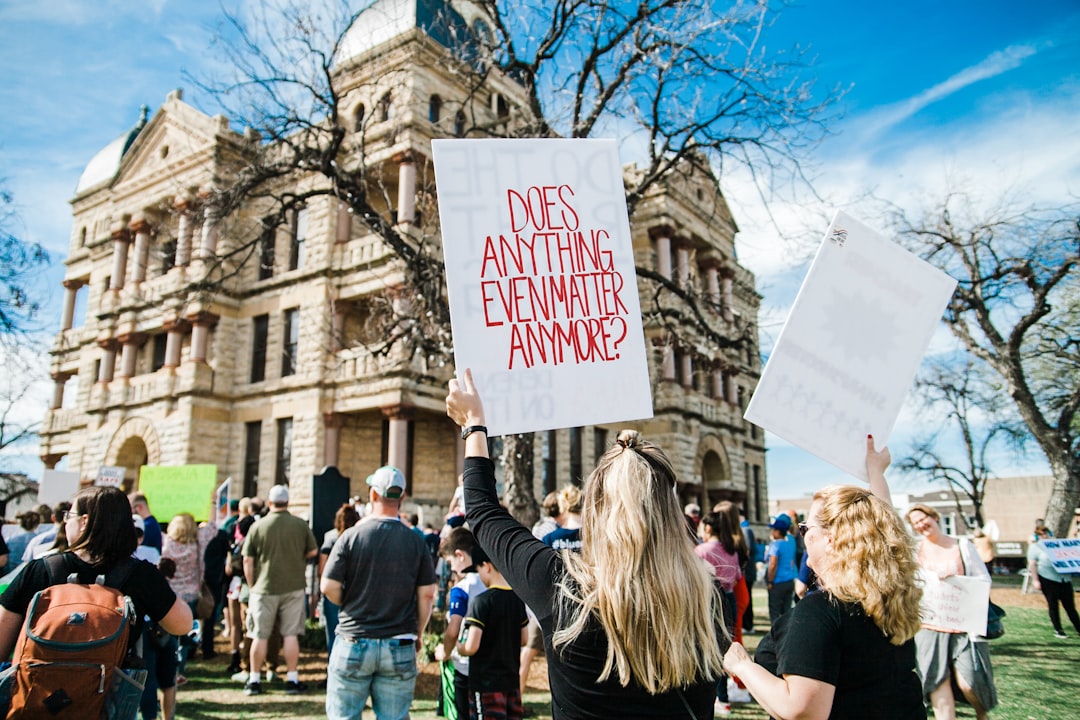
Photo by Heather Mount on Unsplash
Picture this: It's 1986, and Ronald Reagan sits down with Democrat Tip O'Neill over whiskey and stories. By the end of the night, they've hammered out a deal on tax reform that both parties can live with. They don't agree on everything—hell, they agree on very little. But they respect each other enough to find common ground, and the country moves forward.
Fast forward to 2024. Congress can barely pass a budget without threatening government shutdowns. The last major bipartisan legislation was... what, exactly? The infrastructure bill in 2021? And that nearly collapsed a dozen times. Something fundamental has broken in how our politicians talk to each other, and it's not just partisan divisions. It's that they've forgotten how to negotiate.
The Death of the Backroom Deal
Negotiation used to happen offline. Members of Congress would grab lunch, take a walk, maybe golf together over the weekend. They'd build relationships outside the glare of cameras and Twitter. These weren't secret conspiracies—they were the grease that made the system work.
Senator Bob Dole, the former Republican Senate Majority Leader, had genuine friendships with Democratic senators. He'd socialize with them. Their kids knew each other. When you actually know someone as a person, not just as "the other side," it's harder to demonize them. It's harder to hold a grudge over a single vote.
But here's what changed: social media and 24-hour news cycles turned every conversation into a potential gotcha moment. A photo of a Republican senator with a Democratic colleague could be weaponized by primary challengers. "Look, they're working together!" screamed as an attack, not praise. The incentive structure flipped. Instead of rewarding bridge-builders, it punished them.
Congresswoman Alexandria Ocasio-Cortez famously called out this phenomenon when she noted that members don't actually spend time in DC together anymore. They fly in for votes and fly out. No dinners. No getting to know each other's families. No reasons to care about the person on the other side of the aisle.
When Negotiation Became a Four-Letter Word
Somewhere along the way, compromise became weakness. This didn't happen overnight. The tea party movement of the early 2010s actively primaried moderate Republicans who voted with Democrats. The Freedom Caucus made "no compromise" their brand. On the Democratic side, progressive activists started treating moderate Democrats the same way.
The numbers tell the story. According to the Pew Research Center, the number of moderate senators has dropped dramatically since the 1990s. In 1993, there were roughly 20-25 senators in the ideological middle. By 2023, that number had fallen to around 5. Five! The entire party structure has sorted itself into competing tribes with almost no one in between.
When you have no moderates, you have no negotiators. You have true believers on both sides, each convinced that they're fighting existential battles. And when both sides think they're fighting for civilization itself, splitting the difference doesn't feel like a victory—it feels like a betrayal.
The Skill Nobody's Teaching Anymore
Here's the thing that nobody talks about: negotiation is actually a learnable skill, and it's one that Congress used to teach its members through apprenticeship. Young staffers and representatives watched senior members work. They learned how to find leverage, how to know when to hold firm and when to bend, how to save face for all parties involved.
But that institutional knowledge is disappearing. Representatives are arriving in Congress with less legislative experience than ever before. Many come from media, activism, or business backgrounds—not from state legislatures where you have to negotiate with people every single day just to pass a budget.
When you've never had to convince someone you fundamentally disagree with to vote for your bill, you don't develop the muscle memory for it. You don't learn that sometimes you get 60% of what you want and call it a win. You don't understand that the person you're fighting today might be your coalition partner tomorrow.
The Cost of Lost Negotiators
The consequences are real and measurable. According to the Congressional Research Service, the number of bills passed per Congress has declined from an average of about 465 in the 1980s to around 150-200 in recent years. Even more telling: major legislation now takes years of gridlock instead of months of negotiation.
Look at what happened with immigration reform. Bipartisan groups have repeatedly tried to craft compromise bills. Each time, hard-liners on both sides kill the deal before it even reaches the floor. Nobody wants to be photographed voting for "the other side's" bill, even if the compromise represents real progress.
This ties directly into what we've seen happening at the state level, where governors and legislatures have become increasingly powerful precisely because Congress can't function. As state legislatures rewrite fundamental rules without federal oversight, Congress's dysfunction becomes everyone's problem.
Can It Be Fixed?
The answer is yes, but it requires deliberate effort. Some representatives are trying. The Problem Solvers Caucus, a bipartisan group of about 50 members, meets regularly and actually tries to find compromise solutions. But they're treated like oddities, not role models.
What would real change look like? Congressional leaders could stop punishing members who work across the aisle. Primary voters could reward negotiations instead of punishing them. The media could stop treating every compromise as a loss rather than a successful outcome. Social media could be used to celebrate consensus instead of weaponize it.
Most importantly, Congress would need to rebuild its culture around the idea that negotiation isn't weakness—it's power. The ability to get 51% of your priorities through Congress while maintaining relationships for the next fight is more valuable than winning a meaningless primary challenge against a vulnerable colleague.
Until then, expect more shutdowns, more gridlock, and more power flowing away from Washington to state capitals and executive orders. The missing skill of negotiation is costing America far more than most people realize.
Comments (0)
No comments yet. Be the first to share your thoughts!
Sign in to join the conversation.