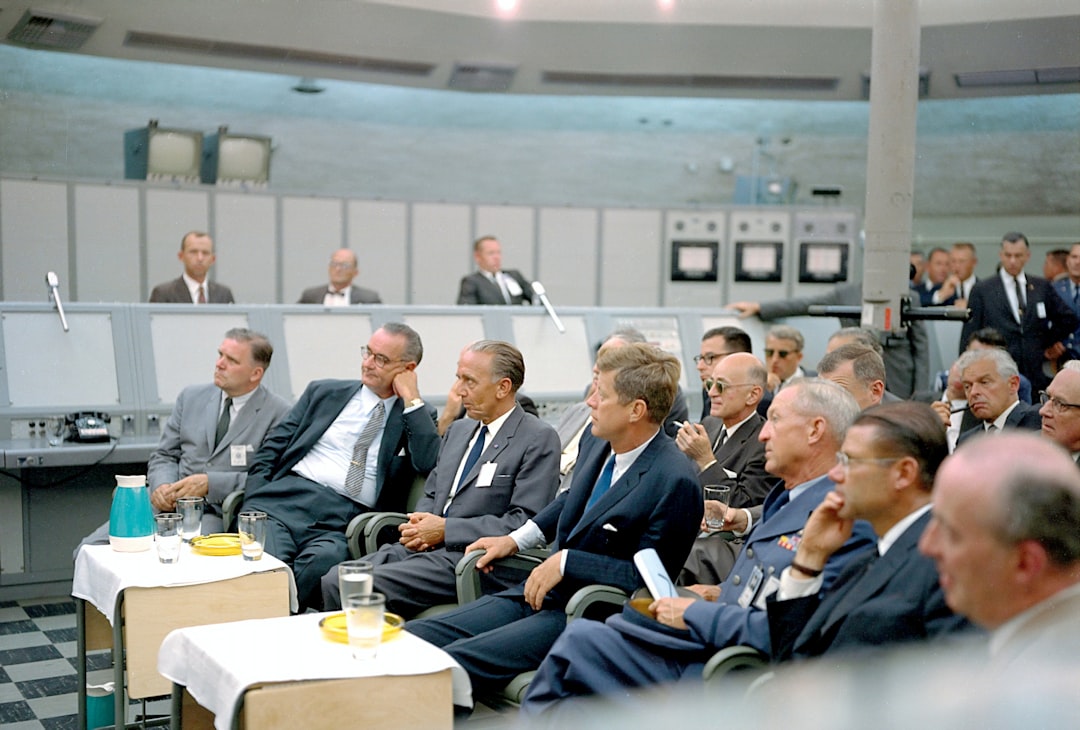
Photo by History in HD on Unsplash
Last November, when the dust settled from the midterm elections, political analysts obsessed over which party controlled Congress. Cable news celebrated or mourned the balance of power in Washington. Meanwhile, something far more consequential happened almost entirely unnoticed: Republicans flipped control of the Michigan state legislature for the first time since 1984, gaining the power to redraw electoral maps that would influence American politics for the next decade. This wasn't a side story. It was the main event.
The uncomfortable truth is that state legislatures have quietly become the most powerful political institutions in America. They control redistricting, election administration, abortion policy, gun regulations, and education standards. They have the power to amend constitutions, override governors' vetoes, and fundamentally reshape the rights of millions of citizens. Yet most Americans couldn't name a single state representative. Most voters skip state legislative races entirely, treating them as afterthoughts compared to high-profile gubernatorial or federal contests.
Why State Legislatures Matter More Than Ever
Consider redistricting alone. After the 2020 census, state legislatures redrew congressional and legislative maps that would determine which party held power for ten years. In many states, this wasn't a fair process of adjusting for population changes. It was partisan warfare. In North Carolina, Republicans drew maps so aggressively skewed that Democrats would have needed to win statewide elections by nearly 10 percentage points just to flip a single seat. The U.S. Supreme Court basically shrugged and said this was acceptable.
But redistricting is just the beginning. State legislatures have become the laboratories for policies that eventually go national. Wisconsin's attack on public sector unions in 2011 became a template. Florida's six-week abortion ban was copied in multiple states. If you want to understand where American politics is heading—what restrictions are coming, what rights are being threatened, what powers are being consolidated—stop watching C-SPAN and start paying attention to your state capitol.
The numbers back this up. According to the Council of State Governments, state legislatures spend over $2 trillion annually in their budgets. That dwarfs the federal discretionary spending most people obsess over. Education funding, healthcare policy, criminal justice, environmental protection—these are fundamentally determined by state legislatures, not Congress.
The Activist Takeover: How a Minority Learned to Rule
What makes the current moment especially significant is that state legislatures have been captured by highly motivated activist minorities. In many states, Republicans dominate not because they're more popular, but because they've invested heavily in local politics while Democrats ignored it. Between 2010 and 2020, while liberals focused on national politics and presidential races, conservatives systematically funded state legislative races in targeted states.
The American Legislative Exchange Council (ALEC), a conservative organization, became something like a bill factory for Republican state legislators. Need model legislation? ALEC provided it, tested and ready to go. This wasn't conspiracy—it was brilliantly executed strategy that operated almost invisibly to the national media.
The results have been stunning. As of 2023, Republicans control the legislature in 30 states. In many of these states, they have supermajorities, meaning Democrats literally cannot stop anything. They can pass any law they want without a single Democratic vote. In North Carolina, Kansas, Wisconsin, and Texas, Republican legislatures have implemented policies that would have seemed fringe just fifteen years ago.
Democrats, meanwhile, have been slowly waking up to this imbalance. But they're years behind. The infrastructure they're building now won't fully pay off until after 2030 redistricting.
The Democracy Paradox: Representation Without Accountability
Here's where it gets genuinely alarming. The people controlling state legislatures often do so despite representing a minority of voters. This sounds impossible, but it's routine. In Wisconsin, Republicans hold 62 of 99 state assembly seats, but if you add up votes in all assembly races, Democrats actually received slightly more votes statewide. It's the same story in Michigan, Pennsylvania, and North Carolina. Gerrymandering, combined with geographic clustering of Democratic voters in cities, means that minority parties can exercise supermajority power.
This creates perverse incentives. A legislator representing a safely gerrymandered district has zero reason to compromise with the other party. Their only threat comes from primary challenges from the right (or left). This is why state legislatures have become increasingly polarized and increasingly willing to pursue scorched-earth strategies.
In Arizona, the Republican legislature passed restrictions on abortion so extreme that even many Republicans found them uncomfortable. In Tennessee, the legislature expelled two Democratic members for protesting gun violence, then faced virtually no electoral consequences because their districts were so safely Republican. These actions would have been politically unthinkable in an era when legislators needed to appeal to swing voters.
What Actually Changes if Citizens Pay Attention
The frustrating part? This imbalance could actually be changed through collective action. State legislative elections have much lower turnout than federal ones. A 10-15 percentage point swing in turnout in a state legislative election can flip entire chambers. In 2018, when Democrats finally showed up for midterms, they flipped state chambers in multiple states and won governors' mansions that controlled redistricting.
The problem is consistency. Liberals tend to mobilize during presidential cycles. Conservatives have learned to show up every single election, regardless of whether the presidency is on the ballot. This difference in civic engagement has translated directly into political power.
Money matters too, but less than you'd think. A state legislative campaign can be won with a fraction of what goes into a congressional race. One committed candidate with grassroots support can compete effectively. Yet how many people know who's running for state legislature in their district? How many have made a donation or knocked on doors?
For those interested in understanding how power actually flows through American politics, The Disappearing Swing Voter: Why Politicians Are Abandoning the Middle offers crucial context on how the decline of moderate voters has transformed political competition at every level.
The Road Ahead
State legislatures will draw new maps after 2030. They'll continue deciding whether you can vote by mail, whether abortion is legal, whether unions can organize, and whether schools teach particular subjects. They're where the real decisions about your life are actually made.
The question isn't whether state legislatures matter. They absolutely do. The question is whether Americans will ever start paying attention before it's too late.
Comments (0)
No comments yet. Be the first to share your thoughts!
Sign in to join the conversation.